
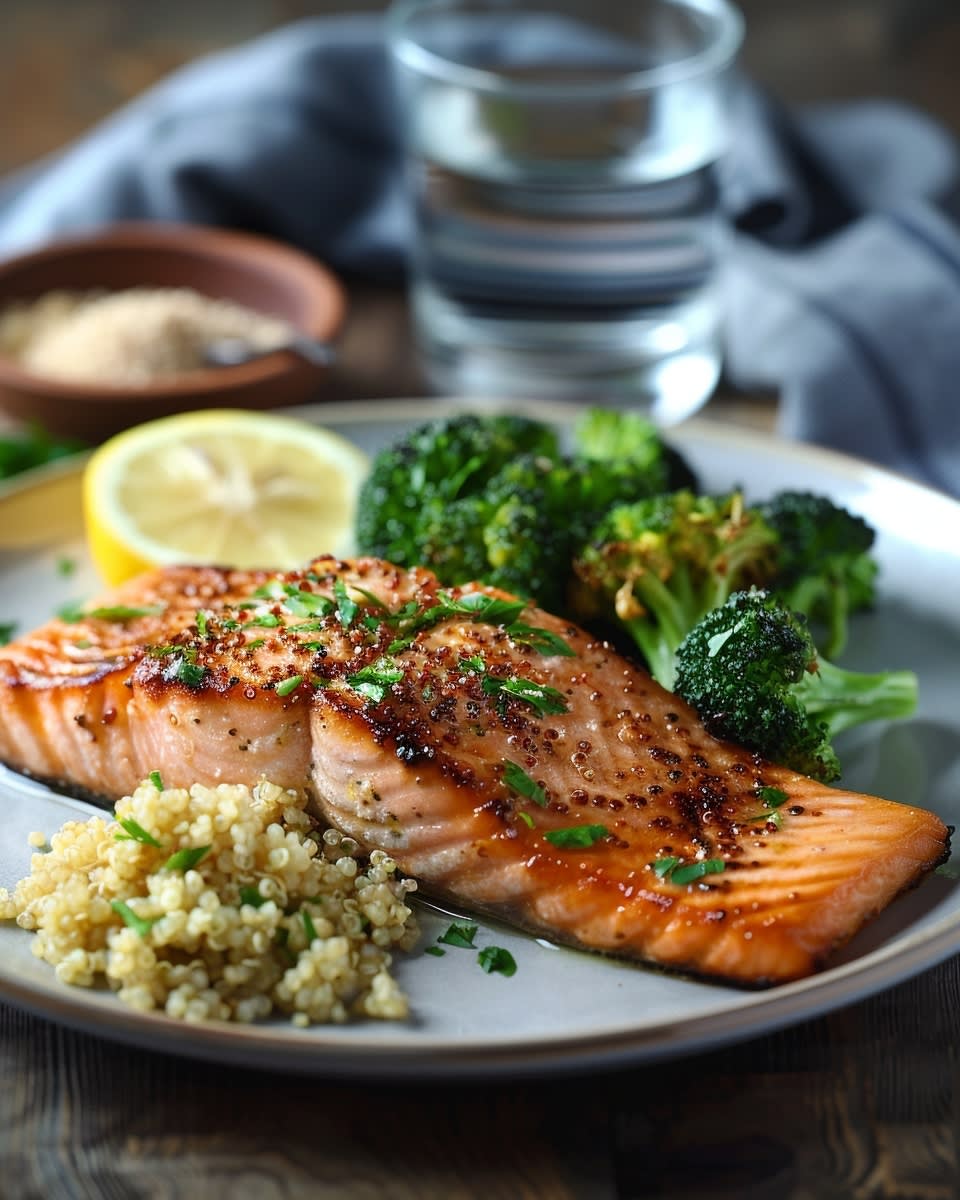
I still remember the first time I made grilled salmon with quinoa for a family dinner. My aunt, who’s always watching her blood sugar, asked me if there was anything she could safely eat. I pointed to the beautiful pink salmon resting on a bed of fluffy quinoa, and her face lit up. She ended up going back for seconds, and that’s when I realized this dish was something special. It checks every box: tasty, healthy, and works for almost everyone at the table.
Here’s the thing about grilled salmon with quinoa – it’s one of those rare meals that makes you feel good while you’re eating it and even better after. There’s no food coma, no guilt, just pure satisfaction. Whether you’re trying to eat cleaner, manage a health condition, or simply want something that tastes amazing without spending hours in the kitchen, this combination delivers.
The magic happens when you pair omega-3-rich salmon with protein-packed quinoa. These two ingredients work together like old friends, each bringing something unique to the plate. The salmon provides heart-healthy fats and lean protein, while quinoa adds fiber, minerals, and a nutty flavor that balances the richness of the fish. Together, they create a complete meal that fuels your body and satisfies your taste buds.
Why Choose Grilled Salmon with Quinoa?
Let’s talk about why this dish deserves a regular spot in your meal rotation. Salmon is packed with omega-3 fatty acids, which are fantastic for your heart and brain. These healthy fats help reduce inflammation throughout your body and can lower your risk of heart disease. If you’re wondering is grilled salmon good for high blood pressure, the answer is a solid yes. The omega-3s in salmon have been shown to help regulate blood pressure naturally.
Quinoa brings its own set of benefits to the table. Unlike regular grains, quinoa is a complete protein, meaning it contains all nine essential amino acids your body needs. It’s also naturally gluten-free, making it perfect for people with celiac disease or gluten sensitivity. The fiber content in quinoa helps with digestion and keeps you feeling full longer, which is great if you’re trying to maintain a healthy weight.
When people ask me does quinoa go well with salmon, I always smile. The answer goes beyond just compatibility – these two ingredients enhance each other. The mild, slightly nutty taste of quinoa doesn’t compete with the rich, buttery flavor of salmon. Instead, it provides the perfect backdrop that lets the fish shine. Add some lemon, herbs, and a drizzle of olive oil, and you’ve got a dish that feels restaurant-quality.
For anyone managing diabetes, this combination is particularly smart. How to cook salmon for a diabetic comes down to preparation methods, and grilling is one of the best choices. You’re not adding extra fats or breading that can spike blood sugar. The protein in both salmon and quinoa helps stabilize glucose levels, and the fiber in quinoa slows down sugar absorption. It’s a balanced meal that won’t cause those dreaded blood sugar swings.
The versatility of this dish amazes me every time. Hosting a fancy dinner party? Grilled salmon with quinoa looks elegant on the plate. Need a quick weeknight meal? It comes together in under 30 minutes. Feeding picky eaters? The mild flavors appeal to most palates. Meal prepping for the week? Both components store well and reheat beautifully.
This recipe works for various eating styles too. It’s naturally gluten-free, dairy-free, and can easily be made paleo by ensuring your seasoning choices align with those guidelines. The high protein content makes it perfect for athletes and fitness enthusiasts. The healthy fats support hormone balance and brain function. It’s truly a meal that adapts to your needs.
Essential Ingredients for Grilled Salmon with Quinoa
Getting the right ingredients makes all the difference in how your dish turns out. Let me walk you through what you’ll need and how to choose the best quality items.
For the salmon:
- Fresh salmon fillets (about 6 ounces per person)
- Olive oil or avocado oil
- Fresh lemon juice
- Garlic (fresh minced works best)
- Salt and black pepper
- Fresh herbs like dill, parsley, or thyme
For the quinoa:
- White, red, or tri-color quinoa
- Vegetable or chicken broth (water works too)
- Olive oil
- Salt
- Optional: garlic, onion, or herbs for extra flavor
When shopping for salmon, look for fillets that are firm to the touch with a fresh, ocean-like smell. Avoid any fish that smells overly fishy or has a slimy texture. The flesh should be vibrant in color – bright pink or orange depending on the type. If you see any browning or dull patches, skip it. I prefer wild-caught salmon when possible because it tends to have better flavor and higher omega-3 content, but good quality farmed salmon works perfectly fine too.
Here’s a common mistake people make: buying salmon that’s too thin. Thin fillets dry out quickly on the grill. Aim for pieces that are at least one inch thick at the thickest part. This thickness helps you avoid one of the most frequent issues – what are the common mistakes in grilling salmon. Thin fillets overcook in seconds, while properly thick pieces give you more control.
For quinoa, I keep it simple. Any color works, though I find white quinoa has the mildest flavor and fluffiest texture. Red and black quinoa have a slightly earthier taste and hold their shape better. Tri-color quinoa gives you the best of all worlds and looks beautiful on the plate. Make sure to buy pre-rinsed quinoa or rinse it thoroughly yourself. Unwashed quinoa has a bitter coating called saponin that can ruin the taste.
Optional ingredients that take this dish to the next level:
- Cherry tomatoes (halved and grilled alongside the salmon)
- Fresh spinach or arugula (mix into warm quinoa for added greens)
- Capers or olives (for a Mediterranean twist)
- Feta cheese or goat cheese (if dairy isn’t an issue)
- Pine nuts or slivered almonds (toasted for crunch)
- Fresh cucumber and red onion (diced for a fresh salsa)
- Avocado slices (because avocado makes everything better)
The beauty of grilled salmon with quinoa is that it serves as a blank canvas. You can keep it simple with just lemon and herbs, or dress it up with multiple toppings and flavors. I like to change my approach based on my mood and what’s in season. Summer calls for bright, fresh additions like tomatoes and cucumbers. Winter invites warmer flavors like roasted garlic and wilted greens.
One ingredient I never skip is good quality olive oil. It’s worth spending a bit more on extra virgin olive oil that has a pleasant, fruity flavor. You’ll use it to brush the salmon before grilling and to dress the quinoa after cooking. That little bit of quality oil brings everything together and adds richness without heaviness.
Fresh herbs make a huge difference too. Dried herbs work in a pinch, but fresh dill, parsley, or cilantro add brightness that dried versions can’t match. I keep these herbs growing in pots on my kitchen windowsill so I always have them ready. A handful of fresh herbs chopped and sprinkled over the finished dish transforms it from good to memorable.


Step-by-Step Guide to Preparing Grilled Salmon with Quinoa
Now that you’ve got your ingredients ready, let’s get into the actual cooking process. I’ll walk you through this like I’m standing right next to you in your kitchen, sharing all the little tricks I’ve picked up over the years.
First things first – start with the quinoa because it takes longer than the salmon. Rinse your quinoa under cold water for about 30 seconds, even if the package says it’s pre-rinsed. I learned this the hard way after serving bitter quinoa to dinner guests once. Never again. The ratio I swear by is 1 cup quinoa to 2 cups liquid. For this dish, I use chicken or vegetable broth instead of plain water. It’s a small change that makes a massive difference in flavor.
Bring your liquid to a boil in a medium saucepan, add a pinch of salt, then stir in the quinoa. Reduce the heat to low, cover it with a tight-fitting lid, and let it simmer for about 15 minutes. Here’s what most people don’t know – once those 15 minutes are up, turn off the heat but leave the lid on for another 5 minutes. This steaming time makes the quinoa incredibly fluffy. When you finally lift that lid, fluff it gently with a fork. Don’t stir it aggressively or you’ll end up with mushy quinoa.
While the quinoa is doing its thing, let’s prep the salmon. Pat your fillets completely dry with paper towels. This step matters more than you’d think. Wet salmon won’t develop that beautiful crust we’re after, and it’s more likely to stick to the grill. Once they’re dry, brush both sides lightly with olive oil.
For the marinade, I keep things simple but flavorful. In a small bowl, mix together 2 tablespoons of olive oil, juice from one lemon, 2 minced garlic cloves, and whatever herbs you’re using. If I’m feeling fancy, I’ll add a teaspoon of Dijon mustard or a drizzle of honey. Season generously with salt and pepper. Pour this mixture over your salmon and let it sit for 15-20 minutes at room temperature. Don’t marinate longer than 30 minutes though – the acid in the lemon will start cooking the fish and change its texture.
By the way, this is also the perfect time to prep any additional vegetables or toppings you want to include. I often throw together a quick salsa with diced cucumber, red onion, and tomatoes while things are marinating. It reminds me of the fresh combinations you’d find in dishes like quick breakfast wraps, where simple ingredients create something greater than the sum of their parts.
Now for the grilling part. Preheat your grill to medium-high heat, somewhere around 375-400 degrees Fahrenheit. This is crucial – too hot and your salmon will char on the outside while staying raw inside. Too cool and it’ll stick and fall apart. Clean your grill grates really well with a wire brush, then oil them. I fold up a paper towel, dip it in vegetable oil, and use tongs to rub it across the grates.
Place your salmon on the grill skin-side up if it has skin, or presentation-side down if it’s skinless. Here’s the golden rule I follow: don’t touch it for at least 4-5 minutes. I know it’s tempting to peek and poke, but resist. The fish will release naturally from the grates when it’s ready to flip. If you try to move it too soon, you’ll tear the flesh and lose that gorgeous grill marks.
After those first 4-5 minutes, gently slide a thin spatula under the salmon. If it resists, give it another minute. When it releases easily, flip it carefully and cook for another 3-4 minutes. The total cooking time depends on thickness – figure about 10 minutes per inch of thickness as a general guideline.
How do you know when it’s done? The salmon should be opaque throughout and flake easily with a fork. I aim for an internal temperature of 145 degrees Fahrenheit in the thickest part. Some people prefer their salmon a bit more medium-rare, around 125-130 degrees, which is totally fine and actually quite delicious. The fish will continue cooking a bit after you remove it from the grill.
Here’s something I do that restaurant chefs swear by – let the salmon rest for 2-3 minutes after grilling. Just like steak, fish benefits from a short rest. It allows the juices to redistribute throughout the fillet.
Customization is where you can really make this dish your own. Want a Mediterranean vibe? Toss the cooked quinoa with chopped olives, sun-dried tomatoes, and crumbled feta. Going for Asian flavors? Add a drizzle of sesame oil to the quinoa and top the salmon with a soy-ginger glaze. For a lighter summer version, mix fresh arugula into warm quinoa and top everything with a lemon-herb vinaigrette. The possibilities remind me of how versatile something like easy breakfast toast can be – simple base, endless variations.
If you’re following specific dietary restrictions, this recipe adapts beautifully. Keeping it low-sodium? Skip added salt and rely on fresh herbs and citrus for flavor. Need it dairy-free? It already is, unless you choose to add cheese as a topping. For a complete paleo meal, quinoa technically isn’t paleo, but you could substitute cauliflower rice. I’ve done this for friends following strict paleo diets, and honestly, it’s still delicious.
Common Mistakes in Grilling Salmon and How to Avoid Them
Let me tell you about the time I ruined eight salmon fillets at a dinner party. Eight. I was so confident, and then I watched in horror as every single piece stuck to the grill and fell apart. That disaster taught me everything about what not to do.
The number one mistake? Not preheating the grill properly. A lot of people get impatient and throw the fish on before the grill reaches the right temperature. Cold or barely warm grates guarantee sticking and uneven cooking. Wait until your grill is properly heated – it should feel hot when you hold your hand about 6 inches above the grates for just a second or two.
Another huge issue is using fillets that are too wet. Moisture is the enemy of good searing. Even if you’ve marinated your salmon, pat it dry again right before it hits the grill. That little bit of surface moisture will steam the fish instead of searing it, and you’ll miss out on that beautiful caramelization.
Flipping too soon or too often ranks high on the mistake list. I see people nervously flipping their salmon every minute, worried it’s burning. Don’t do this. Salmon needs time to develop a crust that naturally releases from the grates. Think of it like making boiled eggs with fruit – you need patience and trust in the process. Constant interference ruins the outcome.
Overcooking is probably the most common problem, and honestly, it breaks my heart every time. Dry, chalky salmon is nobody’s friend. The fish goes from perfectly cooked to overdone in less than a minute, so stay close and keep an eye on it. Remember, it’s better to slightly undercook it since carryover cooking will finish the job. I’d rather serve salmon that’s a tiny bit translucent in the very center than serve fish jerky.
Using the wrong type of spatula causes unnecessary grief too. You need a thin, flexible fish spatula – those wide metal ones with slots. Regular spatulas are too thick and rigid. They can’t slide under the delicate fish without tearing it. I bought a proper fish spatula five years ago, and it’s become one of my most-used tools.
Here’s something people rarely consider – not accounting for thickness variations. If your fillet is thicker on one end, that thick part needs more heat exposure. Position thicker portions toward the hotter part of your grill, or consider cutting your fillet into evenly sized pieces before cooking.
Funny enough, another mistake is overthinking it. People get so stressed about grilling salmon that they freeze up and second-guess everything. Trust your instincts and the guidelines I’ve shared. You’ve got this.
Health Benefits of Grilled Salmon with Quinoa
Beyond just tasting incredible, this dish is a nutritional powerhouse. Let’s dig into why this combination should be a regular part of your eating routine.
Salmon stands out as one of the healthiest proteins you can eat. Those omega-3 fatty acids everyone talks about? They’re not just health food hype. These essential fats reduce inflammation throughout your entire body, support brain function, and protect your heart. Studies consistently show that people who eat fatty fish like salmon regularly have lower rates of heart disease, depression, and cognitive decline.
Speaking of heart health, is grilled salmon good for high blood pressure? Absolutely. The omega-3s in salmon – specifically EPA and DHA – help lower blood pressure naturally. They improve the flexibility of blood vessel walls and reduce arterial stiffness. Research has shown that eating salmon two to three times per week can lead to measurable decreases in both systolic and diastolic blood pressure. Plus, grilling doesn’t add the extra sodium or unhealthy fats that other cooking methods might introduce.
Quinoa brings completely different but equally impressive benefits. As a complete protein containing all essential amino acids, it rivals animal proteins nutritionally while being plant-based. The fiber content supports digestive health and helps maintain steady energy levels throughout the day. This is similar to how balanced meals like cereal with milk and fruit provide sustained energy, though quinoa offers more protein and less sugar.
For anyone managing diabetes, how to cook salmon for a diabetic comes down to preparation method and what you pair it with. Grilling is perfect because you’re not adding breading or sugary sauces. The protein in salmon slows down glucose absorption, preventing blood sugar spikes. Quinoa has a relatively low glycemic index compared to white rice or pasta, meaning it won’t cause rapid blood sugar fluctuations. Together, this meal provides stable, long-lasting energy without the crashes.
The combination of protein, healthy fats, and fiber makes this dish incredibly satiating too. You’ll feel genuinely full and satisfied without that heavy, uncomfortable feeling. I’ve noticed that when I eat grilled salmon with quinoa for lunch, I don’t get those mid-afternoon cravings that usually send me hunting for snacks. The balanced macronutrients keep hunger at bay for hours.
This meal also supports muscle recovery and growth, making it ideal after exercise. The high-quality protein from both the salmon and quinoa provides the building blocks your muscles need to repair and strengthen. The omega-3s help reduce exercise-induced inflammation and muscle soreness. I’ve made this my go-to dinner after tough workouts, and I swear I recover faster than when I eat other meals.


Creative Variations and Serving Suggestions
Here’s where things get really fun. Once you’ve mastered the basic grilled salmon with quinoa, you can start playing around with different flavors and ingredients. I treat this recipe like a formula – salmon plus quinoa equals dinner, but what you add to that equation changes everything.
Let me share some of my favorite variations that I rotate through regularly. For a Mediterranean-inspired version, I cook the quinoa in vegetable broth with a bay leaf, then toss it with chopped Kalamata olives, sun-dried tomatoes, crumbled feta cheese, and fresh basil. The salmon gets brushed with olive oil, lemon, and oregano before grilling. It’s like taking a mini vacation to Greece without leaving your kitchen. Sometimes I’ll add grilled zucchini and bell peppers on the side for extra vegetables.
My Asian-fusion take is probably my most requested variation when friends come over. I marinate the salmon in a mixture of low-sodium soy sauce, fresh ginger, garlic, and a tiny bit of honey. While it’s grilling, I prepare the quinoa with vegetable broth and stir in some sesame oil at the end. Then I top everything with sliced scallions, sesame seeds, and edamame. If I’m feeling ambitious, I’ll make a quick cucumber salad with rice vinegar to serve alongside. The combination of flavors is absolutely addictive.
For a Southwestern spin, I season the salmon with cumin, smoked paprika, and a touch of chili powder. The quinoa gets mixed with black beans, corn kernels, diced tomatoes, and fresh cilantro. A squeeze of lime juice ties it all together. Sometimes I’ll add diced avocado on top or serve it with a dollop of Greek yogurt mixed with lime zest. It’s vibrant, colorful, and tastes like summer no matter what season it actually is.
Funny enough, my kids love what I call the “green goddess” version. I blend together fresh herbs – parsley, basil, cilantro, and dill – with olive oil, lemon juice, and a bit of garlic to make a bright green sauce. This gets drizzled over both the salmon and quinoa. Then I mix baby spinach and arugula into the warm quinoa so it wilts slightly. The whole dish turns beautifully green, and somehow that makes my kids more excited to eat it. Never underestimate the power of fun presentation.
If you’re looking to add more vegetables to the mix, the options are endless. Asparagus is fantastic grilled right alongside the salmon – just toss the spears with olive oil, salt, and pepper. Cherry tomatoes can go directly on the grill too; they get sweet and slightly charred. Grilled bell peppers, red onions, and eggplant all work wonderfully. I usually brush whatever vegetables I’m using with the same marinade as the salmon so the flavors connect.
Different types of quinoa can also change the character of your dish. Red quinoa has a heartier texture and earthier flavor – it holds up really well if you’re making this as meal prep since it doesn’t get mushy. Black quinoa looks dramatic on the plate and has a slightly sweeter taste. Tri-color quinoa gives you visual interest and a mix of textures in each bite. I’ve even started experimenting with quinoa blends that include other ancient grains like millet or amaranth.
Here’s a trick I learned from a chef friend – you can cook quinoa in different liquids to completely change its flavor profile. Try using coconut milk mixed with water for a subtle tropical vibe. Tomato juice or V8 creates a Spanish rice-style quinoa. Even green tea works if you’re going for an Asian-inspired meal. It sounds weird, but trust me on this one.
Sauce options can transform the entire dish too. A cucumber yogurt sauce (basically a quick tzatziki) is refreshing and cooling against the rich salmon. Mix Greek yogurt with grated cucumber, minced garlic, lemon juice, fresh dill, salt, and pepper. Let it chill for at least 30 minutes so the flavors meld together. This sauce is particularly good during warmer months when you want something light.
For a creamier option without dairy, try making an avocado-lime crema. Blend a ripe avocado with lime juice, a bit of olive oil, garlic, cilantro, and enough water to reach a drizzle-able consistency. Season with salt and pepper. It’s silky, rich, and adds healthy fats to an already nutritious meal.
A simple lemon-herb vinaigrette works beautifully if you want something lighter. Whisk together lemon juice, olive oil, Dijon mustard, minced shallots, and whatever fresh herbs you have on hand. This dressing livens up both the salmon and quinoa without weighing anything down. I usually make extra and keep it in a jar in my fridge for salads throughout the week.
Side salad pairings can round out your meal nicely. A crisp arugula salad with shaved Parmesan, cherry tomatoes, and a balsamic vinaigrette complements the richness of the salmon. A simple mixed green salad with cucumber, radishes, and a lemon dressing keeps things fresh. In winter, I lean toward warmer sides like roasted Brussels sprouts or a kale salad with dried cranberries and almonds.
By the way, this dish works brilliantly as part of a larger spread too. When I’m hosting, I’ll set out the grilled salmon and quinoa as the main components, then create a build-your-own-bowl station with different toppings and sauces. I’ll put out bowls of chopped vegetables, herbs, nuts, seeds, different cheeses, olives, and several sauce options. Everyone gets to customize their plate exactly how they want it. It’s interactive, fun, and takes pressure off me as the host since people are essentially finishing their own meals.
For meal prep, this recipe is genuinely a lifesaver. I’ll grill a bunch of salmon fillets and cook a large batch of quinoa on Sunday afternoon. Then I portion everything into containers with different vegetable and topping combinations so I don’t get bored eating the same thing all week. Some containers get the Mediterranean treatment, others go Asian-inspired, and a few stay simple with just lemon and herbs. When you explore more options like these, you realize how much variety exists in what seems like simple meal planning – similar to browsing through healthy lunch ideas and discovering endless possibilities within basic, wholesome ingredients.
Don’t be afraid to experiment based on what you already have in your kitchen. That’s honestly how I come up with most of my variations. I’ll look in my fridge and think, “Okay, I have some roasted red peppers and feta cheese leftover – let’s make this Mediterranean.” Or I’ll notice I bought too much cilantro and decide to go Southwestern. Cooking should be creative and flexible, not stressful and rigid.
One more thing – if you’re cooking for someone with specific dietary needs, this base recipe adapts so easily. Need it vegan? Skip the salmon and grill thick slices of eggplant or portobello mushrooms instead, keeping everything else the same. Want it lower in carbs? Swap the quinoa for cauliflower rice. Following a Mediterranean diet? You’re already there. It’s one of those rare dishes that truly works for almost everyone.
Frequently Asked Questions About Grilled Salmon with Quinoa
Does quinoa go well with salmon?
Absolutely, and they’re actually a perfect pairing. Quinoa has a mild, slightly nutty flavor that doesn’t compete with the rich, buttery taste of salmon. Instead, it provides a neutral but interesting base that lets the fish shine. The textures work together beautifully too – the fluffy, slightly crunchy quinoa contrasts nicely with the tender, flaky salmon. Plus, from a nutritional standpoint, they complement each other by providing complete protein, healthy fats, and complex carbohydrates all in one meal. I’ve served this combination to hundreds of people over the years, and I’ve never had anyone say the flavors clash.
How to cook salmon for a diabetic?
Grilling is one of the best methods for preparing salmon for someone managing diabetes because you’re not adding breading, extra fats, or sugary sauces. The key is keeping the preparation simple and focusing on herbs, spices, lemon juice, and a modest amount of healthy oil. Pair the salmon with high-fiber sides like quinoa or vegetables to help slow glucose absorption and prevent blood sugar spikes. Avoid marinades with honey, brown sugar, or sweet teriyaki sauces unless you’re using sugar-free versions. The protein and omega-3s in salmon actually help stabilize blood sugar levels, making it an excellent choice for diabetic meal planning. Just watch portion sizes – about 4-6 ounces of cooked salmon per serving is appropriate for most people.
What are the common mistakes in grilling salmon?
The biggest mistakes include not preheating the grill properly, which causes sticking and uneven cooking. Using wet fish is another huge problem – always pat your salmon completely dry before grilling. Flipping too early or too often prevents that beautiful crust from forming and can tear the delicate flesh. Overcooking is probably the most frequent issue, turning tender salmon into dry, chalky fish. Using the wrong tools matters too – you really need a thin fish spatula, not a thick regular one. Finally, people often choose fillets that are too thin, which makes it nearly impossible to grill them without drying them out. Stick with pieces that are at least one inch thick at the thickest part for the best results.
Is grilled salmon good for high blood pressure?
Yes, grilled salmon is excellent for managing high blood pressure. The omega-3 fatty acids in salmon – EPA and DHA specifically – have been shown in numerous studies to help lower blood pressure naturally by improving blood vessel flexibility and reducing arterial stiffness. Regular consumption of fatty fish like salmon can lead to measurable decreases in both systolic and diastolic blood pressure readings. Grilling is particularly beneficial because you’re not adding the extra sodium that comes with some other preparation methods. Just be mindful to go easy on salt in your seasoning. The combination of high-quality protein, anti-inflammatory omega-3s, and the absence of unhealthy fats makes grilled salmon one of the most heart-healthy proteins you can choose.
Can I use frozen salmon for this recipe?
Definitely, and frozen salmon can actually be excellent quality. The key is thawing it properly – never at room temperature. Place frozen fillets in the refrigerator overnight to thaw slowly and safely, following safe food handling guidelines that help prevent bacterial growth. If you’re short on time, you can seal the salmon in a plastic bag and submerge it in cold water, changing the water every 30 minutes until thawed. Once thawed, pat the fillets very dry since frozen fish tends to release more moisture. The texture might be slightly less firm than fresh salmon, but if you’ve bought good quality frozen fish, the difference is minimal. I keep frozen salmon in my freezer as a backup for busy weeks when I don’t have time to shop for fresh fish.
How long does leftover grilled salmon with quinoa last?
Stored properly in airtight containers in the refrigerator, both components will last 3-4 days. I actually think the quinoa tastes even better the next day after the flavors have had time to meld together. The salmon is best eaten within 2-3 days for optimal texture and taste. When reheating, be gentle – salmon can dry out quickly if you’re not careful. I prefer reheating it in a covered pan on the stovetop over medium-low heat, or very briefly in the microwave at 50% power. You can also eat the salmon cold or at room temperature, which I actually prefer for lunch sometimes. Just make sure everything cools down within two hours of cooking before refrigerating to prevent bacterial growth.
What’s the best way to tell when grilled salmon is done?
The most reliable method is using an instant-read thermometer – you’re looking for an internal temperature of 145°F in the thickest part of the fillet. Visually, the salmon should be opaque throughout and flake easily when you gently press a fork into it. The flesh should separate into distinct flakes rather than looking mushy or raw. Some people prefer their salmon slightly less done, around 125-130°F, which leaves the very center a bit translucent – this is perfectly safe and actually quite delicious. Remember that carryover cooking will continue for a few minutes after you remove the fish from the grill, so you can pull it off just before it reaches your target temperature. With practice, you’ll develop an intuition for doneness based on how the fish looks and feels.
Can I make this recipe on an indoor grill or grill pan?
Absolutely, and I do this all the time during winter when I don’t want to brave the cold to use my outdoor grill. A grill pan on your stovetop works wonderfully – just preheat it over medium-high heat until it’s properly hot, oil the ridges well, and follow the same cooking process. You won’t get quite the same smoky flavor as outdoor grilling, but you’ll still get those attractive grill marks and a nice sear. Electric indoor grills like George Foreman-style grills work too, though cooking times may vary. The key with any indoor method is ensuring good ventilation since salmon can produce some smoke while cooking. Turn on your exhaust fan and crack a window if needed. The results are still delicious even without that outdoor char.
What wine pairs well with grilled salmon and quinoa?
Since salmon has a rich, fatty texture, it pairs beautifully with wines that have good acidity to cut through that richness. A crisp white wine like Sauvignon Blanc or Pinot Grigio works wonderfully, especially if you’ve prepared the dish with lemon and herbs. Chardonnay is excellent too, particularly if it’s unoaked or lightly oaked – you don’t want heavy oak flavors competing with the delicate fish. If you prefer rosé, a dry Provençal-style rosé is fantastic with salmon. Even light red wines can work – Pinot Noir is classic with salmon because it’s not too heavy. The specific flavors in your dish matter too – if you’ve gone Mediterranean with olives and tomatoes, try a Greek white wine. For Asian-inspired preparations, consider a slightly off-dry Riesling.
How can I prevent my quinoa from getting mushy?
The secret is in the ratio, cooking method, and resting time. Use a 1:2 ratio of quinoa to liquid, and don’t add more liquid than necessary. Once the quinoa has simmered for 15 minutes, turn off the heat but keep the lid on for 5 minutes – this steaming step is crucial for fluffy texture. Don’t lift the lid during cooking or you’ll release the steam needed to cook the quinoa properly. When it’s done, fluff it immediately with a fork using a gentle lifting motion rather than stirring, which can make it gummy. Rinsing the quinoa before cooking also helps by removing excess starch. If you’re meal prepping, slightly undercook the quinoa since it will continue softening in the fridge. These small adjustments make a huge difference in achieving that perfect, fluffy texture every time.
This recipe has become my reliable go-to for good reason – it delivers on taste, nutrition, and versatility without demanding hours in the kitchen. Once you’ve made it a few times, you’ll find your own rhythm and favorite variations. Go ahead and give it a try tonight; I think you’ll be surprised how quickly it becomes a regular part of your cooking routine.
Ingredients
Equipment
Method
- Rinse quinoa under cold water for about 30 seconds.
- Bring broth or water to a boil in a medium saucepan, add a pinch of salt, then stir in the quinoa.
- Reduce heat to low, cover, and simmer for about 15 minutes.
- After 15 minutes, turn off the heat and leave the lid on for another 5 minutes.
- Pat salmon fillets dry with paper towels and brush both sides lightly with olive oil.
- In a bowl, mix together olive oil, lemon juice, minced garlic, and herbs for the marinade. Season with salt and pepper.
- Pour marinade over salmon and let it sit for 15-20 minutes at room temperature.
- Preheat grill to medium-high heat (375-400 degrees Fahrenheit).
- Clean grill grates and oil them.
- Place salmon on the grill skin-side up or presentation-side down.
- Cook for 4-5 minutes without touching.
- Carefully flip the salmon and cook for another 3-4 minutes.
- Ensure the internal temperature reaches 145 degrees Fahrenheit (or to preference).
- Let salmon rest for 2-3 minutes before serving.