
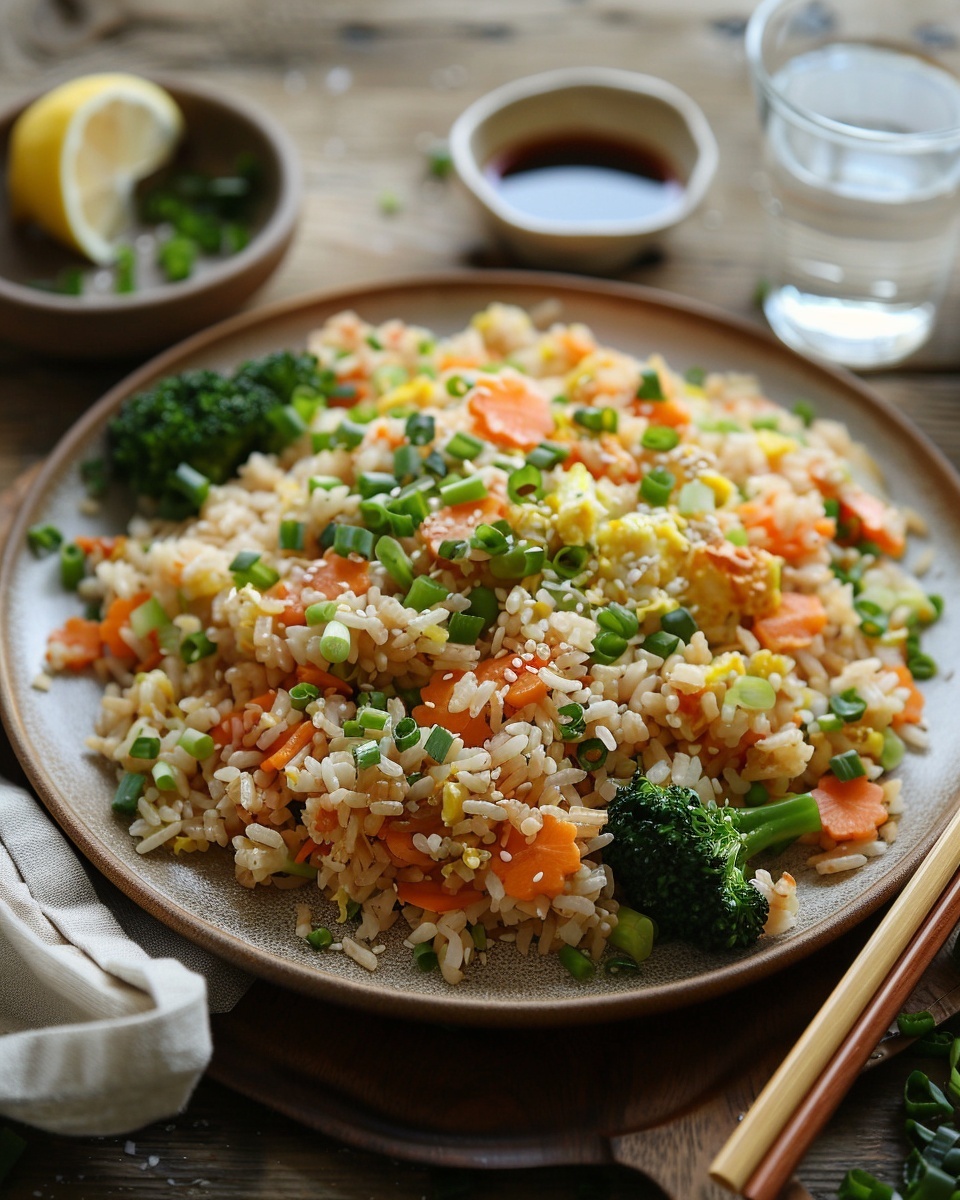
Welcome to Simple Fried Rice Heaven
I still remember the first time I tried to make fried rice. I was a broke college student with leftover rice in my fridge and exactly three dollars in my wallet. That night, I stumbled onto something magical. I cracked a few eggs, tossed in some frozen veggies, and created what would become my go-to meal for years to come.
Here’s the thing about simple fried rice: it’s one of those rare dishes that saves you when your fridge looks empty. You don’t need fancy ingredients or special cooking skills. A hot pan, some day-old rice, and a few basic items can turn into the most satisfying meal you’ll eat all week.
Welcome to my kitchen! Today, I’m excited to share with you a recipe that has saved me countless times. This easy fried rice recipe is not only simple to make but also tastes better than what you’d get from most takeout places. I’m not exaggerating when I say this could be the best fried rice recipe in the world for home cooks.
Whether you’re just learning to cook or you’ve been making meals for decades, this dish works for everyone. It takes about 15 minutes from start to finish. You probably have most of the ingredients already sitting in your pantry. And the best part? You can customize it however you want.
I’ve made this recipe hundreds of times. I’ve served it to friends who couldn’t believe how easy it was. I’ve packed it for lunch and eaten it cold straight from the container. It never disappoints.
Let me walk you through everything you need to know. We’ll start with the basic ingredients, then move into the cooking process. By the end of this guide, you’ll have a foolproof method for making restaurant-quality fried rice at home.
Ingredients for Simple Fried Rice
Let’s talk about what you actually need. The beauty of this dish is its flexibility. You can keep it super basic or dress it up with extras. I’ll give you both options.
For the most basic version, you need just a few things. Rice is obviously number one on the list. Day-old rice works best because it’s drier and won’t get mushy. Fresh rice has too much moisture and tends to clump together. If you only have fresh rice, spread it on a baking sheet and let it cool in the fridge for an hour.
Eggs are your second essential ingredient. Fried rice with egg is a classic combination for good reason. The eggs add protein, richness, and a wonderful texture. I usually use two eggs for every three cups of cooked rice.
Vegetables round out the base recipe. Frozen mixed vegetables work perfectly fine. I’m talking about the basic mix with peas, carrots, and corn. Fresh vegetables are great too if you have them. Green onions, bell peppers, and cabbage all work wonderfully.
Now let’s talk about the three critical components that transform ordinary rice into something special:
- Soy sauce – This gives you that salty, savory flavor
- Oil – Use something with a high smoke point like vegetable or canola oil
- Garlic – Fresh garlic makes all the difference
These three ingredients form the foundation of your fried rice seasoning. Some people ask me about the three ingredients in fried rice, and I always say: rice, eggs, and soy sauce. Everything else is bonus.
If you want to get closer to a Chinese fried rice restaurant style, add a small amount of sesame oil at the end. Just a teaspoon or two adds an authentic flavor that makes people think you ordered takeout.
Protein and Vegetable Options
The basic recipe is great, but adding protein takes it to another level. Chicken fried rice recipes are probably the most popular option. I like to use leftover rotisserie chicken. Just shred it up and toss it in. Raw chicken works too, but you’ll need to cook it separately first.
Here are my favorite protein additions:
- Cooked chicken (shredded or diced)
- Shrimp (fresh or frozen, just make sure they’re cooked)
- Pork (leftover roast pork is amazing)
- Beef (thinly sliced)
- Tofu (pressed and cubed for a vegetarian option)
For a vegetable fried rice recipe, skip the meat entirely and load up on veggies. I’ve made completely meat-free versions that my carnivore friends loved. The key is using lots of different vegetables for variety in texture and flavor.
My go-to vegetables include:
- Peas and carrots (the classic combo)
- Corn kernels
- Diced bell peppers
- Chopped broccoli
- Sliced mushrooms
- Bean sprouts
- Diced zucchini
Green onions deserve their own mention. They’re not optional in my book. The white parts go in during cooking for flavor. The green parts get sprinkled on top at the end for freshness and color.
Special Variations Worth Trying
Once you master the basic version, you can branch out. A Japanese fried rice recipe uses different seasonings. Instead of just soy sauce, try adding a splash of mirin and sake. The result is slightly sweeter and more complex.
For a special fried rice recipe that impresses guests, I add all the proteins at once. Chicken, shrimp, and pork together create what restaurants call “house special fried rice.” It sounds fancy but takes the same amount of effort.
I’ve also made Thai-style versions with fish sauce and lime juice. Mexican-inspired versions with cumin and cilantro. Even breakfast versions with bacon and extra eggs. The technique stays the same. Only the seasonings change.
The recipe I’m sharing today is the foundation. It’s the version I make most often because it’s quick and uses ingredients I always have on hand. Master this one first, then experiment with your own twists.


How to Make Simple Fried Rice
Alright, enough talking about ingredients. Let’s actually cook this thing. I’m going to walk you through how to make fried rice in 5 steps that anyone can follow. Seriously, if I could make this as a broke college student with barely any kitchen skills, you can absolutely do this too.
Before we start, I need to tell you something important. The biggest mistake I see people make is trying to cook fried rice like they’re making a gentle risotto. That’s not what we’re doing here. This needs high heat and quick movements. Think of it more like a fast-paced dance than a slow meditation. Your wok or pan should be hot enough that things sizzle the moment they hit the surface.
Here’s the thing. I use a large nonstick skillet because I don’t own a wok. A wok is ideal, sure, but I’ve made hundreds of batches in a regular pan and they turn out fantastic. Just make sure whatever you use is big enough to let you toss everything around without rice flying onto your stovetop.
Step 1: Prepare Your Rice
Start with cooked rice that’s been sitting in your fridge for at least a few hours. I usually make extra rice the night before specifically for this purpose. If you forgot to do that and need fried rice right now, spread your freshly cooked rice on a baking sheet and stick it in the fridge for about an hour. It won’t be quite as perfect as day-old rice, but it’ll work.
Break up any clumps with your hands before you start cooking. This is weirdly satisfying, by the way. Just get in there and separate the grains. You want individual pieces of rice, not sticky chunks. This step makes a massive difference in the final texture.
Step 2: Scramble Those Eggs
Heat your pan over medium-high heat and add about a tablespoon of oil. While it’s heating, crack two eggs into a bowl and beat them with a fork until they’re completely combined. Some people add a tiny pinch of salt here, though I usually skip it because the soy sauce later adds plenty of saltiness.
Pour the eggs into the hot pan and let them sit for just a second before you start scrambling. I like to scramble them into fairly small pieces because they distribute better throughout the rice. Cook them until they’re just set but still look slightly wet. They’ll finish cooking later when everything comes together.
Here’s where I differ from some recipes. I take the eggs out of the pan at this point and set them aside on a plate. This prevents them from overcooking and getting rubbery. Some cooks leave them in and push them to the side, but I’ve had better results removing them completely. Trust me on this one.
Step 3: Cook Your Vegetables
Add another tablespoon of oil to the same pan. Toss in your vegetables and cook them until they’re tender but still have some bite. If I’m using frozen vegetables, this takes about three to four minutes. Fresh vegetables might need a bit longer depending on what you’re using.
This is where I add minced garlic. Three cloves is my standard amount. Let that cook for maybe thirty seconds until it smells amazing. Don’t let it burn though. Burned garlic tastes bitter and will ruin your whole dish. If you see it starting to brown too quickly, pull the pan off the heat for a moment.
Funny enough, I once made this recipe for someone who insisted they hated garlic. I convinced them to try it anyway, and now it’s their favorite weeknight meal. The garlic isn’t overwhelming when it’s cooked this way. It just adds this background flavor that makes everything taste more complete.
Step 4: Add the Rice and Season
Now comes the fun part. Add your cold rice to the pan with the vegetables. Use your spatula to break up any remaining clumps and mix everything together. This is where you need to channel your inner chef and really work that spatula. Press the rice against the pan, flip it, toss it around. The more you move it, the better it gets.
After about two minutes of stirring, drizzle soy sauce around the edges of the pan. I use about two tablespoons for three cups of cooked rice, but you can adjust based on your taste. The soy sauce will sizzle when it hits the hot pan, and that sound means flavor is happening.
Keep stirring and tossing for another two to three minutes. You want some of the rice to get slightly crispy and golden on the edges. This is the hallmark of great Chinese fried rice restaurant style cooking. Those little crispy bits are like finding treasure in your bowl.
Add the scrambled eggs back in now. Break them up as you mix them through the rice. Everything should be evenly distributed at this point. The whole pan should look cohesive, with every grain of rice coated in that beautiful soy sauce color.
Step 5: Finish and Serve
Turn off the heat. This is when I add a small drizzle of sesame oil if I’m feeling fancy. Just a teaspoon or two makes it taste like it came from your favorite Chinese restaurant. Don’t skip the green onions either. Chop them up and scatter them over the top.
That’s it. Five steps and you’ve got restaurant-quality simple fried rice sitting in your pan. The whole process from start to finish takes maybe fifteen minutes once you’ve done it a few times.
By the way, this dish pairs beautifully with other quick meals. Sometimes I serve it alongside my chicken noodle soup for a comforting dinner spread, or I’ll make extra to pack into a turkey and cheese wrap the next day for lunch. The versatility reminds me of how I use my chickpea wrap with sauce recipe as a base for different meal combinations.
Variations and Tips
Once you’ve nailed the basic technique, the world opens up. I’ve tried probably twenty different variations over the years. Some were amazing. A few were disasters that I’ll never speak of again. But that’s how you learn, right?
A Japanese fried rice recipe uses a slightly different approach. Instead of soy sauce as the primary seasoning, you’ll use a combination of soy sauce, sake, and mirin. The result is sweeter and more delicate. I also add a pat of butter at the end, which sounds weird but creates this rich, almost luxurious texture. Japanese fried rice tends to be lighter in color than the Chinese version because you use less soy sauce.
For protein additions, timing matters more than you’d think. If I’m adding cooked chicken or shrimp, I toss them in during step four along with the rice. They just need to heat through. Raw proteins require a different approach. Cook them first in the pan before you even start with the eggs, then remove them and add them back at the end. This prevents overcooking.
Here’s a trick I learned from a friend who worked in a Chinese restaurant. They always cook their rice with slightly less water than normal. This makes it drier and better suited for frying. I started doing this whenever I know I’m making fried rice the next day, and it genuinely improves the texture.
The fried rice seasoning can go beyond just soy sauce too. I sometimes add a dash of oyster sauce for deeper umami flavor. White pepper instead of black pepper gives it a more authentic taste. A tiny squeeze of lime juice at the end brightens everything up. Don’t be afraid to experiment.
For a special fried rice recipe that looks impressive, I make individual portions in smaller pans and pack them into bowls, then flip them onto plates so the rice comes out in a neat dome shape. Garnish with extra green onions and maybe some sesame seeds. Suddenly your Tuesday night dinner looks like something from a restaurant.
One more thing. When I want something lighter to balance out the richness of fried rice, I’ll throw together a grilled veggie sandwich on the side. The fresh vegetables and lighter profile complement the savory rice perfectly.
The beauty of this easy fried rice recipe is that it grows with you as a cook. Your first attempt might be a little clumpy or underseasoned. That’s fine. By your tenth time making it, you’ll be tossing rice in the air like a pro and adjusting seasonings by instinct. That’s the journey, and honestly, even the imperfect versions still taste pretty darn good.


Health Considerations for Simple Fried Rice
Let me be real with you for a second. I used to eat fried rice almost every day without thinking twice about it. Then I had a health scare a few years back, and my doctor told me I needed to pay more attention to what I was putting in my body. That conversation changed how I approach cooking, even comfort foods like this one.
One question I get asked all the time is, Is fried rice ok for diabetics? The short answer is yes, it can be, but you need to be smart about it. I’m not a doctor or nutritionist, but I’ve done my research and talked to people who manage diabetes. The key is controlling what goes into your rice and how much you eat.
Here’s what I learned. White rice has a high glycemic index, which means it can spike blood sugar levels pretty quickly. That’s not ideal if you’re watching your glucose. But switching to brown rice or even cauliflower rice completely changes the game. Brown rice has more fiber, which slows down how your body processes the carbohydrates. I started making my fried rice with brown rice about half the time, and honestly, once you get used to the nuttier texture, it’s really good.
Portion control matters too. A massive plateful of fried rice, even with all the right ingredients, is still a lot of carbs. I started measuring my portions instead of just piling my plate high. A cup to a cup and a half of cooked rice per serving is reasonable. Pair it with extra vegetables and lean protein, and you’ve got a much more balanced meal.
The vegetables and eggs in your fried rice actually work in your favor nutritionally. Eggs provide protein and healthy fats that help stabilize blood sugar. The vegetables add fiber, vitamins, and minerals. When you look at the three ingredients in fried rice as a foundation—rice, eggs, and vegetables—you’re actually building a pretty decent nutritional base. It’s what you add beyond that and how much you eat that makes the difference.
Another thing I changed was cutting back on the oil. I used to be really heavy-handed with it because I thought more oil meant better flavor. Turns out you can get great results with less. I measure my oil now instead of just pouring. Two tablespoons total for a full recipe is plenty. Using a good nonstick pan helps with this too.
The soy sauce is where you need to watch the sodium content. Regular soy sauce has a ton of salt in it. I switched to low-sodium soy sauce and honestly can’t tell the difference in taste. My blood pressure probably thanks me for it. If you’re really trying to cut back on sodium, you can also dilute regular soy sauce with a bit of water or use coconut aminos as a substitute. Coconut aminos taste slightly sweeter but work surprisingly well.
By the way, adding more vegetables than rice changes the whole nutritional profile. I sometimes do a 50-50 split of rice to vegetables. You’re getting more nutrients and fiber while cutting down on carbs. It still tastes like fried rice, just a healthier version. Bell peppers, broccoli, snap peas, and mushrooms all bulk it up nicely.
For anyone watching their weight, simple fried rice can definitely fit into your plan. The trick is treating it as a complete meal rather than a side dish. When I make it with chicken or shrimp, plenty of vegetables, and reasonable portions, it clocks in at a pretty reasonable calorie count. I’ve lost weight while still eating this regularly because I wasn’t going overboard with portions or drowning it in extra oil.
If you’re following specific dietary guidelines, creating a balanced diet means paying attention to proportions. My plate usually ends up being about a quarter rice, a quarter protein, and half vegetables. That ratio keeps me satisfied without feeling sluggish afterward.
One more health consideration that doesn’t get talked about enough is food safety. Leftover rice can harbor bacteria if it’s not stored properly. I always refrigerate my rice within an hour of cooking it. Keep it in an airtight container and use it within three to four days. When you reheat it for fried rice, make sure it gets hot all the way through. I’m paranoid about this after reading too many articles about food poisoning from improperly stored rice.
The beautiful thing about making your own easy fried rice recipe at home is that you control everything. Restaurant versions often have way more oil, salt, and MSG than you’d ever use at home. Not that restaurant fried rice is evil or anything, but when you make it yourself, you know exactly what went into it. That peace of mind matters, especially if you’re managing health conditions.
I’ve also started thinking about fried rice as a vehicle for getting more good stuff into my diet. Need more protein? Add an extra egg or more chicken. Want more vegetables? Throw in whatever’s in your crisper drawer. It’s forgiving enough that you can tweak it to meet your nutritional goals without sacrificing taste.
Here’s something that surprised me. When I started paying attention to nutrition, I realized that my homemade vegetable fried rice recipe with lots of colorful vegetables was actually one of the healthiest meals I made regularly. Sure, it’s not a kale salad, but it’s way better than a lot of other quick dinner options. Everything’s relative, right?
If you’re looking for more ideas on building balanced, satisfying meals that don’t take forever to make, check out other lunch options that work well alongside or as alternatives to fried rice when you want variety in your weekly rotation.
Frequently Asked Questions About Simple Fried Rice
How to make a very simple fried rice?
The absolute simplest version requires just three things: day-old rice, eggs, and soy sauce. Heat oil in a pan, scramble two eggs and set them aside, then fry your rice with a splash of soy sauce until it’s heated through and slightly crispy. Mix the eggs back in, and you’re done. This stripped-down version takes about ten minutes and uses ingredients most people already have. You can eat it as-is or use it as a base to add whatever vegetables or protein you have on hand.
Is fried rice ok for diabetics?
Yes, fried rice can work for diabetics with some modifications. Switch to brown rice or cauliflower rice to lower the glycemic impact, and watch your portion sizes carefully. Include plenty of vegetables and lean protein to add fiber and slow down carbohydrate absorption. Use minimal oil and low-sodium soy sauce to keep it as healthy as possible. Always pair it with non-starchy vegetables and monitor your blood sugar to see how your body responds. Work with your healthcare provider to determine appropriate serving sizes for your individual needs.
What are the three ingredients in fried rice?
The three core ingredients that form the foundation of any fried rice are rice, eggs, and soy sauce. Everything else is technically optional, though most recipes include vegetables and some type of cooking oil. These three ingredients create the basic flavor profile and texture that defines fried rice. You can build on this foundation with garlic, green onions, various proteins, and different vegetables, but you can absolutely make a satisfying fried rice with just these three essentials.
How to make fried rice in 5 steps?
Start by preparing day-old rice and breaking up any clumps. Next, scramble eggs in a hot pan and set them aside. Third, cook your vegetables and garlic until tender. Fourth, add the rice and soy sauce, stirring constantly until everything is mixed and slightly crispy. Finally, add the eggs back in, toss everything together, and finish with green onions and a drizzle of sesame oil. The whole process takes about fifteen minutes once you get the hang of it, and you’ll have restaurant-quality results.
Can I use fresh rice instead of day-old rice?
You can, but the texture won’t be quite as good. Fresh rice contains too much moisture and tends to get mushy and clump together when you fry it. If you need to use fresh rice, spread it on a baking sheet and refrigerate it for at least an hour to dry it out. Another trick is to cook your rice with slightly less water than usual, which makes it drier and better suited for frying. Day-old rice is always the better choice if you have the time to plan ahead.
What type of rice works best for fried rice?
Long-grain white rice like jasmine or basmati works perfectly for fried rice. These varieties stay separate and don’t get too sticky when cooked. Medium-grain rice works too, though it’s slightly stickier. Brown rice is a healthier option with more fiber and nutrients, though it has a chewier texture. Short-grain sushi rice tends to be too sticky for great fried rice unless you really let it dry out. I usually stick with jasmine rice because it has a subtle flavor that doesn’t compete with the seasonings.
Can I make fried rice without a wok?
Absolutely, and I do it all the time. A large nonstick skillet or even a regular frying pan works fine for home cooking. The key is using high heat and a pan that’s big enough to let you toss the ingredients around. A wok is traditional and does make it easier to flip everything, but it’s not necessary for delicious results. I’ve made hundreds of batches in a regular skillet, and they turn out fantastic. Just make sure your pan is well-heated before you start cooking.
How long does leftover fried rice keep in the fridge?
Properly stored fried rice stays good in the refrigerator for three to four days. Make sure to put it in an airtight container and refrigerate it within two hours of cooking. When you’re ready to eat it again, reheat it thoroughly until it’s steaming hot all the way through. You can reheat it in the microwave, on the stovetop, or even in the oven. I actually think fried rice tastes great reheated because the flavors have more time to blend together overnight.
What’s the secret to restaurant-style fried rice at home?
The biggest secret is high heat and constant movement. Restaurants use powerful burners that home stoves can’t match, but you can get close by cranking your heat up and working quickly. Day-old rice is crucial, and so is not overcrowding your pan. Cook in batches if you’re making a large amount. A small drizzle of sesame oil at the end adds that authentic restaurant flavor. Also, don’t be shy with your spatula—really toss and flip that rice to get some pieces slightly crispy.
Can I freeze fried rice for meal prep?
Yes, fried rice freezes surprisingly well and makes excellent meal prep. Let it cool completely, then portion it into freezer-safe containers or bags. It’ll keep in the freezer for up to three months. When you’re ready to eat it, you can reheat it straight from frozen in the microwave or thaw it overnight in the fridge first. The texture might be slightly softer than fresh, but it’s still tasty and convenient. I often make double batches specifically so I can freeze half for busy weeks.
Making simple fried rice at home is one of those skills that keeps giving back. You’ll save money, eat healthier, and always have a satisfying meal option when you need something quick. Don’t stress about making it perfect the first time—just get in there and start cooking.
Ingredients
Equipment
Method
- Prepare cooked rice that has been sitting in the fridge for a few hours, breaking up any clumps.
- Heat a tablespoon of oil in a large nonstick skillet over medium-high heat and scramble the eggs until just set, then remove and set aside.
- Add another tablespoon of oil to the pan and cook the vegetables until tender, then add minced garlic and cook for about 30 seconds.
- Add the cold rice to the pan, breaking up any remaining clumps, and stir for about 2 minutes. Drizzle soy sauce around the edges of the pan and continue stirring for another 2-3 minutes until some rice pieces are crispy.
- Add the scrambled eggs back to the mix, stir to combine, and finish with optional sesame oil and chopped green onions before serving.