
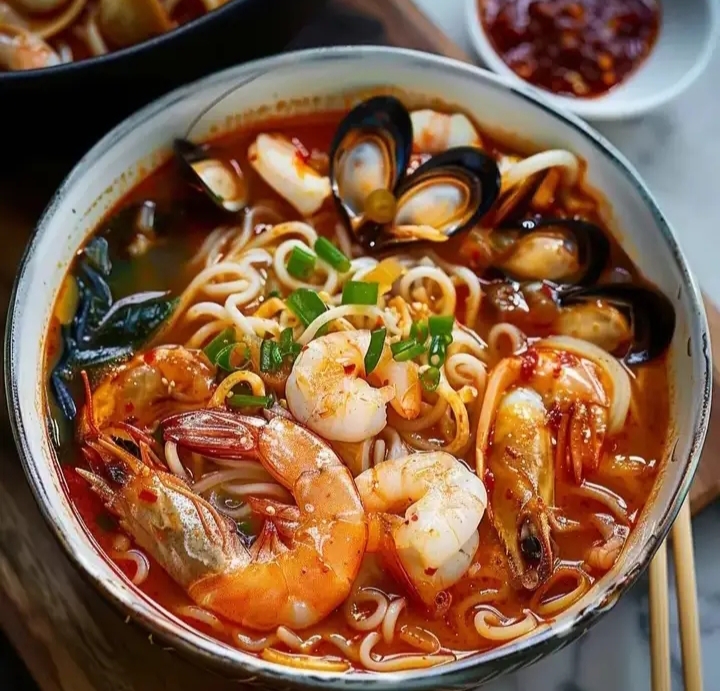
Why This Spicy Seafood Noodle Recipe Will Win Your Heart
There’s something magical about a steaming bowl of Spicy Seafood Noodle Soup. The first time I tried Jjamppong, I was at a tiny Korean restaurant tucked away in the corner of a bustling city. One slurp, and I was hooked. The fiery broth, tender seafood, and chewy noodles felt like a warm hug on a cold day. When I got home, I knew I had to recreate it. After a few trials (and some kitchen mishaps), I finally nailed this recipe. It’s become my go-to dish for family dinners and cozy nights with friends.
A Little History Behind Jjamppong
Jjamppong is a beloved dish from Korea, often served in Korean-Chinese restaurants. Its roots trace back to China but have been reimagined with Korean flavors. Unlike its milder Chinese cousin, Jjamppong boasts a bold, spicy kick thanks to gochugaru and gochujang. Traditionally, it’s packed with fresh seafood like shrimp, squid, and mussels, making it a hearty and satisfying meal. Over the years, modern versions have popped up, but the classic combination of spice, seafood, and noodles remains unbeatable.
Why You’ll Love This Recipe
This Spicy Seafood Noodle Soup is a flavor bomb. The broth is rich, fiery, and deeply savory, while the seafood adds a touch of sweetness and freshness. Plus, it’s surprisingly easy to make! Even if you’re new to Korean cooking, this recipe is beginner-friendly. Best of all, it’s versatile—you can tweak the spice level or swap ingredients based on what you have at home. Whether you’re craving comfort food or want to impress your guests, this dish has got you covered.
Perfect Occasions to Make This Dish
This Spicy Seafood Noodle Soup shines on chilly winter nights when you need something to warm you up. It’s also perfect for dinner parties because it looks impressive but doesn’t take hours to prepare. Hosting a game night? Serve it as a main course, and watch your friends rave about it. And let’s not forget—it’s ideal for those days when you just want to treat yourself to a bowl of pure comfort.
Ingredients
Here’s what you’ll need to whip up this delicious soup:
For the Soup:
- 200 g of udon or ramen noodles
- 2 tablespoons of vegetable oil
- 1 onion, thinly sliced
- 2 garlic cloves, minced
- 2 cm piece of fresh ginger, grated
- 1 red bell pepper, thinly sliced
- 1 green bell pepper, thinly sliced
- 1 cup of Napa cabbage or regular cabbage, shredded
- 1 carrot, julienned
- 150 g of peeled shrimp
- 150 g of cleaned mussels
- 150 g of squid, cut into rings
For the Broth:
- 1.5 liters of chicken or vegetable stock
- 2 tablespoons of gochugaru (Korean chili powder)
- 2 tablespoons of gochujang (Korean chili paste)
- 2 tablespoons of soy sauce
- 1 tablespoon of sesame oil
- 1 teaspoon of sugar
For Garnish:
- 1 green onion, thinly sliced
- Fresh red chili slices (optional)
Substitution Options
No problem if you’re missing an ingredient or two. Here are some swaps:
- Noodles: Use rice noodles or even spaghetti if you don’t have udon or ramen.
- Seafood: Substitute with scallops, clams, or even tofu for a vegetarian twist.
- Gochugaru/Gochujang: If unavailable, use sriracha or red pepper flakes, though the flavor will differ slightly.
- Bell Peppers: Swap with zucchini or mushrooms if needed.
Preparation Section
Step 1: Cook the Noodles
Start by boiling water for the noodles. Follow the package instructions until they’re al dente. Drain them and set aside. Pro tip: Rinse the noodles under cold water to prevent sticking. This step ensures they stay springy and don’t turn mushy later.
Step 2: Sauté the Aromatics
In a large pot, heat the vegetable oil over medium heat. Add the sliced onion, minced garlic, and grated ginger. Stir frequently until fragrant—about 2 minutes. The aroma of sizzling garlic and ginger will fill your kitchen, making everyone curious about what’s cooking!
Step 3: Add the Vegetables
Toss in the bell peppers, cabbage, and carrots. Sauté for 3–4 minutes until the veggies soften slightly but still retain their crunch. The vibrant colors of the peppers and carrots will brighten up your pot, creating a feast for the eyes.
Step 4: Build the Spicy Broth
Now comes the fun part—making the broth spicy! Stir in the gochugaru, gochujang, soy sauce, sesame oil, and sugar. Mix well to combine, then pour in the stock. Bring the mixture to a boil. The broth will turn a deep red color, signaling that it’s ready to pack a punch.
Step 5: Cook the Seafood
Add the shrimp, mussels, and squid rings to the pot. Let everything simmer gently for 5–7 minutes until the seafood is cooked through. Be careful not to overcook the seafood; otherwise, it might become rubbery. Pro tip: Discard any mussels that remain closed after cooking—they’re not safe to eat.
Step 6: Assemble and Serve
Divide the cooked noodles among bowls. Ladle the hot soup over the top, ensuring each serving gets plenty of seafood and veggies. Garnish with green onions and red chili slices if you’re feeling fancy. Serve immediately while it’s piping hot!
Chef’s Tip
To elevate the flavor, toast the gochugaru in a dry pan for 30 seconds before adding it to the broth. This simple trick intensifies its smoky, spicy notes.
Timing
This recipe takes about 40 minutes from start to finish. Prep time is around 15 minutes, cooking time is 25 minutes, and there’s no resting period required. Perfect for busy weeknights!
Extra Info
Did you know that gochugaru isn’t just spicy—it’s also slightly sweet and fruity? That’s why it pairs so beautifully with seafood. Look for high-quality gochugaru to really bring out the best in your Spicy Seafood Noodle Soup.
Necessary Equipment
You’ll need a large pot, a sharp knife, a cutting board, and a ladle. A colander is handy for draining the noodles, and a wooden spoon works great for stirring.
Storage
If you have leftovers, store them in an airtight container in the fridge for up to 2 days. Keep the noodles separate from the broth to avoid sogginess. Reheat the broth on the stove and cook the noodles briefly before combining.
Freezing isn’t recommended due to the seafood, which can lose texture upon thawing. However, you can freeze the broth alone for up to a month. Just add fresh seafood and veggies when reheating.
Label your containers with the date to keep track of freshness. Proper storage ensures you enjoy every bite without compromising quality.
Tips and Advice
Use fresh seafood whenever possible for the best taste. Adjust the spice level by adding more or less gochugaru. For extra umami, sprinkle a dash of fish sauce into the broth. Patience is key when sautéing aromatics—let them release their full flavor before moving on.
Presentation Tips
- Serve in wide, shallow bowls to showcase the colorful ingredients.
- Arrange the seafood neatly on top for a restaurant-worthy look.
- Add a sprig of cilantro or parsley for a pop of green.
Healthier Alternative Recipes
Want to lighten things up? Try these variations:
- Zucchini Noodle Version: Replace regular noodles with spiralized zucchini for a low-carb option.
- Vegetarian Delight: Skip the seafood and add tofu, mushrooms, and bok choy instead.
- Less Spicy: Reduce the gochugaru and omit the gochujang for a milder taste.
- Gluten-Free: Use gluten-free noodles and tamari instead of soy sauce.
- Coconut Milk Twist: Add a splash of coconut milk to the broth for creaminess.
- Protein-Packed: Include boiled eggs or shredded chicken alongside the seafood.
Common Mistakes to Avoid
Mistake 1: Overcooking the Pasta
Overcooked noodles turn mushy and ruin the texture of your soup. Always cook them al dente and rinse them under cold water to stop the cooking process. Tip: Taste-test the noodles a minute before the package suggests—they should be firm but not hard.
Mistake 2: Using Stale Seafood
Freshness matters! Old or improperly stored seafood can spoil the entire dish. Buy seafood on the same day you plan to cook and keep it chilled until ready to use.
Mistake 3: Skipping the Toasting Step
Some cooks skip toasting the gochugaru, but doing so amplifies its flavor. Take the extra 30 seconds—it’s worth it!
FAQ
What is Jjamppong?
Jjamppong is a Korean-Chinese noodle soup known for its spicy broth and mix of seafood. It’s a comforting dish that balances heat, umami, and freshness.
Can I make this vegetarian?
Absolutely! Swap the seafood for tofu and mushrooms, and use vegetable stock instead of chicken stock.
Where can I find gochugaru?
Gochugaru is available at most Asian grocery stores or online retailers. Look for brands labeled “Korean chili powder.”
How spicy is this dish?
The spiciness depends on the amount of gochugaru and gochujang you use. Start small if you’re sensitive to heat and adjust gradually.
Can I prep this ahead?
You can chop the veggies and measure spices beforehand, but it’s best to assemble and cook the dish fresh for optimal flavor.
What noodles work best?
Udon or ramen noodles are traditional, but rice noodles or even spaghetti can work in a pinch.
Is this dish healthy?
Yes! Packed with protein-rich seafood and veggies, it’s both nutritious and satisfying. Opt for whole-grain noodles for added fiber.
Can I freeze leftovers?
It’s better to freeze only the broth and reheat with fresh ingredients later. Seafood doesn’t freeze well and may lose texture.
How do I adjust the saltiness?
Taste the broth before serving. If it’s too salty, dilute with a bit of water or unsalted stock. Add more soy sauce if needed.
What sides pair well?
Kimchi, pickled radishes, or a simple cucumber salad complement the richness of the soup beautifully.
Final Thoughts
This Spicy Seafood Noodle Soup is more than just a recipe—it’s an experience. From the vibrant colors to the bold flavors, every element comes together to create something truly special. Whether you’re a seasoned chef or a kitchen newbie, this dish invites you to explore the magic of Korean cuisine. So grab your apron, gather your ingredients, and get ready to fall in love with Jjamppong!