
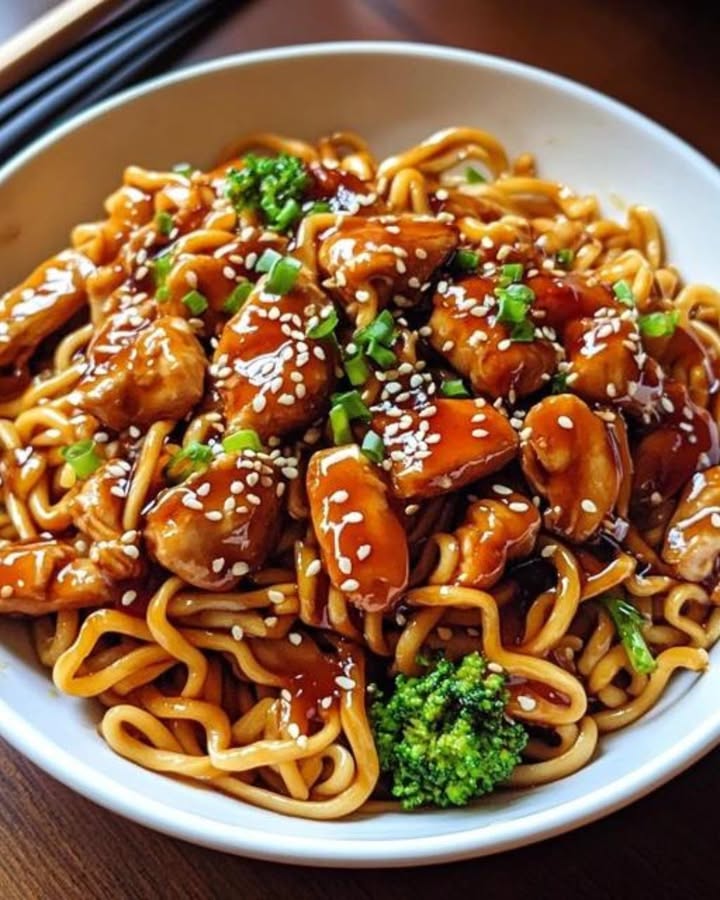
The Ultimate Weeknight Savior: My Family’s Chicken Teriyaki Noodles
Ever have one of those nights where everyone is starving, the clock is ticking, and you need a dinner hero? That was me last Tuesday. I stared into the fridge, saw some chicken thighs and veggies, and my mind went straight to my favorite comfort food hack: Teriyaki Chicken Noodles. In 30 minutes, my kitchen was filled with the most incredible sweet and savory aroma, and my family was gathered around the table, chopsticks at the ready. This isn’t just a recipe; it’s my secret weapon for happy, full bellies.
A Little Slice of Sweet & Savory History
The word “teriyaki” comes from Japan, combining “teri” (shine) and “yaki” (grilling or broiling). Traditionally, it’s a glaze for fish or meat. My version is what I lovingly call “weeknight fusion.” It takes that iconic glossy, sticky-sweet sauce and tosses it with hearty udon noodles and a rainbow of crisp veggies. It’s a modern, one-pan wonder that respects the soul of the original while making it totally doable for a busy home cook. It reminds me of the amazing noodle shops I used to visit, but now I get to create that magic in my own kitchen.
Why You’ll Fall Head Over Heels for This Teriyaki Noodle Bowl
Let me count the ways! First, the flavor is unreal—a perfect balance of salty, sweet, and umami that coats every single noodle. Second, it’s crazy adaptable. Don’t have broccoli? Use snap peas! Prefer chicken breast? Go for it! Finally, it’s a complete meal in one pan (okay, maybe two if you’re boiling noodles). You get your protein, your carbs, and your veggies all mingling together in saucy, delicious harmony. It’s a certified crowd-pleaser.
When to Whip Up Your Teriyaki Noodles
This dish is your versatile best friend. It’s perfect for a speedy Tuesday dinner when you’re running on empty. It’s also fantastic for casual weekend lunches or meal prep—the leftovers taste amazing! I’ve even doubled the recipe for a last-minute potluck, and let’s just say the bowl came home scraped clean. It works for pretty much any occasion that calls for something satisfying and delicious.
Gathering Your Noodle Bowl Ingredients
Here’s what you’ll need to create this masterpiece. I promise, most of it is probably already in your pantry!
- For the Chicken & Stir-fry: 1 lb boneless, skinless chicken thighs, 1 tbsp vegetable oil, 1 sliced onion, 2 julienned carrots, 2 cups broccoli florets, 1 cup sliced cabbage, 3 cloves minced garlic, 1 tbsp grated fresh ginger, 2 sliced green onions, sesame seeds for garnish.
- For the Noodles: 12 oz fresh or frozen udon noodles.
- For the Homemade Teriyaki Sauce: 1/2 cup soy sauce, 1/4 cup water, 2 tbsp mirin, 1/4 cup brown sugar, 1 tbsp honey, 2 cloves minced garlic, 1 tsp grated ginger, 1 tbsp cornstarch + 2 tbsp cold water (slurry).
No-Stress Ingredient Swaps
Don’t let a missing ingredient stop you! Cooking is all about creativity.
- Protein: Swap chicken for thinly sliced beef, shrimp, or firm tofu cubes.
- Noodles: Udon is my favorite for chewiness, but rice noodles, soba, or even whole-wheat spaghetti work great.
- Veggies: Bell peppers, snap peas, baby corn, or mushrooms are all fantastic additions or substitutions.
- Mirin: If you don’t have this sweet rice wine, use a little extra honey or brown sugar mixed with a splash of rice vinegar.
Crafting Your Perfect Chicken Teriyaki Noodles
Get ready for some simple, sizzling fun! Let’s break it down step-by-step.
Step 1: Whisk Up That Glossy Sauce
All the magic starts right here. Grab a small saucepan and whisk together the soy sauce, water, mirin, brown sugar, honey, garlic, and ginger. Bring it to a gentle simmer over medium heat. This lets the sugar dissolve and the flavors get friendly. Give your cornstarch slurry a quick re-stir (it settles fast!) and slowly drizzle it into the simmering sauce. Watch in amazement as it transforms from a thin liquid to a gorgeous, glossy glaze in just 2-3 minutes. Take it off the heat and set it aside. Pro tip: Taste your sauce! Want it sweeter? Add a pinch more sugar. More savory? A dash of soy sauce. Make it yours.
Step 2: Marinate the Chicken (The Flavor Secret!)
While your sauce cools slightly, pat your chicken thighs dry and cut them into bite-sized pieces. Season them with a little salt and pepper. Now, here’s my secret for super flavorful chicken: take about 1/4 cup of your freshly made teriyaki sauce and toss it with the chicken. Let it sit for at least 15 minutes. If you have time, 30 minutes to an hour in the fridge is even better. This little bath ensures every piece is packed with flavor from the inside out.
Step 3: Sear the Chicken to Golden Perfection
Heat the oil in a large wok or skillet over medium-high heat until it shimmers. Add the marinated chicken in a single layer (you might need to do this in batches to avoid steaming). Listen to that satisfying sizzle! Let it cook undisturbed for a couple of minutes to get a beautiful brown sear, then stir-fry until it’s cooked through and no longer pink inside, about 5 minutes total. Transfer the gorgeous, browned chicken to a clean plate. It will finish its journey back in the pan soon!
Step 4: Stir-Fry Your Veggie Rainbow
In that same pan (all those tasty brown bits are flavor gold!), add the onion and carrots. Stir-fry for 2-3 minutes until they start to soften. Now add the broccoli and cabbage. The colors are so vibrant! Another minute later, add the minced garlic and grated ginger. The aroma that hits you is incredible—fresh, sharp, and utterly mouthwatering. Cook just until the veggies are crisp-tender, about 2-3 minutes more. You want that crunch!
Step 5: Cook and Cool Your Noodles
While the veggies cook, cook your udon noodles according to the package directions. Once they’re done, drain them in a colander and give them a quick rinse with cold water. This stops the cooking process and washes away excess starch, which keeps them from sticking together in a big, gummy clump later. Chef’s tip: A tiny splash of oil tossed with the rinsed noodles can also help prevent sticking.
Step 6: The Grand Finale: Bring It All Together!
This is the best part. Add the cooked chicken, cooled noodles, and all of your remaining teriyaki sauce back into the pan with the veggies. Using a pair of tongs or two spoons, gently toss and stir-fry everything for 1-2 minutes. You’ll see the sauce cling to every noodle and piece of chicken, warming everything through. The whole mixture becomes one glorious, unified dish.
Timing Your Teriyaki Triumph
A little planning makes this a breeze. The sauce takes about 5 minutes. Marinating the chicken for 15 minutes adds a huge flavor boost (do this while you chop veggies!). The active cooking time—chicken, veggies, combining—is about 15 minutes. From start to finish, you’re looking at roughly 30-40 minutes for a restaurant-quality meal at home. Not bad at all!
My #1 Chef’s Secret for Amazing Teriyaki
Don’t skip the slurry! The cornstarch mixed with cold water is what gives the sauce its signature restaurant-style glossy, clingy texture. If you just add cornstarch straight to the hot sauce, you’ll get lumps. The cold slurry mixes in smoothly for a perfectly silky finish every single time.
A Noodle Note: The Story of Udon
I love using udon noodles for their thick, wonderfully chewy texture. They’re like the friendly, hearty cousin in the noodle world. They originated in Japan and are traditionally made from wheat flour. Their thickness makes them perfect for holding onto rich sauces like our teriyaki. If you’re new to them, you’re in for a delightful, satisfying treat!
Your Kitchen Toolbox
You don’t need fancy gear! A large wok or deep skillet is ideal for stir-frying. A good chef’s knife for chopping, a grater for the ginger, a small saucepan for the sauce, and a set of tongs for tossing everything together are all you require. Simple tools for a spectacular result.
Storing Your Delicious Leftovers
Let the noodles cool completely before storing. Pop them in an airtight container in the refrigerator. They’ll stay delicious for up to 3-4 days.
To reheat, I prefer the stove. Add a splash of water or chicken broth to a skillet over medium heat, add the noodles, and cover for a few minutes, tossing occasionally. This helps re-steam them and loosen the sauce without drying them out.
You can freeze this dish, but be aware that the texture of the noodles and veggies may soften a bit upon thawing. Store in a freezer-safe container for up to 2 months. Thaw overnight in the fridge before reheating.
Common Mistakes to Avoid
Mistake 1: Overcrowding the Pan
It’s tempting to dump all the chicken in at once, but a crowded pan steams the food instead of searing it. You end up with pale, boiled-tasting chicken instead of flavorful, caramelized bits. To avoid this, cook your chicken in two batches if your pan isn’t very large. Give each piece some personal space to brown properly. A good sear equals big flavor.
Mistake 2: Overcooking the Vegetables
Mushy, sad veggies are a dinner downer. Vegetables like broccoli and cabbage should be crisp-tender, with a bright color and a little bite. They continue to cook a bit from residual heat even after you turn off the stove. The key is to stir-fry them quickly over high heat and take them out just before you think they’re done. Remember, you’ll be tossing them back in the pan with the hot sauce at the end, which gives them another minute of cooking.
Mistake 3: Using the Sauce Straight from the Bowl for the Marinade
If you marinate raw chicken in the entire batch of sauce, you can’t use that same sauce later for tossing—it’s a food safety no-no due to raw chicken juices. Always separate your sauce! I take out a small bowl (about 1/4 cup) for the marinade before I even touch the chicken. The rest stays clean and safe for finishing the dish. It’s a simple step that keeps your meal delicious and safe.
Mistake 4: Skipping the Noodle Rinse
It might seem like an extra step, but rinsing your cooked udon noodles with cold water is a game-changer for texture. It washes away the sticky surface starch. If you skip this, the noodles can clump together in a gummy mass when you try to mix them with the sauce and other ingredients. A quick, cool rinse ensures every noodle stays separate, chewy, and ready to soak up that teriyaki goodness.
Tips for Noodle Bowl Success
- Prep First: Chop all your veggies and make your sauce before you turn on the heat. Stir-frying happens fast!
- Control the Salt: Use low-sodium soy sauce if you’re watching salt intake, as the sauce reduces and concentrates.
- Fresh is Best: Fresh garlic and ginger make a huge difference in flavor compared to dried powders for this sauce.
- If you’re in the mood for other saucy dinners, you must try this rich Creamy Cajun Shrimp and Chicken Pasta or this indulgent Savory Steak and Fettuccine in Cheesy Garlic Butter Alfredo. They’re both family favorites on my site!
Make It Pretty: Presentation Ideas
- Serve in wide, shallow bowls to show off all the colorful ingredients.
- Garnish generously with sliced green onions and a sprinkle of white and black sesame seeds.
- Add a lime wedge on the side for a bright, fresh squeeze before eating.
- For a restaurant touch, use chopsticks laid neatly across the bowl.
Mix It Up! 6 Flavorful Variations
Love the base recipe? Here are some fun ways to change it up:
- Spicy Teriyaki Noodles: Add 1-2 teaspoons of sriracha or a diced fresh chili to the sauce while simmering.
- Pineapple Chicken Teriyaki: Stir in 1 cup of fresh pineapple chunks with the vegetables for a sweet, tropical twist.
- Teriyaki Noodle Salad: Let the cooked noodles, chicken, and veggies cool completely. Toss with the sauce and serve cold as a fantastic pasta salad.
- Beef & Broccoli Teriyaki Noodles: Swap the chicken for thinly sliced flank steak. Sear it quickly and set it aside, then proceed with the recipe.
- Vegetarian Teriyaki Noodles: Omit the chicken. Use extra-firm tofu (pressed and cubed) or a can of chickpeas for protein. Add more veggies like mushrooms and bell peppers.
- Zoodle Teriyaki Bowl: For a low-carb option, replace the udon noodles with spiralized zucchini or sweet potato noodles. Sauté them lightly at the very end.
Looking for more saucy inspiration? A simple Creamy Lemon Sauce is perfect over fish or veggies, and for a Tex-Mex twist, this Cheesy Beef Enchilada Tortellini is always a hit.
Frequently Asked Questions
Can I use chicken breasts instead of thighs?
Absolutely! Chicken breasts work just fine. The key is to not overcook them, as they can dry out faster than thighs. I recommend cutting them into uniform pieces and reducing the cooking time by a minute or so. Keep an eye on them and remove them from the pan as soon as they are no longer pink inside. Chicken thighs are more forgiving because of their higher fat content, but breasts are a great leaner option.
I don’t have mirin. What can I use instead?
No problem! Mirin adds sweetness and a subtle flavor. You can easily substitute it. Try using 2 tablespoons of dry sherry, sweet marsala wine, or even apple juice mixed with a tiny pinch of sugar. If you have none of those, simply increase the honey or brown sugar in the sauce by about 2 teaspoons and add a splash of rice vinegar or white vinegar (about 1/2 teaspoon) to mimic the mild acidity. The sauce will still be delicious.
How can I make this recipe gluten-free?
You can easily make gluten-free Teriyaki Chicken Noodles with two simple swaps. First, use certified gluten-free tamari instead of regular soy sauce. They taste almost identical. Second, make sure your noodles are gluten-free. Look for udon noodles made from rice or sweet potato starch, or use 100% buckwheat soba noodles (check the label, as some soba contains wheat). With those changes, you’re all set for a gluten-free meal.
Why did my sauce turn out too thick or too thin?
This usually comes down to the cornstarch slurry or simmering time. If it’s too thick, you might have added too much cornstarch or simmered it too long. Just whisk in a tablespoon of warm water at a time until it reaches your preferred consistency. If it’s too thin, your slurry might not have been mixed well, or it wasn’t simmered long enough to activate the starch. Make another small slurry (1/2 tsp cornstarch + 1 tbsp water) and whisk it into the simmering sauce until it thickens.
Can I make the sauce ahead of time?
Yes, and I do this often to save time! The teriyaki sauce can be made up to a week in advance. Simply let it cool, store it in an airtight container or jar in the refrigerator, and give it a good shake or stir before using. You can even make a double or triple batch to have on hand for quick meals. It’s a great way to ensure you always have a delicious homemade sauce ready to go, much better than store-bought.
What’s the best way to reheat leftovers without drying them out?
The microwave can really dry out noodles. My preferred method is on the stove. Add your leftovers to a skillet or saucepan with a tablespoon or two of water, broth, or even a splash of extra teriyaki sauce. Cover the pan and heat over medium-low heat, stirring occasionally, until everything is steaming hot. The added liquid creates steam that gently reheats the noodles and chicken without sucking out all the moisture. It works like a charm every time.
Are udon noodles the same as ramen noodles?
They are different, though both are popular in Asian cuisine. Udon noodles are thick, white, and chewy, made primarily from wheat flour, water, and salt. Ramen noodles are thinner, yellow, and have a springy, firm texture because they contain an alkaline ingredient called kansui. For this recipe, udon’s hearty chew is perfect for the thick sauce, but ramen can be a tasty substitute in a pinch—just cook them according to their package directions.
How can I add more protein to this dish?
Besides the chicken, there are easy ways to bump up the protein. You can stir in a handful of edamame (shelled soybeans) with the vegetables. Top each bowl with a soft-boiled or fried egg. You can also add cashews or peanuts when you toss everything together at the end for a nice crunch and protein boost. Another great tip from the world of baking and cooking science is that browning your chicken well (the Maillard reaction) doesn’t add protein, but it does create incredible depth of flavor that makes the whole dish more satisfying.
My family doesn’t like cabbage. What else can I use?
Cabbage is easily swapped out! Its job is to add a nice crunch and volume. Great alternatives include sliced bell peppers (any color), sugar snap peas, snow peas, or even green beans cut into bite-sized pieces. You could also use bok choy or baby spinach—just add the spinach at the very end and wilt it into the hot noodles. The goal is to get those veggies in, so use what your family loves.
Is this dish kid-friendly?
In my experience, yes! The sweet and savory sauce is usually a big hit. To make it even more appealing for little ones, you can chop the veggies smaller so they blend in. You can also set aside a portion of the sauce before adding any garlic or ginger if they prefer a simpler flavor. Let them build their own bowl with the components separated. I find that when kids help or have choices, they’re much more likely to dive in. For more fantastic family dinner ideas that are sure to please everyone, be sure to explore our full collection of easy dinner recipes.
Ready, Set, Stir-Fry!
There you have it—my ultimate guide to Chicken Teriyaki Noodles. It’s a recipe born from busy nights, hungry families, and a love for big, bold flavors that don’t take all day to make. I hope it becomes a trusty, go-to favorite in your home just like it is in mine. So grab your wok, put on some fun music, and get ready for a seriously delicious dinner. Don’t forget to snap a picture of your masterpiece before everyone digs in! Happy cooking!
Teriyaki Chicken Noodles
Ingredients
Equipment
Method
- Whisk together soy sauce, water, mirin, brown sugar, honey, garlic, and ginger in a small saucepan; simmer and add cornstarch slurry until thickened.
- Cut chicken thighs into bite-sized pieces, season with salt and pepper, and marinate in 1/4 cup of teriyaki sauce for at least 15 minutes.
- Heat oil in a large wok or skillet; sear marinated chicken until cooked through and browned, then remove it from the pan.
- In the same pan, stir-fry onion and carrots for 2-3 minutes, then add broccoli and cabbage, cooking until crisp-tender.
- Cook udon noodles according to package directions, drain, and rinse with cold water.
- Add chicken, noodles, and remaining teriyaki sauce to the pan with veggies and stir-fry for 1-2 minutes until everything is well mixed.