
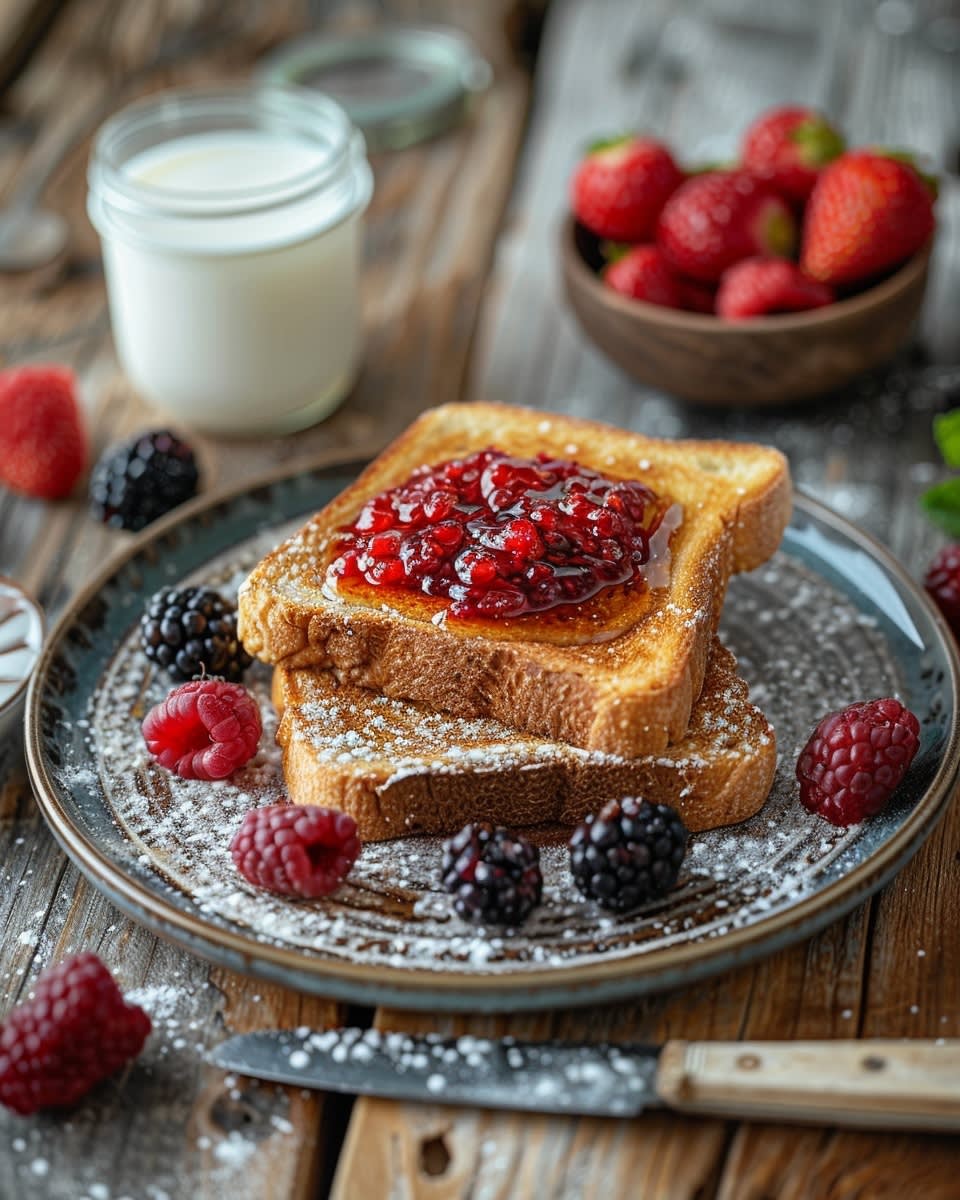
I’ll never forget the first time I made toast with butter and jam in my own kitchen. I was seven years old, standing on a stool to reach the toaster, and I felt like a professional chef. The smell of toasting bread filled the room, and when I spread that creamy butter and sweet strawberry jam on top, I thought I’d created something magical. Years later, I still get that same warm feeling every time I make this simple breakfast.
Here’s the thing about toast with butter and jam: it’s one of those recipes that seems too basic to mess up. But trust me, there’s an art to getting it just right. The bread matters. The butter temperature matters. Even the way you spread your jam can make a difference between a good breakfast and a great one.
In this guide, I’m going to walk you through everything you need to know about making the perfect toast with butter and jam. We’ll talk about choosing the right bread, picking quality ingredients, and mastering the technique that turns simple ingredients into something you’ll actually look forward to eating. Whether you’re making a quick weekday breakfast or a lazy Sunday brunch, this bread butter jam toast will hit the spot every single time.
I love this recipe because it reminds me that good food doesn’t have to be complicated. Sometimes the best meals are the ones that take five minutes and use ingredients you already have. Plus, you can customize it to match your mood. Feeling fancy? Try artisan sourdough with fig jam. Need something quick? White bread with your favorite grape jelly works perfectly. That’s the beauty of this butter and jam sandwich – it adapts to whatever you need.
Choosing the Right Bread for Your Toast with Butter and Jam
Let me tell you something I learned the hard way: not all bread is created equal when it comes to making toast. I once grabbed a cheap loaf from the discount bin, and it turned into cardboard the second it hit the toaster. The butter wouldn’t melt, the jam just sat there in a sad clump, and I ended up throwing the whole thing away. That’s when I realized that picking the right bread is the foundation of great toast.
The bread you choose affects everything. It changes how crispy your toast gets, how well it holds the butter, and whether the jam soaks in or slides off. Good bread makes your breakfast worth getting out of bed for. Bad bread makes you wish you’d just grabbed a granola bar instead.
So what type of bread is best for making toast with butter and jam? Here’s what I’ve discovered after years of testing different options in my own kitchen.
White Bread
Classic white bread is the comfort food champion. It toasts evenly, creates a soft interior with a crispy outside, and has a mild flavor that lets your butter and jam shine. I reach for white bread when I want something nostalgic and familiar. It reminds me of Saturday mornings at my grandma’s house.
The downside? It’s not the most nutritious option. White bread lacks the fiber and nutrients you’ll find in whole grain varieties. But for pure taste and texture, it’s hard to beat.
Whole Wheat Bread
Whole wheat gives you that nutty, hearty flavor and adds some nutritional value to your breakfast. It has more fiber than white bread, which means it keeps you full longer. This is my go-to choice on busy weekday mornings when I need energy that lasts until lunch.
Pick a whole wheat loaf that’s soft and fresh. Some whole wheat breads can be dense and dry, which doesn’t work well for toast. You want something with a bit of softness that will still crisp up nicely in the toaster.
Sourdough Bread
Sourdough is my personal favorite for this bread butter jam recipe. That tangy flavor pairs beautifully with sweet jam, creating a balance that makes your taste buds happy. The crust gets extra crispy while the inside stays chewy. It’s the kind of toast that makes you slow down and actually enjoy your breakfast instead of eating while running out the door.
Look for a sourdough with a good structure and visible air pockets. These little holes are perfect for catching melted butter. Just be aware that sourdough can be pricey compared to regular sandwich bread.
Multigrain Bread
Multigrain bread gives you the best of both worlds. You get interesting flavor from seeds and grains, plus extra nutrition. I like using multigrain when I’m making toast with jam and butter for guests because it looks more impressive than plain white bread.
The seeds add a nice crunch that complements the smooth butter and jam. Just make sure to check that the bread is fresh because multigrain can go stale faster than other types.
Tips for Picking Fresh and High-Quality Bread
Now that you know which types of bread work well, let me share my tricks for choosing a quality loaf at the store.
Check the date first. This seems obvious, but I’ve grabbed expired bread more times than I’d like to admit. Look for the freshest date possible. Bread tastes best within the first few days after baking.
Give it a gentle squeeze. Fresh bread should spring back when you press it lightly. If it feels hard or stays compressed, it’s already going stale. I always do the squeeze test through the bag before I buy.
Look at the ingredient list. Fewer ingredients usually means better bread. You should see flour, water, yeast, and salt as the main components. If there’s a long list of preservatives and chemicals, the bread probably won’t taste as good.
Buy from a bakery when possible. I know it’s more expensive, but bakery bread makes a huge difference in your bread butter jam toast. The texture is better, the flavor is richer, and it doesn’t have all those additives. I treat myself to bakery bread on weekends.
Consider slicing thickness. Medium-thick slices work best for toast with butter and jam. Too thin and they get too crispy or even burn. Too thick and the outside toasts before the inside warms up. Most store-bought bread comes pre-sliced at the right thickness, but if you’re buying from a bakery, ask for medium slices.
Store it properly. Even the best bread goes bad if you don’t store it right. I keep mine in a bread box on the counter for up to three days. After that, I move it to the freezer. Frozen bread toasts perfectly straight from the freezer, and this trick has saved me from wasting so many loaves.
The type of bread you choose really does change your entire butter on toast experience. I’ve made this recipe with every bread imaginable, and the difference between okay bread and great bread is night and day. Take an extra minute at the store to pick quality bread. Your breakfast will thank you for it.


Spreading the Butter and Jam
Once you’ve got your perfect bread selected and toasted, the real magic happens in how you spread your toppings. I learned this lesson during a disastrous breakfast attempt where I threw cold butter straight from the fridge onto hot toast. It tore holes in the bread and left me with uneven chunks that never melted properly. Not exactly the dreamy breakfast I was going for.
The technique you use to spread butter and jam might seem like such a small detail, but it genuinely transforms your toast from acceptable to absolutely delicious. I’ve been making this simple recipe for decades now, and I promise these little tricks make all the difference.
Start with room temperature butter whenever possible. This is my number one rule. When butter sits at room temperature for about 15 to 20 minutes before you use it, it spreads like an actual dream. It glides across your toast without ripping or leaving those annoying hard chunks. I usually take my butter out of the fridge when I start making my morning coffee, and by the time my toast pops up, it’s ready to go.
If you forget to take the butter out ahead of time (which happens to me constantly), here’s my backup trick: cut a thin pat of butter and place it on the toast immediately after it comes out of the toaster. The heat from the bread will soften the butter enough to spread it more easily. You’ll need to work quickly though. Wait too long and the toast cools down, and you’re back to the tearing problem.
When spreading butter on your jam toast recipe, use gentle pressure with your knife. Start from the center and work your way outward in smooth strokes. Don’t scrub back and forth aggressively like you’re trying to erase a mistake. That’s what creates those sad holes in your toast. Think of it more like painting than scrubbing.
Here’s something I discovered by accident: warm your knife under hot water for a few seconds, then dry it off before spreading cold butter. The warm knife helps the butter spread more smoothly even when it’s straight from the fridge. This trick has saved my breakfast on rushed mornings more times than I can count.
Now let’s talk about the jam layer. This is where people often go wrong with their butter and jam sandwich. They either use way too much jam that makes everything sticky and overwhelming, or too little where you barely taste it at all.
I aim for about one tablespoon of jam per slice of toast. That gives you good flavor coverage without making your toast soggy or turning into a sugar bomb. Spread the jam in an even layer over the butter, reaching close to the edges but not quite over them. I like leaving a little border of just butter around the perimeter. It looks nice and gives you different flavor experiences as you eat.
The order matters too. Always spread butter first, then jam on top. The butter creates a protective barrier that keeps the jam from soaking into the bread and making it mushy. Plus, when you bite into toast with butter underneath and jam on top, you get better flavor distribution in your mouth. Trust me on this one.
One question I get asked constantly: should I use salted or unsalted butter on my toast? After making this bread butter jam recipe about a thousand times, I’ve developed a strong opinion on this.
I prefer salted butter for toast with butter and jam, and here’s why. The salt brings out the sweetness of the jam in a way that unsalted butter just doesn’t. It creates this beautiful sweet-and-salty contrast that makes each bite more interesting. When I use unsalted butter, the whole thing tastes kind of flat and one-dimensional.
That said, if you’re using a very sweet jam like grape jelly or honey, unsalted butter can help balance things out. And if you’re watching your sodium intake, unsalted is obviously the better choice. But for most situations, I reach for salted butter every single time.
The butter quality matters just as much as whether it’s salted. I buy European-style butter when I can afford it because it has a higher fat content and richer flavor. Regular butter works fine too, but treating yourself to good butter occasionally really does elevate your butter on toast experience. It’s worth it for special weekend breakfasts, especially if you’re pairing your toast with scrambled eggs in 5 minutes for a complete meal.
Here’s another tip for getting the perfect balance of flavors: consider the sweetness level of your jam when deciding how much butter to use. Tart jams like raspberry or blackberry can handle a thicker layer of butter because the butter’s richness balances the tartness. Sweeter jams like strawberry or apricot work better with a thinner butter layer so they don’t become too heavy.
I also adjust my ratios based on the bread I’m using. Dense breads like sourdough can handle more butter and jam without getting soggy. Lighter breads like white sandwich bread need a gentler hand. Pay attention to how your specific combination works and adjust accordingly.
The Healthier Option: Jam or Butter?
Okay, let’s address the elephant in the kitchen. Whenever I post about this recipe online, someone inevitably asks whether jam or butter is healthier. And honestly, the answer isn’t as straightforward as you might think.
Butter gets a bad reputation because it contains saturated fat and cholesterol. A tablespoon of butter has about 102 calories and 12 grams of fat. That sounds scary until you remember that fat isn’t actually the enemy we once thought it was. Our bodies need healthy fats for brain function, hormone production, and absorbing certain vitamins. Butter also contains vitamins A, D, E, and K.
Jam, on the other hand, is basically concentrated fruit and sugar. A tablespoon of jam typically has around 50 calories and about 13 grams of sugar. It doesn’t have fat, but that sugar content adds up quickly if you’re generous with your spreading. Most commercial jams are pretty far removed from actual fruit by the time they hit your toast.
So which is healthier? Honestly, they’re both fine in moderation, and you don’t need to choose between them. The real question is about portion control and overall diet balance.
If you’re curious about the total damage, toast with jam and butter calories typically range from 200 to 300 calories per slice, depending on your bread choice and how heavy-handed you are with the toppings. Using just jam brings toast with jam calories down to about 150 to 200 calories. That’s a modest difference, but it might matter if you’re tracking your intake carefully.
When I’m trying to eat healthier, I make a few simple swaps that reduce the calorie and sugar content without sacrificing too much flavor. I use a thin scrape of butter instead of a thick layer. I pick jams with no added sugar or use fresh fruit instead of jam altogether. Mashed berries on toast give you that fruity sweetness with way less sugar than traditional jam.
Another trick is choosing whole grain bread, which adds fiber that helps you feel full longer. This might sound random, but I often pair my toast with simple overnight oats or a quick yogurt and fruit bowl to add protein and make the meal more balanced nutritionally.
You can also try using jam on one slice and butter on another, then eating them as open-faced toasts instead of a sandwich. This cuts your topping amounts in half automatically. Or consider banana peanut butter toast as an alternative that gives you protein along with your carbs.
Here’s my honest take after years of making this bread butter jam toast: neither jam nor butter is particularly healthy or unhealthy on its own. What matters is the context of your whole diet. If you’re eating vegetables, lean protein, and whole grains throughout the day, having toast with both butter and jam for breakfast isn’t going to derail your health. But if you’re eating three slices loaded with butter and jam every morning, then yeah, you might want to scale back.
I eat this breakfast two or three times a week, and I use both butter and jam because life’s too short to eat food that doesn’t make me happy. I just pay attention to my portions and balance it with nutrient-dense foods the rest of the day. That approach works way better for me than stressing about whether jam or butter is technically healthier.


Easy and Delicious Recipes for Toast with Butter and Jam
After all this talk about choosing bread and spreading techniques, let’s get to the fun part: actually making some incredible toast. I’m going to share my favorite ways to make this classic breakfast, along with some creative variations that have become regular staples in my kitchen. Some of these ideas came from happy accidents, others from late-night snack experiments that turned out way better than expected.
The Classic Toast with Butter and Jam Recipe
Let me walk you through my go-to method for making the absolute perfect toast with butter and jam. This is the version I make probably three times a week, and it never gets old.
Ingredients:
- 2 slices of your chosen bread (I’m using sourdough today)
- 2 tablespoons salted butter, room temperature
- 2 tablespoons jam of your choice (strawberry is my current obsession)
Step-by-step instructions:
Step 1: Take your butter out of the fridge and let it sit on the counter while you prep everything else. This is crucial for that smooth, easy spread we talked about earlier.
Step 2: Set your toaster to medium-high heat. Every toaster is different, so you might need to experiment. Mine sits at setting 4 out of 6. You want golden brown with slight crispiness, not burnt edges.
Step 3: Drop your bread slices into the toaster and press down. While they’re toasting, get your butter knife ready and open your jam jar. I also like to warm my plate slightly under hot water, then dry it. This keeps the toast warmer longer.
Step 4: When the toast pops up, immediately transfer it to your plate. The countdown starts now because you want to spread the butter while the toast is still hot enough to melt it slightly.
Step 5: Take about half a tablespoon of butter and spread it gently across the entire surface of one slice. Use those smooth, outward strokes from the center. You should see the butter melting slightly into the warm bread, creating little glossy patches. That’s what you’re looking for.
Step 6: Now comes the jam layer. Scoop about half a tablespoon onto the buttered toast and spread it evenly. I like to leave just a tiny border of butter showing around the edges because it looks prettier and gives you that first bite of pure butter flavor.
Step 7: Repeat with your second slice. Some people do one with butter and one with jam separately, but I prefer having both on each slice. That’s just personal preference though.
Step 8: Eat immediately while it’s warm. Seriously, don’t wait. Hot toast with slightly melted butter is the whole point of this bread butter jam recipe. Cold toast is a completely different experience and honestly not nearly as good.
This basic method gives you consistent, delicious results every single time. But here’s where it gets really interesting.
Creative Variations That’ll Change Your Breakfast Game
Once you’ve mastered the classic version, these variations will keep your mornings exciting. I rotate through these depending on my mood, what’s in season, or what I happen to have in my pantry.
The Fancy Fig and Ricotta Toast
This one makes me feel like I’m eating at a expensive brunch spot instead of my own kitchen. Spread a thick layer of ricotta cheese on your toast first, then add fig jam on top. The creamy ricotta balances the intense sweetness of fig jam perfectly. I discovered this combination by accident when I ran out of butter one morning and grabbed ricotta instead. Best mistake ever.
Cinnamon Sugar Butter Toast with Berry Jam
Mix a teaspoon of cinnamon and a teaspoon of sugar into your room temperature butter before spreading. Then top with your favorite berry jam. The cinnamon adds warmth that makes this taste like a breakfast pastry. My kids request this version every weekend. It’s become our Saturday morning tradition.
Nutty Banana Butter Toast
Spread your butter as usual, then add thin banana slices before putting the jam on top. The banana adds natural sweetness and a soft texture that contrasts nicely with the crispy toast. I use raspberry jam for this version because the tartness cuts through the banana sweetness. Add a sprinkle of chopped walnuts if you’re feeling extra.
Savory-Sweet Cheese and Jam
This might sound weird, but trust me on this one. Butter your toast, add a thin slice of sharp cheddar cheese, then top with apricot or peach jam. The combination of salty cheese and sweet jam is mind-blowing. I learned this from my friend who grew up in France where they serve cheese with jam all the time. It’s particularly good on whole wheat or multigrain bread.
Honey Butter with Citrus Marmalade
Mix equal parts butter and honey together until smooth, then spread on your toast. Top with orange marmalade. The double hit of sweetness with that citrus tang creates something special. This is my go-to when I’m feeling under the weather because it feels comforting and nourishing at the same time.
Almond Butter Base with Cherry Jam
Instead of regular butter, spread almond butter on your toast first, then add cherry jam. This gives you more protein and makes the breakfast more filling. The almond and cherry flavors remind me of those fancy European cookies. Plus, if you’re looking for ways to incorporate more whole grain foods into your diet, using whole wheat toast with this combination adds extra nutrition.
Coconut Butter with Tropical Jam
Coconut butter spread thin on toast with mango or pineapple jam transports you straight to a beach vacation. I make this version during dreary winter mornings when I need something to brighten my mood. The tropical flavors genuinely help, even if it’s snowing outside.
Making It a Complete Meal
Sometimes toast by itself isn’t quite enough to keep me going until lunch. Here are some quick additions that turn your toast with butter and jam into a more balanced breakfast.
I often serve my toast alongside a simple fruit salad with whatever’s in season. The fresh fruit adds vitamins and fiber without weighing you down. In summer, I do strawberries and blueberries. In fall, apple slices with a squeeze of lemon. It takes maybe two minutes to throw together.
A glass of milk or a protein smoothie on the side makes the meal more filling. The protein helps stabilize your blood sugar so you don’t crash an hour later. I learned this the hard way after too many mornings where I ate just toast and then felt starving by 10 AM.
Another option is pairing your toast with a hard-boiled egg or two. I prep a batch of hard-boiled eggs at the beginning of the week and keep them in the fridge. Then I can just grab one or two to eat alongside my toast. The combination of carbs from the toast and protein from the egg keeps my energy steady.
Greek yogurt on the side adds protein and probiotics. Sometimes I mix a little jam into plain Greek yogurt to tie the flavors together. It feels like a more complete breakfast experience this way.
Making Multiple Servings
Here’s something I figured out when I started making breakfast for my whole family instead of just myself: you can actually make several pieces of toast at once without them getting cold. Use your oven instead of a toaster.
Preheat your oven to 375°F and arrange as many bread slices as you need on a baking sheet. Toast them for about 8-10 minutes, flipping halfway through. They’ll all be done at the same time, and they stay warm longer than toaster toast. This trick changed my life on busy school mornings.
You can even prep a butter and jam sandwich assembly line. Set out all your toast on a large cutting board, butter them all at once, then add jam to each piece. It sounds excessive, but when you’re feeding four people who all want breakfast at the exact same time, this system is a lifesaver.
Storage and Make-Ahead Tips
Okay, so toast is obviously best fresh. You can’t really make it ahead and expect it to taste the same. But you can prep some elements to make your mornings easier.
I portion out butter into tablespoon-sized pats and keep them in a small container on the counter. Room temperature butter ready to go means one less step in the morning. Just make sure you use it within a few days and keep it covered so it doesn’t pick up weird flavors from your kitchen.
Making your own jam in larger batches and storing it in the fridge means you always have quality jam on hand. Homemade jam tastes better than store-bought anyway. My mom taught me to make strawberry jam every June when berries are at their peak, and those jars last us most of the year.
If you’re really organized, you can pre-slice bread and freeze individual slices with parchment paper between them. Pull out however many slices you need and pop them straight into the toaster from frozen. They toast up perfectly and taste just as fresh as unfrozen bread.
Troubleshooting Common Problems
Even with a simple recipe like this, things can go wrong. Let me share solutions to the most common issues I’ve encountered or heard about from readers.
Problem: My butter tears holes in the toast.
Solution: Your butter is too cold, or you’re pressing too hard. Let the butter sit out longer, or use the warm knife trick I mentioned earlier. Also, lighten up on the pressure. You’re spreading, not sanding wood.
Problem: My jam makes the toast soggy.
Solution: You’re using too much jam, or your bread is too thin. Cut back to about half a tablespoon per slice, and make sure your butter layer is thick enough to act as a moisture barrier. Also, eat your toast right away instead of letting it sit.
Problem: My toast comes out unevenly toasted.
Solution: Your toaster probably has hot spots, or your bread slices are different thicknesses. Try rotating the bread halfway through toasting, or consider investing in a better toaster. A good toaster genuinely makes a difference.
Problem: The flavors seem boring.
Solution: You might need better quality ingredients. Upgrade your bread or try a more flavorful jam. Also, make sure you’re salting appropriately. A tiny pinch of flaky sea salt on top of your jam can completely transform the taste.
By the way, if you’re looking for more creative ways to start your day, I’ve found that rotating between different easy breakfast ideas keeps morning meals from feeling boring and repetitive.
The beauty of this bread butter jam toast recipe is that it’s endlessly adaptable. You can keep it simple when you’re rushed, or get creative when you have extra time. Either way, you’re starting your day with something warm, comforting, and genuinely delicious. That’s worth waking up for.
I hope these recipes and variations inspire you to experiment in your own kitchen. The best version of toast with butter and jam is the one that makes you happiest. Try different combinations, find what works for your taste buds, and don’t be afraid to break the rules a little. Some of my favorite versions came from throwing together whatever I had on hand and discovering something unexpectedly wonderful.
Final Thoughts
Making the perfect toast with butter and jam doesn’t require fancy equipment or complicated techniques. It just takes good ingredients, a little attention to detail, and the willingness to slow down for five minutes to enjoy something simple. In our rushed world, that small act of making breakfast with care can set the tone for your entire day.
Frequently Asked Questions
What type of bread is best for making toast with butter and jam?
The best bread depends on your personal preference, but sourdough is my top choice because the tangy flavor balances sweet jam beautifully. Whole wheat offers more nutrition and keeps you full longer, while classic white bread gives that nostalgic comfort food experience. Fresh bakery bread always tastes better than mass-produced loaves, regardless of the type. Look for bread with minimal preservatives and a soft, springy texture.
Should I use salted or unsalted butter on my toast?
I strongly prefer salted butter because the salt enhances the sweetness of jam and creates a more interesting flavor profile. Unsalted butter tastes flat by comparison unless you’re using extremely sweet jam that needs balancing. The salt content in salted butter is minimal enough that it won’t affect your health unless you’re on a strict low-sodium diet. European-style salted butter offers the richest flavor if you want to splurge. Ultimately, taste both versions and decide what makes your taste buds happier.
Is jam or butter healthier for my toast?
Neither is significantly healthier than the other when used in reasonable amounts. Butter contains fat and calories but also provides fat-soluble vitamins your body needs. Jam has less fat but more sugar, which can spike your blood sugar. The real answer is that both are fine as part of a balanced diet that includes vegetables, protein, and whole grains throughout the day. If you’re counting calories, using just one topping instead of both saves about 50-100 calories per slice.
Toast two slices of your favorite bread until golden brown, then spread one tablespoon of room temperature butter on each slice while still warm. Add one tablespoon of jam on top of the butter on each slice, spreading evenly but leaving a small border around the edges. You can eat them as two open-faced pieces or press them together to make a traditional sandwich. The sandwich version is less messy and travels better if you’re eating on the go. Just make sure to let the toast cool slightly before pressing together so the jam doesn’t squish out the sides.
How many calories are in toast with butter and jam?
A single slice of toast with butter and jam typically contains 200-300 calories depending on your bread choice and how much topping you use. White bread tends to be on the lower end while thick sourdough sits on the higher end. Using just jam without butter brings it down to about 150-200 calories per slice. If you’re tracking calories carefully, measure your butter and jam with measuring spoons instead of eyeballing it. The calories add up quickly when you’re generous with portions.
Can I make toast with butter and jam ahead of time?
Unfortunately, no. Toast is best eaten immediately after making it because it loses its crispiness as it sits. The butter soaks into the bread and the toast becomes soft and sometimes soggy, especially if you used a lot of jam. If you absolutely must prep ahead, you can toast the bread and keep it in a warm oven, then add toppings right before eating. Alternatively, pack the components separately and assemble when you’re ready to eat. Fresh toast takes less than five minutes to make, so it’s worth doing it fresh each time.
What’s the best jam flavor for toast?
Strawberry, raspberry, and apricot are classic choices that work beautifully with most breads and butter. I love strawberry for its familiar sweetness and raspberry for its slight tartness that balances rich butter. Fig jam feels fancy and pairs especially well with sourdough. Blackberry has a deep, complex flavor that makes breakfast feel special. Honestly, the best jam is whatever you enjoy most. Experiment with different flavors and local artisan jams to discover your personal favorite.
Why does my toast always burn or come out too light?
This usually happens because your toaster settings aren’t right for your specific bread type. Thicker, denser breads need higher settings and more time, while thin sandwich bread burns easily on high settings. Start on a medium setting and adjust up or down based on results. Also, make sure your toaster is clean because built-up crumbs at the bottom can cause uneven heating and smoking. Some toasters just have hot spots or wear out over time, so you might need to upgrade if adjusting settings doesn’t help.
Can I use margarine instead of butter?
You can, but the flavor won’t be nearly as good. Butter has a rich, creamy taste that margarine simply can’t match because margarine is made from vegetable oils rather than cream. Margarine also tends to have a slightly artificial flavor that conflicts with the pure taste of good jam and bread. If you’re avoiding dairy, I’d suggest trying coconut oil or almond butter instead of margarine. Both offer better flavor and more natural ingredients. Real butter is worth the extra cost in my opinion.
How do I store leftover jam and butter properly?
Store opened jam jars in the refrigerator and use within 3-4 weeks for best quality. Always use a clean spoon when scooping jam to prevent introducing bacteria. Butter can be stored at room temperature in a covered butter dish for up to a week if you use it quickly, or keep it refrigerated for longer storage. I keep a small amount at room temperature for daily use and the rest in the fridge. Homemade jam should always be refrigerated and used within two weeks unless you’ve properly canned it with a water bath method.
Ingredients
Equipment
Method
- Take your butter out of the fridge and let it sit on the counter while you prep everything else.
- Set your toaster to medium-high heat.
- Drop your bread slices into the toaster and press down.
- When the toast pops up, immediately transfer it to your plate.
- Take about half a tablespoon of butter and spread it gently across the entire surface of one slice.
- Scoop about half a tablespoon of jam onto the buttered toast and spread it evenly.
- Repeat with your second slice.
- Eat immediately while it's warm.