
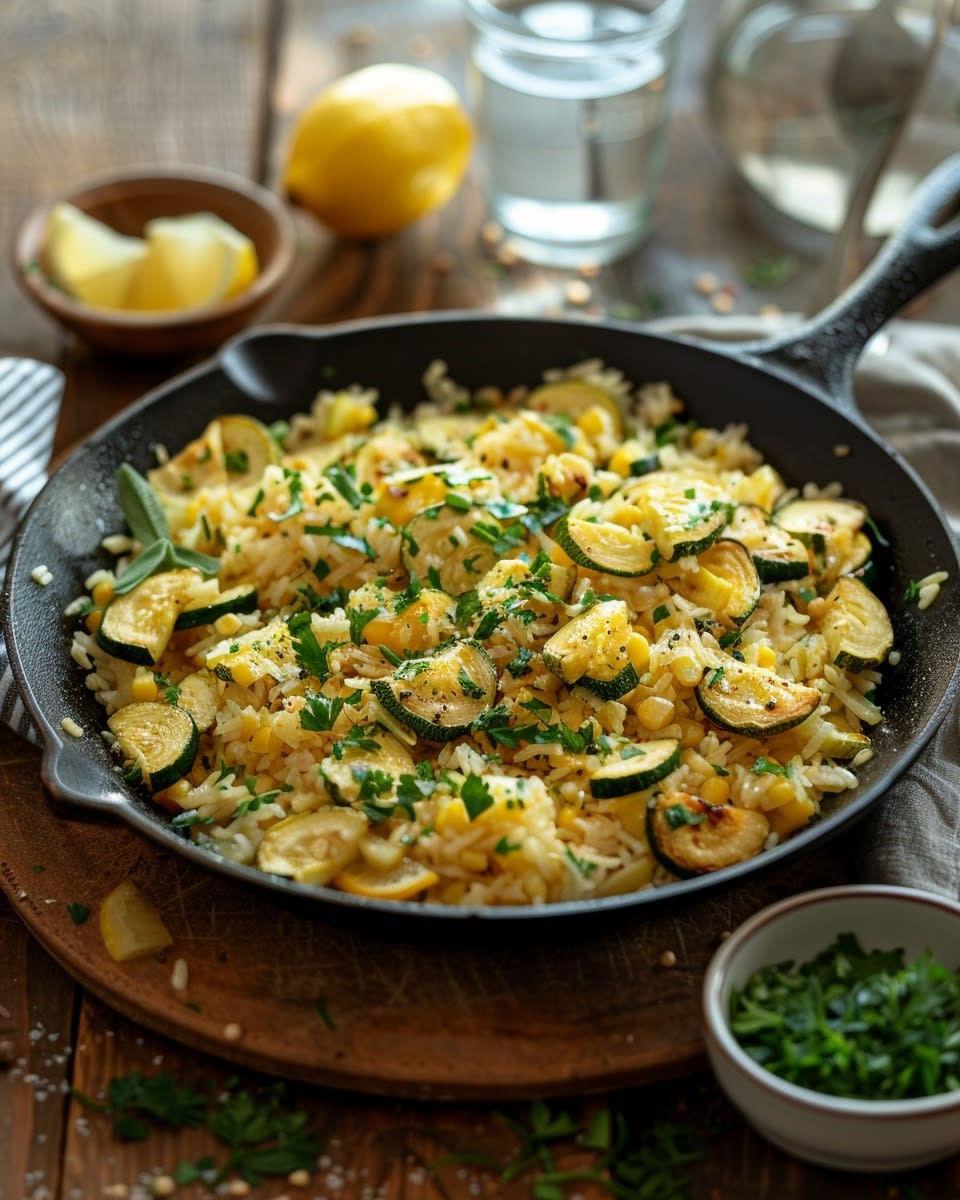
Introduction: My Go-To Zucchini and Rice Skillet
I still remember the first time I threw together this dish on a random Tuesday night. My fridge was packed with zucchini from my neighbor’s garden, and I needed dinner on the table in 30 minutes. I grabbed some rice, tossed in those fresh vegetables, and created what has become my family’s favorite weeknight meal. The best part? Everyone actually ate their vegetables without complaining.
This zucchini and rice skillet has saved me countless times when I’m too tired to think about meal planning. It’s one of those recipes that doesn’t require much brain power but still delivers on flavor and nutrition. You probably have most of the ingredients sitting in your kitchen right now.
The beauty of this dish lies in its simplicity. You need one pan, basic ingredients, and about 25 minutes from start to finish. There’s no complicated prep work or fancy cooking techniques. Just chop, sauté, and let everything come together while you help with homework or catch your breath from the day.
I love this recipe because it’s a lifesaver during summer when zucchini takes over gardens everywhere. You know that moment when your neighbor leaves a bag of zucchini on your doorstep and runs away? This skillet turns that vegetable surplus into something your family will actually request again. I’ve made it with small zucchini, baseball bat-sized ones, and everything in between.
Beyond just using up extra produce, this meal has become my answer to those nights when everyone is hungry and impatient. My kids don’t hover around the kitchen asking when dinner will be ready because they know it won’t take long. I can have this ready faster than ordering takeout and waiting for delivery.
The recipe is also incredibly forgiving. Forgot to buy an ingredient? Swap it out for something else. Only have brown rice instead of white? It works. Got bell peppers that need using? Throw them in. This flexibility makes it a true weeknight hero in my kitchen.
Why Zucchini and Rice Make a Perfect Pair
I never thought much about food pairings until I started cooking more at home. But zucchini and rice really do complement each other in ways that make sense both for your taste buds and your health.
Rice brings a neutral, comforting base to any dish. It’s the blank canvas that lets other ingredients shine. The soft, slightly chewy texture of cooked rice creates a satisfying foundation that fills you up without overwhelming your palate. It’s warm and familiar in a way that makes dinner feel like home cooking.
Zucchini adds a completely different element to the mix. It has a mild, slightly sweet flavor that isn’t aggressive or bitter. When you cook zucchini in a skillet, it releases moisture and softens while still keeping a bit of texture. That gentle sweetness balances the starchiness of rice perfectly.
The textural contrast between these two ingredients keeps every bite interesting. Rice offers that tender, grainy consistency we all know. Zucchini brings a softer but slightly firmer bite that adds variety to each forkful. You get multiple sensations in one dish without it feeling like a mash-up of random leftovers.
From a practical standpoint, zucchini soaks up flavors from whatever seasonings and aromatics you add to your skillet. Garlic, onions, herbs, or spices all get absorbed into those tender zucchini pieces. Rice does the same thing, creating a unified flavor profile throughout the entire dish.
Let me share why I think this combination works so well nutritionally. You’re getting the best of both worlds without overthinking your meal planning.
The Nutritional Benefits You’re Actually Getting
I’m not a nutritionist, but I do care about feeding my family foods that support their health. This zucchini and rice skillet delivers more nutrition than you might expect from such a simple dish.
Zucchini brings these benefits to your plate:
- High water content that keeps you hydrated
- Vitamin C for immune system support
- Vitamin A for healthy eyes and skin
- Potassium for heart health and blood pressure regulation
- Antioxidants that help protect your cells
- Very few calories, so you can eat a generous portion
- Dietary fiber that aids digestion
One medium zucchini contains only about 33 calories but gives you a good dose of nutrients. That’s a pretty impressive return on investment for something so mild and easy to cook.
Rice adds its own nutritional value:
- Complex carbohydrates for sustained energy
- B vitamins that support metabolism
- Minerals like manganese and selenium
- Fiber, especially if you use brown rice
- Protein in modest amounts
- Gluten-free option for those with sensitivities
Brown rice contains more fiber and nutrients than white rice because it keeps the bran layer. White rice cooks faster and has a softer texture that my kids prefer. I use both depending on what I have available and how much time I can spare.
When you combine zucchini and rice in one skillet, you create a balanced meal that covers multiple nutritional bases. You get carbs for energy, vegetables for vitamins and minerals, and fiber for digestive health. Add some protein like chicken, beans, or eggs, and you have a complete dinner.
I appreciate that this dish doesn’t feel like diet food but still supports healthy eating. My family enjoys it because it tastes good, not because I’m forcing vegetables on them. That’s the kind of win I’m always looking for at dinnertime.
The fiber from both ingredients helps everyone feel full and satisfied. Nobody is raiding the pantry an hour after dinner looking for snacks. That alone makes this recipe worth keeping in regular rotation.
This combination also provides steady energy without the blood sugar spike and crash you might get from a refined carb-heavy meal. The vegetables add bulk and nutrients that slow down digestion in a good way. Your body processes the meal more gradually, keeping energy levels stable through the evening.


Gathering What You Need for Your Zucchini Rice Skillet
Now that you know why this combination works so well, let’s talk about what actually goes into the pan.
I keep my ingredient list pretty straightforward because I want this meal to be something I can make without a special trip to three different stores. Most of these items are probably already in your kitchen, which is exactly how weeknight cooking should work.
Here’s what I typically use: Two medium zucchini (about three cups chopped), one and a half cups of cooked rice, one medium onion, three cloves of garlic, two tablespoons of olive oil, salt and pepper to taste, half a teaspoon of Italian seasoning, and a quarter cup of grated Parmesan cheese if I’m feeling fancy. Sometimes I add a squeeze of lemon juice at the end, but that’s totally optional.
The rice situation deserves its own conversation. I usually cook extra rice when I’m making it for another meal, then store the leftovers in the fridge specifically for recipes like this. Cold, day-old rice actually works better in a skillet because it’s drier and won’t turn mushy when you reheat it. If you don’t have leftover rice, you can absolutely cook some fresh, just let it cool down a bit before adding it to your skillet.
For the rice itself, I switch between white and brown depending on my mood and schedule. White rice gives you a softer, more delicate texture that absorbs flavors quickly. Brown rice brings a nuttier flavor and chewier bite that holds up well during cooking. My kids prefer white rice, but I sneak in brown rice when I’m feeling like we need extra fiber. They’ve stopped complaining about it, which I consider a major parenting victory.
Picking good zucchini makes a difference in how your skillet turns out. I look for zucchini that feel firm when I squeeze them gently. The skin should be smooth and glossy, not wrinkled or soft. Medium-sized zucchini, about six to eight inches long, have the best flavor and texture. Those giant ones that your neighbor is trying to pawn off might look impressive, but they tend to be watery and full of large seeds.
Here’s something I learned the hard way: really fresh zucchini has a slightly prickly stem end. If the stem looks dried out and brown, that zucchini has been sitting around too long. The color should be consistent too, whether you’re using dark green zucchini or the lighter green varieties. Avoid any with soft spots or bruises because those areas will turn to mush when you cook them.
I don’t peel my zucchini because the skin contains nutrients and adds color to the dish. Plus, who wants extra prep work? Just give them a good rinse under cold water and you’re ready to chop. If you happen to have yellow summer squash, it works exactly the same way and adds a pretty pop of color to your skillet.
The onion and garlic are non-negotiable for me. They create the flavor foundation that makes this simple dish actually taste like something worth eating. I dice my onion pretty small so it distributes evenly throughout the skillet. For garlic, I mince it fine because I want those little flavor bombs in every bite.
When it comes to oil, olive oil is my standard choice. It has a pleasant flavor that complements vegetables without overwhelming them. You could use butter for a richer taste, or any neutral cooking oil if that’s what you have on hand. I’ve even used coconut oil when that was all I had left, and honestly, nobody noticed the difference.
The Italian seasoning I mention is just my personal preference. It’s a blend of oregano, basil, thyme, and sometimes rosemary that works beautifully with zucchini. But you could easily use different herbs or spices based on what direction you want to take the dish. Cumin and paprika would give it a more southwestern vibe. Fresh herbs like basil or parsley are amazing if you have them growing on your windowsill.
Getting Everything Ready Before You Start Cooking
I used to just start cooking and prep as I went, but that always turned into a stressful scramble with something burning while I frantically chopped onions. These days, I spend five minutes getting everything ready before I turn on the stove, and dinner comes together so much smoother.
For the zucchini, I trim off both ends, then cut each one in half lengthwise. From there, I slice each half into quarter-inch half-moons. This size cooks evenly and quickly without turning into zucchini pudding. Some people like to cut zucchini into cubes, which also works fine. Just keep the pieces roughly the same size so everything cooks at the same rate.
If your zucchini is particularly large or seems extra watery, you can salt the cut pieces and let them sit in a colander for ten minutes. This draws out excess moisture. I rarely bother with this step unless I’m dealing with a massive overgrown zucchini that someone left on my porch anonymously.
The rice prep depends on your situation. Like I mentioned, leftover rice is ideal. If you’re cooking rice fresh, make it according to package directions but maybe use slightly less water than usual so it comes out on the firmer side. Spread it on a baking sheet to cool faster if you’re in a hurry. Rice that’s too hot and steamy will make your skillet soggy instead of getting those nice slightly crispy bits I love.
By the way, if you want to add protein to make this a complete one-pan meal, now’s the time to think about it. Cooked chicken works really well here. I often use leftover roasted chicken and veggies from another dinner. Chickpeas are another great option that adds both protein and a pleasant texture contrast. If you have some cooked beans from making veggie soup with beans earlier in the week, those would fit right in.
Making Your Zucchini and Rice Skillet Step by Step
Alright, let’s actually cook this thing. I’m writing this out in detail, but once you’ve made it a couple times, you won’t even need to look at a recipe.
First, heat your skillet over medium-high heat. I use a large skillet, about twelve inches across, because you need room for everything to cook properly without crowding. Add your two tablespoons of olive oil and let it heat up for about thirty seconds. You’ll know it’s ready when the oil looks shimmery and moves easily around the pan.
Toss in your diced onion and let it cook for about three to four minutes. You want the onion to soften and turn translucent around the edges. I stir it occasionally but not constantly. Let it sit on the heat long enough to develop some color and sweetness. If your onion starts to brown too quickly, turn the heat down a notch.
Once the onion looks good, add your minced garlic and stir it around for maybe thirty seconds. Garlic burns easily and turns bitter, so don’t walk away from the stove during this part. As soon as you can smell that amazing garlic aroma filling your kitchen, it’s time for the zucchini.
Add all your chopped zucchini to the skillet and spread it out into an even layer. Sprinkle with about half a teaspoon of salt and some black pepper. Now here’s where I practice patience, which doesn’t come naturally to me. Let the zucchini sit undisturbed for about three minutes so it can develop some golden color on one side. Then stir everything around and let it cook for another three to four minutes.
The zucchini should be tender but not falling apart. It’ll shrink down considerably as it releases water and cooks. If your skillet seems really watery at this point, turn up the heat slightly and let some of that liquid evaporate. You want a little moisture but not a pool of liquid that’ll make your rice soggy.
Funny enough, this is the moment when everyone in my house suddenly appears in the kitchen asking what smells so good. The combination of sautéed onions, garlic, and zucchini is apparently irresistible.
Now add your cooked rice to the skillet. Break up any clumps with your spoon and stir everything together so the rice gets mixed evenly with the vegetables. Sprinkle in your Italian seasoning or whatever herbs you’re using. This is also when I add any cooked protein if I’m including it.
Let everything cook together for about three to five minutes, stirring occasionally. The rice should heat through completely and start to pick up a little color on the bottom. Some people don’t care about this part, but I love when the rice gets slightly crispy in spots. It adds texture and a deeper flavor that makes the dish more interesting.
Taste your creation and add more salt and pepper if needed. Every time I make this, the seasoning needs are slightly different depending on what type of rice I used and how much moisture was in the zucchini. Trust your taste buds here.
If you’re using Parmesan cheese, stir it in right at the end so it melts into the rice and vegetables. That hit of salty, nutty cheese really elevates the whole dish. Sometimes I add a squeeze of fresh lemon juice too, which brightens everything up with a little acidity.
Ways to Change Up This Basic Recipe
The basic version I just described is delicious, but this recipe is incredibly flexible. I change it constantly based on what’s in my fridge or what my family is in the mood for.
For protein additions, diced cooked chicken is probably my most frequent choice. I cook chicken breasts or thighs earlier in the week and keep them in the fridge specifically for quick meals like this. Shrimp is another excellent option that cooks so fast you can add it raw right when you add the zucchini. Just make sure it’s fully pink and opaque before serving.
Ground turkey or beef works well if you cook it first, before you start the onions. Brown the meat, remove it from the pan, then proceed with the recipe as written and stir the meat back in with the rice. White beans or chickpeas make this vegetarian while adding protein and fiber. A spinach chickpea bowl uses similar flavors if you want to explore that combination more.
Vegetable variations are endless. Bell peppers add sweetness and crunch, especially red or yellow ones. Corn kernels bring pops of sweetness that my kids love. Cherry tomatoes stirred in at the end provide bursts of acidity. Spinach or kale wilted into the finished dish adds more greens without much effort.
I’ve also made this with different types of rice. Jasmine rice has a subtle floral aroma that’s lovely with the vegetables. Basmati rice stays fluffy and separate, which some people prefer. Wild rice gives you a chewier texture and earthier flavor. Even cauliflower rice works if you’re cutting carbs, though you’ll want to adjust cooking times since it needs less time to heat through.
Seasoning variations let you take this in completely different directions. Soy sauce and ginger transform it into an Asian-inspired dish. Add cumin, chili powder, and lime for a Mexican-style skillet. Curry powder and coconut milk create an Indian-influenced version. The basic cooking method stays the same, you’re just changing the flavor profile.
Sometimes I top the finished skillet with things that add extra interest. Toasted pine nuts or slivered almonds provide crunch. Fresh herbs like basil, cilantro, or parsley add brightness. A fried egg on top turns this into a hearty breakfast-for-dinner situation that everyone loves. If you’re into healthy tuna salad for lunch, the same philosophy of simple, fresh ingredients applies here for dinner.
The whole process from starting to chop vegetables to having dinner on the table takes me about twenty-five to thirty minutes. That includes prep time, which isn’t bad for a homemade meal that actually tastes good and uses real ingredients. This is the kind of recipe that proves healthy weeknight cooking doesn’t have to be complicated or time-consuming.


How to Serve Your Zucchini and Rice Skillet
The skillet is done, your kitchen smells amazing, and now you’re wondering what else should go on the table. Honestly, this dish is hearty enough to stand alone, but I usually add a couple simple things that round out the meal.
A crisp green salad is my default side dish. I keep it really basic with mixed greens, cucumber slices, and a simple vinaigrette. The cool, crunchy salad contrasts nicely with the warm, savory skillet. Sometimes I just toss lettuce with olive oil, lemon juice, salt, and pepper. That’s it. When dinner is already handled, your salad doesn’t need to be complicated.
Crusty bread is another favorite at my table. I warm up some French bread or ciabatta in the oven while the skillet finishes cooking. Everyone uses the bread to soak up any flavorful bits left on their plates. Garlic bread would be delicious too, though that might be garlic overload if you’ve already used garlic in your skillet.
For toppings, I set out a few options and let everyone customize their own bowl. Grated Parmesan or crumbled feta cheese adds a salty, tangy element. Fresh herbs like chopped basil, cilantro, or parsley bring brightness and color. A drizzle of good quality olive oil or a dollop of Greek yogurt can add richness. Red pepper flakes are always on the table for anyone who wants heat.
Lemon wedges are a game-changer that I didn’t discover until recently. A squeeze of fresh lemon juice right before eating wakes up all the flavors. The acidity cuts through the richness and makes everything taste more vibrant. My husband thought I was being fancy the first time I put lemon wedges on the table, but now he asks for them every time we eat this dish.
If you want to make this feel more substantial, add a protein-rich side. Grilled chicken skewers, baked fish, or even some sausages would work well. I’ve served this alongside simple roasted chicken thighs seasoned with just salt, pepper, and paprika. The combination felt like a complete dinner without requiring me to make anything complicated.
Here’s something I do when I’m feeding a crowd: I serve the zucchini rice skillet in individual bowls and set up a little topping bar. People love customizing their food, and it makes a simple weeknight meal feel special. Plus, it accommodates different preferences without me having to make multiple versions of dinner.
Storing Your Leftovers the Right Way
Good news if you’re a meal prep person or just someone who enjoys leftovers: this zucchini and rice skillet stores beautifully. I actually think it tastes even better the next day after all the flavors have had time to meld together.
Let the skillet cool down to room temperature before you pack it away. I usually transfer leftovers into airtight containers within two hours of cooking. Glass containers with tight-fitting lids work best because they don’t absorb odors or stain like plastic sometimes does. I divide the leftovers into individual portions so I can grab exactly what I need without reheating more than necessary.
In the refrigerator, this will keep well for about four days. I’ve pushed it to five days when I cooked it on Monday and ate the last serving on Friday, but I wouldn’t go much longer than that. The zucchini releases more moisture as it sits, so the texture changes slightly over time. It’s still perfectly good to eat, just a bit softer than when freshly made.
For reheating, I prefer using a skillet on the stovetop over medium heat. Add a tiny splash of water or broth to help steam everything and prevent sticking. Stir occasionally until heated through, which takes about five minutes. This method keeps the rice from drying out and maintains better texture than the microwave.
That said, I absolutely use the microwave when I’m in a rush. Put your portion in a microwave-safe bowl, add a tablespoon of water, cover it loosely with a damp paper towel, and heat for about two minutes. Stir halfway through to ensure even heating. The rice might be slightly softer than the stovetop method, but it’s still tasty and ready in minutes.
If you want to freeze portions for later, this dish handles freezing reasonably well. I say “reasonably” because the zucchini texture changes when frozen and thawed. It becomes softer and releases more liquid. If you’re okay with that textural change, go ahead and freeze it in freezer-safe containers for up to three months. Thaw overnight in the refrigerator before reheating.
By the way, I learned this trick from my grandmother: press a piece of plastic wrap directly onto the surface of the food before sealing the container. This prevents air exposure and keeps everything fresher longer. It’s an old-school method that actually works.
Creative Ways to Transform Your Leftovers
Eating the same thing multiple days in a row can get boring, even when the original dish is delicious. I’ve discovered several ways to transform leftover zucchini rice skillet into something that feels completely different.
My favorite transformation is turning it into a frittata for breakfast or brunch. Beat about six eggs with a quarter cup of milk, salt, and pepper. Heat your leftover skillet mixture in an oven-safe pan, pour the egg mixture over it, sprinkle with cheese, and bake at 375 degrees for about twenty minutes until the eggs are set. You’ve just created a whole new meal that uses up leftovers without feeling like leftovers.
Stuffed peppers are another excellent option. Cut bell peppers in half lengthwise, remove the seeds, and fill them with your leftover mixture. Top with cheese and bake until the peppers are tender. This presentation makes the leftovers feel fancy enough to serve to guests.
I’ve also mixed leftovers into a quick soup. Add vegetable or chicken broth, maybe a can of diced tomatoes, and some additional vegetables if you have them. Simmer everything together for fifteen minutes and you have a completely different dish. A handful of spinach or kale stirred in at the end makes it even heartier.
Wraps and burritos work surprisingly well with this mixture. Warm a large tortilla, add your leftover skillet filling, top with cheese, salsa, and sour cream, then roll it up. My kids request this version specifically because they love anything they can eat with their hands.
Here’s a random idea that worked better than expected: I mixed leftovers with beaten eggs and formed them into patties, then pan-fried them until crispy on both sides. They’re kind of like vegetable and rice cakes that you can eat plain or put on a bun like a veggie burger. My daughter, who’s usually suspicious of my cooking experiments, actually asked me to make them again.
You could also transform it into a grain bowl by adding fresh components. Put the reheated skillet mixture in a bowl and top it with fresh greens, sliced avocado, cherry tomatoes, and a drizzle of tahini or your favorite dressing. The contrast between the warm rice mixture and cool, fresh toppings creates a satisfying meal. If you’re always looking for easy options, check out more healthy lunch ideas that follow this same philosophy of simple, nourishing food.
Making This Recipe Work for Different Diets
One reason I love this zucchini and rice skillet so much is how easily it adapts to various dietary needs. I’ve made versions for my vegetarian sister, my gluten-free friend, and my brother who’s always trying new eating plans.
The basic recipe as written is naturally vegetarian if you skip adding meat. To make it vegan, just leave out the Parmesan cheese or substitute nutritional yeast, which gives you that savory, almost cheesy flavor without dairy. I’ve done this several times and nobody at the table could tell the difference.
For a gluten-free version, you’re already there. Rice is naturally gluten-free, and the rest of the ingredients don’t contain gluten either. Just double-check your seasonings and any add-ins to make sure they’re certified gluten-free if you’re cooking for someone with celiac disease.
The dish fits nicely into a Mediterranean diet, which emphasizes vegetables, whole grains, olive oil, and moderate amounts of protein. That eating pattern has been linked to numerous health benefits, and this skillet hits many of those key components without feeling like you’re following a restrictive diet plan.
If you’re watching carbs, swap regular rice for cauliflower rice. I know some people are skeptical about cauliflower rice, but it genuinely works in this application. The seasonings and vegetables provide so much flavor that the cauliflower doesn’t taste bland. You’ll cut the carb content significantly while keeping the satisfying, filling nature of the dish.
For paleo eaters, stick with cauliflower rice and skip the cheese. Add extra protein like chicken or shrimp to make sure the meal is substantial enough. I’ve made this version for my cousin who does paleo, and he was happy with how filling it was despite the dietary restrictions.
My friend who’s always counting macros for her fitness goals adds extra protein to boost the protein-to-carb ratio. She throws in grilled chicken, keeps the portion of rice smaller, and adds more zucchini to increase the volume without adding many calories. She meal preps this every Sunday and eats it for lunch throughout the week.
The flexibility of this recipe means almost anyone can enjoy it regardless of their dietary preferences or restrictions. That’s incredibly valuable when you’re cooking for a family with different needs or hosting friends with various eating styles.
Frequently Asked Questions About Zucchini and Rice Skillet
Can I use brown rice instead of white rice?
Absolutely, brown rice works perfectly in this recipe. The main difference is texture since brown rice has a chewier bite and nuttier flavor compared to white rice. It also contains more fiber and nutrients because it retains the bran layer. Just make sure your brown rice is fully cooked before adding it to the skillet. I find that day-old brown rice works even better than freshly cooked because it’s firmer and less likely to turn mushy when reheated.
How can I make this dish more filling?
The easiest way to make this more substantial is adding protein. Cooked chicken, shrimp, tofu, chickpeas, or white beans all work beautifully. You could also increase the rice portion or add more vegetables like bell peppers, mushrooms, or spinach. Another trick I use is topping each serving with a fried or poached egg, which adds protein and makes the meal feel more complete. Some people also add a side of bread or serve it alongside a hearty salad to create a more filling dinner.
Is this recipe suitable for vegetarians?
Yes, the basic version of this recipe is completely vegetarian. It contains only vegetables, rice, olive oil, and seasonings. If you add Parmesan cheese at the end, it’s still vegetarian but not vegan since it contains dairy. To make it vegan, simply skip the cheese or use a plant-based alternative. The dish is naturally satisfying without meat, though you can add plant-based proteins like beans, lentils, or tofu if you want extra protein.
What are some good protein options to add to the skillet?
I’ve tried many proteins in this skillet and most work wonderfully. Cooked chicken breast or thighs are my most frequent choice because they’re mild and absorb the seasonings well. Shrimp cooks quickly and adds a slightly sweet flavor that complements the zucchini. Ground turkey or beef brings heartiness if you brown it first before starting the vegetables. For vegetarian options, chickpeas, white beans, or black beans add protein and fiber without changing the overall character of the dish. Cubed tofu is another excellent choice that soaks up all the garlic and herb flavors.
How do I prevent the rice from becoming mushy?
The key to avoiding mushy rice is using rice that’s already been cooked and cooled, preferably day-old rice from the refrigerator. Cold rice has dried out slightly and the starches have firmed up, so it holds its shape better during reheating. If you’re using freshly cooked rice, spread it on a baking sheet to cool completely before adding it to the skillet. Also, don’t over-stir once you add the rice to the pan. Let it sit and develop a slight crust on the bottom, stirring only occasionally to prevent sticking.
Can I prepare this dish in advance?
You can definitely do some advance prep to make dinner come together faster. Chop your zucchini and onions ahead of time and store them in containers in the fridge. Cook your rice a day or two before and keep it refrigerated. You could even sauté the vegetables ahead of time, though I find the dish tastes best when the vegetables are freshly cooked. I don’t recommend assembling the entire dish in advance because the zucchini releases moisture as it sits, which can make the rice soggy.
What are some creative ways to use leftover zucchini and rice?
Leftovers from this skillet are incredibly versatile. My favorite transformation is making a frittata by mixing the leftovers with beaten eggs and baking until set. You can also stuff the mixture into bell peppers or tomatoes and bake them. It works great as a filling for wraps or burritos with some fresh toppings. I’ve mixed it into soup by adding broth and extra vegetables. Another option is forming the mixture into patties, pan-frying them until crispy, and serving them like veggie cakes. You could even mix it with fresh greens and dressing to create a grain bowl.
How can I make this dish spicier?
There are several ways to add heat to this zucchini and rice recipe. The simplest method is sprinkling red pepper flakes into the skillet when you add the zucchini. Fresh or pickled jalapeños add both heat and flavor if you dice them and cook them with the onions. A dash of cayenne pepper or hot paprika mixed into the seasonings distributes heat throughout the dish. Hot sauce drizzled on top at serving time lets everyone control their own spice level. I sometimes add a teaspoon of sriracha or sambal oelek to the skillet for an Asian-inspired kick that doesn’t overwhelm the other flavors.
Is this a good meal for meal prep?
Yes, this recipe is excellent for meal prep. It reheats well, stores safely in the refrigerator for four to five days, and holds up to being portioned into individual containers. I make a big batch on Sundays and divide it into five containers for weekday lunches. The flavors actually improve after sitting for a day, which is ideal for meal prep. Just be aware that the zucchini texture softens slightly over time as it releases moisture. If texture is really important to you, you might want to slightly undercook the zucchini initially so it doesn’t become too soft after reheating.
Can I make this recipe in a different type of pan?
While I prefer using a large skillet for this recipe, you can adapt it to other cookware. A wok works beautifully and is actually ideal for tossing everything together. A large sauté pan with high sides gives you more room if you’re making a bigger batch. You could even make this in a Dutch oven if that’s what you have available. Just avoid pans that are too small because crowding the vegetables prevents them from developing good color and can make them steam instead of sauté. Whatever pan you choose, make sure it’s at least ten to twelve inches in diameter to give everything enough space to cook properly.
This simple skillet has earned its place in my regular dinner rotation because it solves so many weeknight challenges at once. Give it a try this week when you need something quick, and I think you’ll understand why I keep coming back to it. The best recipes aren’t always the fanciest ones, they’re the ones you’ll actually make again and again.
Ingredients
Equipment
Method
- Heat a large skillet over medium-high heat and add olive oil.
- Sauté diced onion for 3-4 minutes until softened and translucent.
- Add minced garlic and cook for about 30 seconds until fragrant.
- Add chopped zucchini, salt, and pepper; cook undisturbed for 3 minutes.
- Stir zucchini and cook for another 3-4 minutes until tender.
- Add cooked rice, breaking up any clumps and mixing well.
- Stir in Italian seasoning and any cooked protein, if using.
- Cook everything together for 3-5 minutes, stirring occasionally to heat through.
- If using, stir in Parmesan cheese at the end until melted, then squeeze lemon juice over the top if desired.