
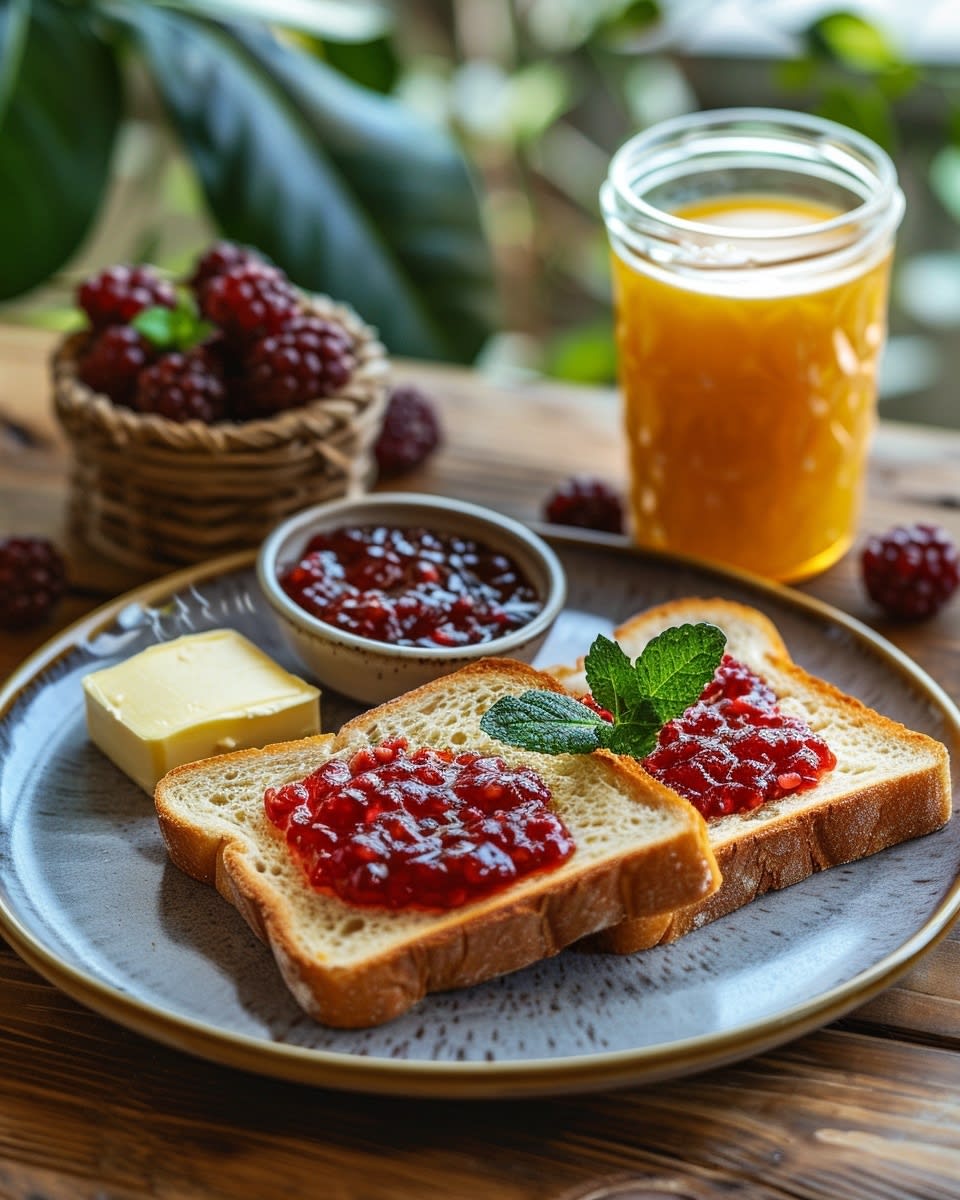
Easy Breakfast Toast with Jam: A Simple Morning Solution
I’ll never forget that chaotic Tuesday morning last month. My alarm didn’t go off, my kids were running late for school, and I had a work meeting in thirty minutes. Standing in my kitchen in a panic, I realized something important. The best breakfast isn’t always the fanciest one. Sometimes it’s the simplest option that saves the day.
That morning, I made toast with jam. It took me less than five minutes, filled our bellies, and got everyone out the door on time. This small win reminded me why Easy Breakfast Toast with Jam deserves more credit. It’s not just food. It’s a lifesaver.
Welcome to my kitchen! Today, I’m excited to share with you a simple and delicious breakfast idea that’s perfect for busy mornings. Let’s dive into making Easy Breakfast Toast with Jam. This recipe has become my go-to solution when life gets hectic, and I think it might become yours too.
I love this easy breakfast option because it fits perfectly into my real life. Not the Instagram-perfect life where I have time to make elaborate omelets and fresh-squeezed juice. I mean the actual life where I’m juggling work deadlines, school drop-offs, and trying to remember if I paid the electric bill. Quick breakfast toast meets me where I am, no judgment attached.
The beauty of this breakfast lies in its flexibility. You can make it in two minutes on a regular day or dress it up on a lazy weekend morning. It works whether you’re feeding just yourself or a family of five. Plus, kids can learn to make it themselves, which means a few precious extra minutes of sleep for you.
In this article, I’ll walk you through everything you need to know about making the perfect simple breakfast toast. We’ll cover the basic ingredients and equipment, explore different bread and jam combinations, and discuss some creative toppings that can transform your toast from basic to amazing. I’ll also share some time-saving tips I’ve learned after making this breakfast hundreds of times.
What You Need for Easy Breakfast Toast with Jam
Let’s start with the basics. One reason I adore this jam toast recipe is that you probably already have everything in your kitchen right now. No special trip to the grocery store required. No hunting down exotic ingredients you’ll only use once.
The star ingredients are beautifully simple. You need bread, jam, and butter. That’s it for the essential version. Of course, you can get creative with optional toppings like fresh fruits, nuts, honey, or even a sprinkle of cinnamon. But on those really rushed mornings, the three basics will do the job perfectly.
Here’s what goes into my quick toast breakfast:
- Bread: Any type works, from basic white bread to whole grain, sourdough, or multigrain
- Jam or jelly: Pick your favorite flavor or mix things up with different varieties
- Butter: Regular butter, salted or unsalted, works great
- Optional toppings: Fresh berries, sliced bananas, chopped nuts, nut butter, honey, or ricotta cheese
The equipment list is just as straightforward. You need a toaster or toaster oven, a butter knife, and a plate. I sometimes use a small spreading knife too because it makes getting jam out of the jar easier. That’s the complete list. No fancy gadgets, no expensive appliances.
If you don’t have a toaster, don’t worry. A regular oven set to broil works fine. You can even make toast with jam in a skillet on the stovetop. I’ve done this during power outages, and it actually adds a nice crispy texture.
Choosing the Right Bread for Your Toast
Bread selection makes a bigger difference than you might think. I learned this lesson after years of grabbing whatever was on sale. The right bread can turn an okay breakfast into something you actually look forward to eating.
For a classic breakfast toast recipe, I usually reach for thick-sliced whole wheat bread. It toasts beautifully, holds up well under butter and jam, and has enough substance to keep me full until lunch. My kids prefer white bread because it’s softer and sweeter. Both choices work perfectly fine.
Sourdough bread creates an amazing contrast with sweet jam. The tangy flavor cuts through the sweetness in a really pleasant way. I save this option for weekend mornings when I’m not rushing around. Taking those extra few seconds to appreciate the taste makes a difference.
Multigrain or seeded bread adds extra nutrition and texture. The seeds give you a nice crunch that pairs well with smooth jam. This option works great if you’re trying to add more fiber to your diet without thinking too hard about it.
One tip I swear by: avoid really thin sliced bread for this recipe. Thin slices get soggy too quickly when you add butter and jam. They also tend to tear when you’re spreading. Go for medium or thick slices whenever possible.
Here’s a quick comparison of bread types I use most often:
| Bread Type | Best For | Texture |
|---|---|---|
| Whole Wheat | Everyday breakfasts | Hearty and filling |
| White Bread | Kids and picky eaters | Soft and mild |
| Sourdough | Weekend treats | Chewy with crispy edges |
| Multigrain | Extra nutrition | Dense with added crunch |
Picking the Perfect Jam
Jam selection is where your personality shines through. I keep three different flavors in my fridge at all times because variety keeps this easy jam toast from getting boring. My rotation usually includes strawberry, raspberry, and apricot.
Strawberry jam is the classic choice for a reason. It’s sweet, familiar, and almost everyone likes it. This is my safe option when I’m making toast for guests or kids who might be picky.
Raspberry jam offers more tartness than strawberry. The seeds add texture too. I reach for this when I want something that feels a bit more grown-up and sophisticated.
Apricot jam is my secret weapon. The flavor is subtle and slightly floral. It pairs amazingly well with butter and creates a taste that reminds me of fancy hotel breakfasts.
Don’t limit yourself to traditional jams either. I’ve experimented with fig spread, blueberry preserves, and even orange marmalade. Each one changes the entire experience of your toast and jam breakfast.
When shopping for jam, read the label. Look for options with real fruit listed as the first ingredient. These taste better and spread more easily than versions loaded with corn syrup. I’m not opposed to sugar in jam, but I want to taste actual fruit, not just sweetness.
Homemade jam takes this breakfast to another level if you have access to it. My neighbor makes blackberry jam every summer and shares jars with me. Using that on my morning toast feels like a special treat. If you enjoy canning or know someone who does, homemade jam is worth seeking out.
Storage matters too. Keep your jam in the refrigerator after opening. Cold jam is harder to spread, so I often take mine out while I’m getting ready in the morning. By the time I’m ready to make toast, the jam has softened just enough to spread smoothly.


Step-by-Step Guide to Making Perfect Easy Breakfast Toast with Jam
Now that you’ve got your bread and jam sorted out, let’s talk about actually making this thing. I know it sounds almost too simple to need instructions, but trust me, these small details make the difference between mediocre toast and the kind that makes you pause mid-bite and think “wow, this is really good.”
The first step is getting your toast just right. I like mine medium-golden with a crispy exterior but still soft enough inside that it doesn’t shatter when I bite it. My husband prefers his darker, almost burnt around the edges. Figure out what works for you and stick with it.
Most toasters have settings from 1 to 5 or light to dark. I usually set mine to 3, which gives me that perfect middle ground. Thicker bread needs a higher setting or a second round in the toaster. I learned this the hard way after serving my kids bread that was warm but not actually toasted. They were not impressed.
Here’s the thing: different toasters run hotter or cooler than others. When I got a new toaster last year, I had to completely relearn my settings. What used to be perfect at level 3 was now burnt. Give yourself permission to experiment until you find the sweet spot with your specific appliance.
While your bread is toasting, get your butter and jam ready. I take my butter out of the fridge and slice off what I need so it can start softening. Cold butter tears bread apart, which is frustrating when you’re already running late. Room temperature butter spreads like a dream.
The moment your toast pops up is crucial for butter application. This is when I move fast. Hot toast melts butter beautifully, creating that gorgeous glossy layer that soaks slightly into the bread. Wait too long and your toast cools down, leaving you with chunks of unmeltable butter sitting on top.
I use about a tablespoon of butter per slice, but I’m generous with it. Some people prefer less. My mother-in-law barely uses any butter at all, which I think is a crime against breakfast toast with jam, but to each their own. The butter adds richness and helps the jam spread more smoothly, so don’t skip it entirely.
Spread your butter from the center outward, using gentle pressure. Cover the entire surface right to the edges. Those dry corners with no butter are sad and disappointing. Nobody wants sad toast corners.
Now comes the jam. I wait about 30 seconds after buttering before adding jam. This gives the butter time to melt into the bread but keeps the toast warm enough that the jam softens and spreads easily. Timing matters more than you’d think for something this simple.
For jam spreading, I use a clean knife, not the one I used for butter. This keeps my jam jar from getting contaminated with butter and crumbs. It’s a small thing, but it makes your jam last longer without getting funky. Use about two tablespoons of jam for a standard slice, more if you have a serious sweet tooth.
Start with a dollop in the center and spread outward in smooth strokes. Don’t scrub back and forth aggressively like you’re sanding wood. That tears the bread and makes a mess. Think of it more like painting. Smooth, even strokes create the best coverage.
One trick I discovered by accident: slightly warm jam spreads infinitely better than cold jam straight from the fridge. If I remember, I microwave my jam for about 5 seconds before spreading. It becomes silky and glides across the butter without any effort. Game changer.
The optional toppings are where this simple jam toast becomes something special. On regular weekday mornings, I usually skip extras. But on weekends or when I have an extra minute, adding toppings transforms this from basic breakfast to something that feels indulgent.
Sliced bananas are my most frequent addition. They add natural sweetness, creamy texture, and actual nutrition. I cut them about a quarter-inch thick and arrange them on top of the jam. The combination of strawberry jam and banana is absolutely delicious. My kids will actually eat fruit this way without complaining, which is a parenting win.
Fresh berries work beautifully too. Raspberries, blueberries, or sliced strawberries add pops of flavor and make your toast with jam look Instagram-worthy if you care about that sort of thing. I mostly care about taste, but it’s nice when breakfast looks pretty too.
A sprinkle of cinnamon adds warmth and depth without any extra calories. This works especially well with apple or apricot jam. Just a light dusting is enough. I keep a small shaker of cinnamon near my toaster for easy access.
Chopped nuts like almonds, walnuts, or pecans add crunch and healthy fats. They make this breakfast more filling and satisfying. I toast my nuts first in a dry pan for a few minutes because it intensifies their flavor. Worth the extra step when you have time.
A drizzle of honey over everything adds another layer of sweetness and gives the toast a gorgeous shine. This is my weekend luxury addition. Honey and jam together might sound like overkill, but it’s absolutely divine. If you need another quick breakfast option that’s equally simple, you might also enjoy a simple breakfast smoothie on mornings when you want something cold and refreshing.
Ricotta cheese spread on the toast before adding jam creates a creamy base that’s absolutely incredible. This makes your easy breakfast toast feel fancy enough for brunch guests. The mild cheese balances the sweetness of the jam perfectly.
Serving Suggestions and Variations
Let me share some combinations I’ve discovered over years of making this breakfast. Some are classics everyone knows. Others are creative twists that surprised me with how well they worked.
The peanut butter and jam combination is legendary for good reason. I spread peanut butter on one slice and jam on another, then press them together for a classic PB&J toast sandwich. It’s more substantial than regular jam toast and keeps me full much longer. My son requests this version at least three times a week.
Almond butter with raspberry jam is the grown-up sophisticated cousin of PB&J. The nuttiness of almond butter paired with tart raspberries creates a flavor combination that feels gourmet. I make this when I want my quick breakfast toast to feel special.
Cream cheese and jam is another classic pairing that deserves more attention. Spread a thick layer of cream cheese on your toast first, then add jam on top. The tangy cream cheese balances sweet jam beautifully. This works with literally any jam flavor, but I especially love it with strawberry or blueberry.
Here’s where things get interesting. I started experimenting with savory-sweet combinations last year and discovered some surprising winners. Adding a thin layer of mashed avocado under your jam sounds weird, I know. But the creamy richness of avocado with sweet jam is unexpectedly amazing. Try it with orange marmalade or fig jam.
A poached egg on jam toast creates this incredible sweet and savory balance. The runny yolk mixing with jam is absolutely delicious. I use less jam when adding an egg, maybe just a thin spread, because the egg adds so much richness on its own. This version turns toast with jam into a complete meal that satisfies completely.
Funny enough, adding a slice of sharp cheddar cheese under apricot or fig jam is one of my favorite discoveries. The saltiness of aged cheese against sweet jam is a classic flavor pairing that works brilliantly on toast. Sometimes I’ll make this alongside breakfast crackers with cheese when I’m hosting a casual brunch.
Seasonal variations keep this breakfast interesting all year long. In summer, I use strawberry, peach, or raspberry jam with fresh berries on top. The bright flavors match the warm weather perfectly. Sometimes I’ll pair this with boiled eggs with fruit for a balanced summer breakfast.
Fall calls for apple butter, pumpkin butter, or spiced pear jam. These deeper, warmer flavors feel right when the weather gets cooler. I add a sprinkle of cinnamon and maybe some chopped walnuts. This version pairs wonderfully with hot coffee or tea.
Winter is perfect for citrus marmalades and berry jams that remind you of summer. Orange marmalade on dark rye toast with a bit of cream cheese is my cold-weather comfort breakfast. The bright citrus flavor fights off the winter blues.
Spring brings me back to lighter fruit jams like apricot, cherry, or mixed berry. Fresh mint leaves torn over strawberry jam toast might sound strange, but it’s incredibly refreshing. The mint adds brightness that feels perfect for spring mornings.
By the way, you can absolutely make this jam toast recipe ahead if you’re meal prepping. Toast your bread, let it cool completely, then store it in an airtight container. Add butter and jam right before eating so it doesn’t get soggy. Not quite as perfect as fresh toast, but it works when you need grab-and-go options. For other make-ahead breakfast ideas, microwave oatmeal with banana is another quick option worth considering.
The versatility of this breakfast never stops amazing me. It works for any season, any mood, any time constraint. That’s the real beauty of easy breakfast toast with jam. It meets you wherever you are and adapts to whatever you need that morning.


Health Benefits and Nutritional Value
Let’s talk about what you’re actually putting into your body when you eat this breakfast. I’m not going to pretend that Easy Breakfast Toast with Jam is some kind of superfood miracle meal. But it’s not nutritional garbage either, despite what some diet culture voices might tell you.
The basic version with whole wheat bread, butter, and fruit jam gives you carbohydrates for energy, a small amount of protein and fiber from the bread, some fat from the butter, and natural sugars from the jam. A typical serving contains around 200-250 calories, depending on how generous you are with toppings.
Whole wheat bread brings more to the table nutritionally than white bread. You get B vitamins, iron, magnesium, and fiber that helps keep your digestive system happy. The fiber also slows down sugar absorption, which means you won’t crash an hour later like you might with a sugary pastry.
Butter gets a bad reputation sometimes, but it provides fat-soluble vitamins like A, E, and K. Your body needs fat to function properly. The key is moderation. A tablespoon of butter contains about 100 calories and 11 grams of fat, which isn’t excessive for a complete breakfast. If you’re curious about specific nutritional details, the USDA’s FoodData Central database offers detailed information about fat content and other nutrients in common breakfast ingredients.
Jam contributes quick energy from natural fruit sugars. Yes, most commercial jams also contain added sugar, which means you’re getting more sweetness than you would from plain fruit. A tablespoon of jam typically has around 50 calories and 13 grams of sugar. I’m not going to lie and say that’s nothing, but it’s also not the end of the world.
Here’s the thing about making this breakfast healthier. You don’t need to transform it into something unrecognizable. Small tweaks can boost nutrition without sacrificing taste.
Switching to whole grain or sprouted grain bread immediately increases fiber, protein, and micronutrients. Sprouted grain bread is especially nutritious because the sprouting process makes vitamins and minerals more available to your body. My kids don’t notice the difference in taste, which makes this swap easy.
Using nut butter instead of regular butter adds protein and healthy fats. Almond butter or cashew butter spread on toast before jam creates a more balanced meal that keeps you fuller longer. The protein helps stabilize blood sugar so you don’t get that mid-morning energy crash.
Choosing low-sugar or reduced-sugar jam cuts calories and sugar without completely eliminating the sweetness you want. I’ve tried several brands, and honestly, some taste just as good as regular jam. Others taste noticeably different, so you might need to experiment to find one you like.
Making your own jam lets you control exactly how much sugar goes in. I started making simple freezer jam last summer using fresh berries, a bit of honey, and chia seeds as a natural thickener. It takes maybe 20 minutes and tastes incredible. Way less sugar than store-bought versions, plus you get omega-3s from the chia seeds.
Adding fresh fruit on top boosts vitamins, antioxidants, and fiber. Berries are especially good because they’re lower in sugar than tropical fruits but packed with beneficial compounds. I add them almost every time I make toast with jam for myself.
A handful of nuts or seeds sprinkled on top adds protein, healthy fats, and satisfying crunch. Sliced almonds, chopped walnuts, pumpkin seeds, or sunflower seeds all work great. This simple addition makes your breakfast much more nutritionally complete.
Using less jam and more fresh fruit flips the sugar ratio in your favor. Instead of two tablespoons of jam, try one tablespoon of jam with half a cup of sliced strawberries. You get the jam flavor without quite as much added sugar.
For those dealing with dietary restrictions, this breakfast is surprisingly adaptable. I’ve made versions for friends with celiac disease, diabetes, and various food allergies. With a few modifications, almost anyone can enjoy breakfast toast with jam.
Gluten-free bread makes this accessible for people with celiac disease or gluten sensitivity. The texture of gluten-free bread has improved dramatically over the past few years. Some brands toast up almost as well as regular bread. Look for varieties with whole grains like brown rice or quinoa for better nutrition.
Sugar-free jam made with alternative sweeteners works for people managing diabetes or cutting sugar. These use stevia, erythritol, or monk fruit instead of sugar. The taste isn’t identical to regular jam, but it’s pretty close. My diabetic uncle uses sugar-free strawberry jam and says it satisfies his sweet tooth without spiking his blood sugar.
Dairy-free butter or coconut oil works perfectly for people avoiding dairy. I’ve used both, and honestly, coconut oil adds a subtle tropical flavor that’s really nice with certain jams. Vegan butter spreads just like regular butter and tastes very similar.
Nut-free options matter for people with allergies. Instead of nut butter, try sunflower seed butter or tahini. Both spread well and add protein without tree nuts or peanuts. Seed butter with raspberry jam is one combination I discovered by accident that turned out amazing.
Low-sodium bread helps if you’re watching salt intake. Many commercial breads contain more sodium than you’d expect. Reading labels matters, or consider making your own bread if you enjoy baking.
Funny enough, my most health-conscious friend makes what she calls “jam toast bowls” instead of regular toast. She cuts her whole grain bread into cubes, toasts them, then tosses them with a tiny bit of butter, fruit, nuts, and just a drizzle of jam. It’s basically deconstructed toast that you eat with a spoon. Sounds weird, but it actually helps with portion control because you can’t mindlessly eat as much.
Frequently Asked Questions
What are the best types of bread for toast?
The best bread depends on your preferences and nutritional goals. Whole wheat or whole grain bread offers the most fiber and nutrients, making it my top choice for everyday breakfasts. Sourdough adds tangy flavor and is easier to digest for some people because the fermentation process breaks down some of the gluten. Thick-sliced bread works better than thin because it doesn’t get soggy as quickly. For special occasions, I love artisan breads like ciabatta or rustic country loaves that have great texture and flavor. Avoid pre-sliced bread that’s too thin because it tears easily when you spread butter and jam.
How can I make my own jam at home?
Making homemade jam is easier than most people think. The simplest method is freezer jam, which doesn’t require canning equipment. Just combine fresh or frozen fruit with sugar or honey in a pot, mash it up, and simmer until it thickens. I add a tablespoon of chia seeds to help it gel naturally without pectin. Cook it for about 15-20 minutes until it reaches your desired consistency, then pour it into clean jars and refrigerate or freeze. Traditional canning jam requires sterilized jars and a water bath process, which preserves it for months at room temperature. Start with small batches until you find the sweetness level and fruit combinations you like best.
Is this breakfast suitable for kids?
Absolutely, and it’s actually one of the best breakfasts for kids in my opinion. Children as young as five or six can learn to make easy breakfast toast with jam themselves with supervision, which builds independence and confidence. The familiar flavors appeal to even picky eaters, and you can sneak in nutrition by using whole grain bread and adding fresh fruit. My kids have been making their own jam toast for years, and it’s one less thing I have to do on busy mornings. Just be careful with young children around hot toasters and teach them proper knife safety when spreading. This breakfast provides quick energy for active kids without being overly processed or full of artificial ingredients.
Can I prepare this toast ahead of time?
You can prep components ahead, but fully assembled toast doesn’t hold well. I toast bread the night before, let it cool completely, and store it in an airtight container so it stays relatively crisp. Then in the morning, I just add butter and jam, which takes maybe 30 seconds. Pre-toasted bread is definitely less ideal than fresh, but it works when you’re truly desperate for time. Never spread butter and jam ahead because the bread gets soggy and unpleasant within an hour or two. If you’re packing this for lunch boxes, keep the toast and jam separate and have kids assemble it right before eating. Some people freeze buttered toast, but I’ve tried this and found the texture after thawing pretty disappointing.
Are there any low-calorie jam options?
Yes, several options exist for people watching calories. Sugar-free jams use alternative sweeteners and typically contain about half the calories of regular jam, around 10-25 calories per tablespoon instead of 50. Reduced-sugar jams fall somewhere in the middle, usually around 25-35 calories per tablespoon. I’ve also discovered that fruit spreads made primarily from fruit puree with minimal added sugar taste great and have fewer calories. Another option is making your own jam with less sweetener or using mashed fresh berries as a spread, which eliminates processed sugar entirely. Read labels carefully because “no sugar added” doesn’t always mean low calorie if the jam contains other caloric sweeteners like fruit juice concentrate.
What are some creative ways to serve toast with jam?
Beyond the basic spread-and-eat method, you can get really creative with presentation and combinations. Cut toast into strips or triangles for kids, which makes it more fun and easier to dip into yogurt. Make toast stacks by alternating layers of toast, cream cheese, and jam for an impressive brunch dish. Create a toast board with multiple bread types, several jam flavors, and various toppings so everyone can customize their own. I sometimes make toast points by cutting toasted bread into small triangles and serving them alongside a jam and cheese plate. French toast made with jam-stuffed bread takes this breakfast to decadent levels. Roll-ups made with flattened bread, jam, and cream cheese create portable breakfast treats that kids love.
How do I store leftover toast and jam?
Store bread in a cool, dry place in its original bag or a bread box, which keeps it fresh for about a week. I freeze extra bread if I won’t use it within a few days because frozen bread toasts perfectly fine straight from the freezer. Jam belongs in the refrigerator after opening and typically lasts several months when stored properly. Always use a clean spoon or knife when scooping jam to prevent contamination that can cause mold. Never refrigerate leftover buttered and jammed toast because it gets soggy and sad. If you somehow have leftover prepared toast, eat it within an hour or toss it because the quality deteriorates quickly. Homemade jam without commercial preservatives should be used within a few weeks and definitely kept refrigerated.
Can I use this recipe for other meals?
Definitely, jam toast isn’t just for breakfast. I eat it as an afternoon snack when I need quick energy without feeling too full. It makes a simple dessert that satisfies sweet cravings without being as heavy as cake or cookies. My kids request jam toast as an after-school snack at least three times a week. It works as a light dinner option when you’re not very hungry or feeling under the weather. I’ve served fancy versions with artisan bread and gourmet jam as an appetizer at casual dinner parties. Late-night jam toast hits different when you’re up studying or working, providing comfort and fuel without disrupting sleep. The versatility means you can enjoy this simple pleasure basically whenever the mood strikes.
What’s the best way to spread jam without tearing the bread?
The secret is warming both your jam and your toast properly. Let jam sit at room temperature for a few minutes or microwave it for just 5 seconds to soften it, which makes spreading dramatically easier. Apply butter while the toast is still hot so it melts into the bread, creating a smooth base layer that protects against tearing. Use a gentle spreading motion from the center outward rather than aggressive back-and-forth scrubbing. A flexible spreader or offset spatula works better than a stiff knife because it conforms to the bread’s surface. Don’t overload your knife with too much jam at once; use several smaller dollops instead. Slightly stale bread is actually easier to spread on than super fresh bread, which tends to compress and tear under pressure.
Does the order of butter and jam matter?
Yes, it actually makes a noticeable difference in both taste and texture. Butter should always go on first while the toast is hot because it melts into the bread, creating richness throughout rather than just sitting on the surface. This butter layer also creates a barrier that prevents jam from soaking in too quickly and making the toast soggy. Jam on top means you taste its sweetness immediately when you bite, which is the flavor progression most people prefer. I’ve tried jam first and butter second, and it just doesn’t work as well because cold jam prevents butter from melting properly. The traditional butter-then-jam order exists for good reasons, and I haven’t found a compelling argument for switching it up.
By the way, if you’re looking for more inspiration beyond jam toast, you’ll find plenty of other easy breakfast ideas that fit into busy morning routines without sacrificing taste or nutrition.
Here’s what I want you to remember. Making Easy Breakfast Toast with Jam isn’t about perfection or following rigid rules. It’s about creating a moment of simple pleasure in your morning, even when everything else feels chaotic. Start with whatever bread and jam you have right now, toast it how you like it, and enjoy the fact that breakfast doesn’t have to be complicated to be satisfying.
Ingredients
Equipment
Method
- Toast the bread to your desired level of doneness.
- While the toast is toasting, take out the butter to soften.
- Once the toast is ready, spread about a tablespoon of softened butter over the hot toast.
- Wait about 30 seconds for the butter to melt before spreading the jam.
- Use a clean knife to spread about two tablespoons of jam over the buttered toast.
- Add optional toppings if desired.
- Serve immediately.