
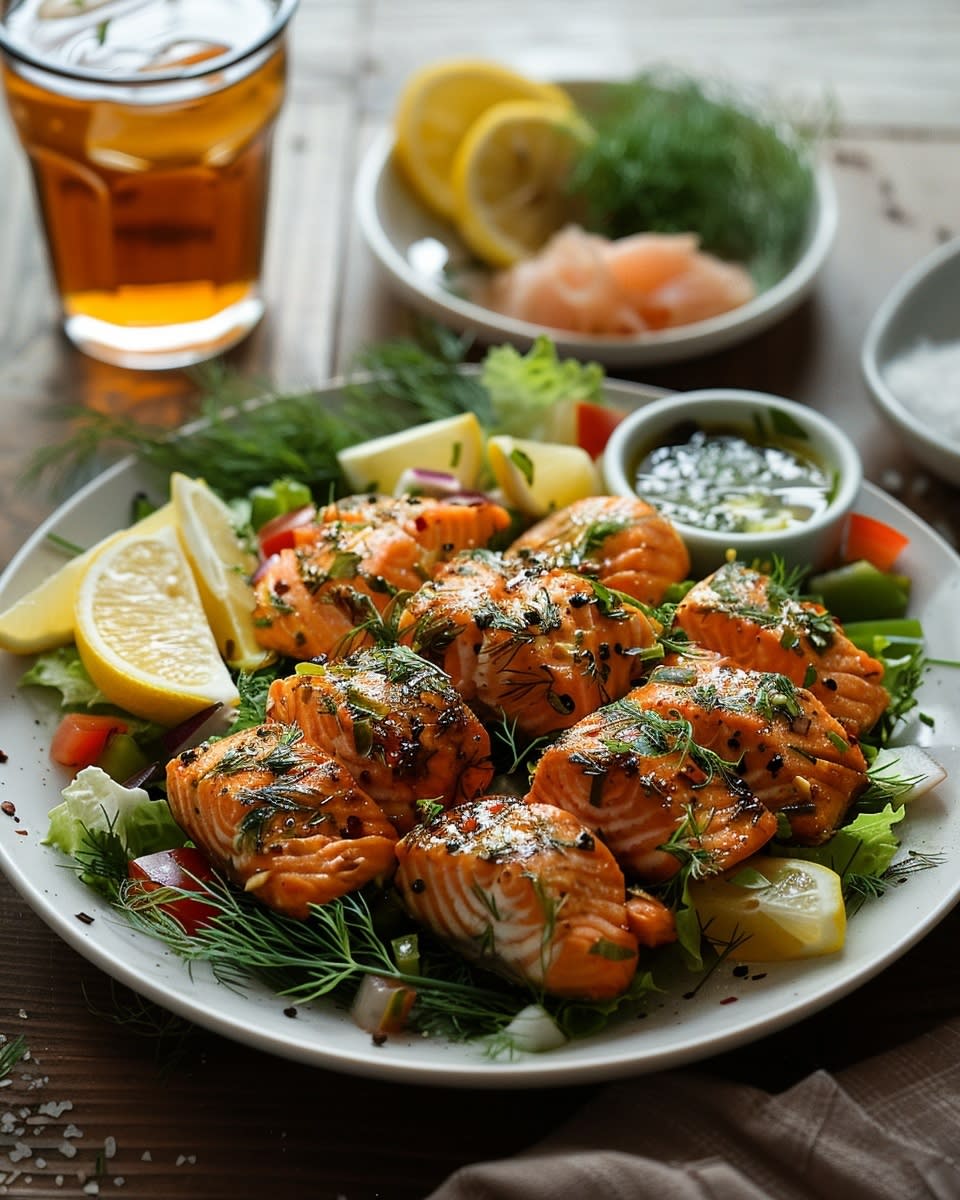
Welcome to My Favorite Baked Salmon Salad Recipe
Last Tuesday, I opened my fridge and stared at a beautiful salmon fillet I’d bought on sale. I wanted something light, fresh, and filling. That’s when it hit me – why not make my go-to baked salmon salad? Within thirty minutes, I was enjoying one of the most satisfying meals I’d had all week.
Here’s the thing about salmon salad that most people don’t realize. It’s one of those rare dishes that works for literally any occasion. Need a quick lunch? Done. Want to impress guests at dinner? Easy. Looking for meal prep options? Perfect. I’ve made this recipe dozens of times, and it never gets old.
Today, I’m walking you through everything you need to know about making an amazing baked salmon salad. We’ll cover the basics, explore different variations like a salmon salad bowl or even a salmon salad sandwich recipe, and I’ll share some tricks I’ve learned along the way.
Why Baked Salmon Salad Is a Game Winner
Baked salmon brings something special to the table. The fish stays moist and flaky when you bake it right. It doesn’t have that heavy, greasy feeling you sometimes get from fried protein. Plus, baking is hands-off. You season the salmon, pop it in the oven, and get on with prepping your other ingredients.
The health benefits are hard to ignore too. Salmon packs omega-3 fatty acids, which are great for your heart and brain. When paired with fresh greens and vegetables, you’re looking at a nutrient-dense meal that actually tastes incredible. If you’re wondering about grilled salmon salad recipes easy options, the same principles apply – just swap the oven for the grill.
I love how versatile this dish is. Some days I keep it simple with basic greens and lemon. Other times I go all out with a jewish baked salmon salad recipe style, adding capers, red onion, and everything bagel seasoning. You can make it into a salmon salad bagel for breakfast or pack it as a cold salmon salad recipe for work lunches.
Basic Ingredients for Your Baked Salmon Salad
Let me break down what you need for a classic version. Don’t worry – this isn’t complicated. Most of these items are probably sitting in your kitchen right now.
The foundation starts with your salmon and greens. From there, you can add whatever sounds good to you. I’ve kept this list simple because I want you to feel confident making this dish your own.
Core ingredients include:
- Fresh or frozen salmon fillets (about 6 ounces per person)
- Mixed salad greens (4-5 cups per serving)
- Cherry tomatoes
- Cucumber
- Red onion
- Olive oil
- Lemon juice
- Salt and pepper
That’s really it for the basics. Everything else is extra. You can add avocado, hard-boiled eggs, olives, feta cheese, or whatever vegetables you enjoy. The beauty of a fresh salmon salad is that it adapts to what you have on hand.
Choosing the Right Salmon
Walking up to the fish counter can feel overwhelming. There are so many options. Should you get Atlantic or Pacific? Wild-caught or farm-raised? Skin-on or skinless?
Here’s what I look for when buying salmon. The flesh should be firm and bounce back when you press it gently. It should smell like the ocean – fresh and clean, never fishy or sour. The color should be vibrant, whether it’s pink or deep orange-red.
I typically buy skin-on fillets because the skin helps hold everything together during baking. You can easily remove it after cooking if you don’t want to eat it. For a simple baked salmon salad, a standard fillet works great. You don’t need fancy cuts.
Frozen salmon is completely fine. I use it all the time when fresh isn’t available or when I find a good deal. Just thaw it properly – overnight in the fridge, never on the counter. Pat it dry with paper towels before seasoning. Excess moisture prevents that nice exterior texture we want.
One question I get often relates to how to cook salmon for a diabetic. Baked salmon is actually perfect because you control exactly what goes on it. Skip sugary glazes and stick with herbs, lemon, and a little olive oil. The natural fats in salmon are beneficial, and the protein helps stabilize blood sugar.
Preparing the Greens
The greens make or break your salad. Wilted, sad lettuce ruins even the best salmon. I learned this the hard way after making a beautiful dinner that fell flat because I used week-old greens.
My go-to mix includes butter lettuce, baby spinach, and a handful of arugula. The butter lettuce gives you that soft, mild base. Spinach adds nutrients and a slightly earthy taste. Arugula brings a peppery kick that pairs wonderfully with salmon’s richness.
Wash your greens thoroughly, even if the package says “pre-washed.” I use a salad spinner to get them completely dry. Wet greens dilute your dressing and make everything soggy. This step takes two extra minutes but makes a huge difference.
For a salmon salad bowl setup, I sometimes use heartier greens like kale or romaine. These hold up better if you’re making the salad ahead. Massage kale with a tiny bit of olive oil and salt to soften it. This trick transforms tough kale into something tender and delicious.
When thinking about what salad to serve with baked salmon, consider the other components of your meal. If the salmon is heavily seasoned, keep the greens simple. If you’re going minimal on the fish, jazz up the salad with interesting vegetables and a bold dressing.
Room temperature greens taste better than ice-cold ones straight from the fridge. Take them out about ten minutes before assembling your salad. This small detail lets the flavors shine through more clearly.
One common mistake I see relates to what are some common mistakes when making salmon salad. People often overdress the greens or add the dressing too early. Both lead to a mushy, unappetizing result. Dress right before serving, and use less than you think you need. You can always add more.
Another tip for salmon salad ideas – think about texture contrast. Crispy greens, flaky salmon, crunchy vegetables, and maybe some toasted nuts or seeds. Each bite should offer something different. This keeps the salad interesting from the first forkful to the last.


Variations and Creative Ideas
Once you’ve nailed down the basic technique for a perfect baked salmon salad, the real fun begins – experimenting with different versions that keep your taste buds guessing.
I’ll be honest, I got bored making the same salad week after week. Don’t get me wrong, the classic version is fantastic, but we all need variety. That’s when I started playing around with different formats and flavor combinations. Some experiments flopped hard (let’s never speak of my salmon-and-pickle attempt again), but others became weekly staples.
The best part about these variations is that they use the same foundation we just talked about. You’re not learning an entirely new recipe – you’re just rearranging the pieces in exciting ways.
Baked Salmon Salad Bagel
This might sound unconventional, but trust me on this one. A baked salmon salad bagel changed my entire breakfast routine last spring.
Here’s what happened. I had leftover baked salmon from dinner sitting in the fridge. The next morning, I was starving and didn’t feel like cooking eggs. I grabbed an everything bagel, toasted it until it was golden and crispy, and started layering.
First, I spread a thick layer of cream cheese – the full-fat kind because we’re not playing around here. Then I flaked some cold salmon on top. Added thin cucumber slices, red onion rings so thin you could see through them, and fresh dill. That first bite was incredible. The warmth of the toasted bagel softened the cream cheese slightly, and the cold salmon provided this amazing contrast.
My go-to version now includes capers for that briny punch. Sometimes I’ll add a squeeze of lemon juice or even everything bagel seasoning if I’m using a plain bagel. If you’re feeling fancy, a few arugula leaves add a peppery note that cuts through the richness beautifully.
The salmon salad sandwich recipe approach works equally well with regular bread or croissants. I’ve made these for brunch gatherings, and they disappear within minutes. People love the combination of textures – creamy, crunchy, flaky, soft all at once.
One trick I learned – let your salmon come to room temperature before assembly. Ice-cold fish straight from the fridge doesn’t taste as vibrant. Just take it out about fifteen minutes before you plan to eat.
Salmon Salad Bowl
Funny enough, the salmon salad bowl became my answer to meal prep madness. You know those weeks when you’re running from meeting to meeting and barely have time to breathe? That’s when these bowls save me.
The concept is simple but genius. You build layers in a container, and each component stays somewhat separate until you’re ready to eat. This prevents sogginess, which is the death of any packed lunch.
My typical bowl starts with a grain base. Quinoa works great because it’s fluffy and holds up well. Sometimes I use brown rice or farro when I want something chewier. Cook whatever grain you choose in broth instead of water – massive flavor upgrade right there.
Next layer is vegetables. I rotate based on what’s in season. Right now I’m obsessed with roasted sweet potato chunks, but cherry tomatoes, shredded carrots, and sliced bell peppers are all winners. Adding fruit to savory dishes can create unexpected magic, so I sometimes throw in mango or mandarin segments.
Then comes the star – your perfectly baked salmon. I usually break it into large chunks rather than shredding it completely. Those bigger pieces feel more substantial and satisfying.
Avocado goes in next because obviously. Half an avocado per bowl, sliced thick. If you’re prepping ahead, squeeze lemon juice over the avocado to prevent browning. It actually works.
The final touch is something crunchy. Toasted sesame seeds, chopped almonds, or crispy chickpeas all bring that textural element that makes each bite interesting. Pack your dressing separately and pour it on right before eating.
For salmon salad ideas that lean Asian-inspired, I’ll use a miso-ginger dressing and add edamame, cucumber ribbons, and pickled ginger to the bowl. Mediterranean versions get a lemon-tahini drizzle with chickpeas, olives, and feta cheese scattered throughout.
Grilled Salmon Salad Recipes Easy
By the way, not everyone wants to turn on their oven, especially during summer. That’s where grilling enters the picture.
The beautiful thing about grilled salmon salad recipes easy versions is that smoky char you can’t get from baking. Fire adds a whole different dimension to salmon. Those caramelized edges and grill marks aren’t just pretty – they taste incredible.
I’ll walk you through my streamlined method. Heat your grill to medium-high, around 400 degrees. While it’s heating, brush your salmon with olive oil and season aggressively with salt and pepper. Maybe add some smoked paprika or cumin if you’re feeling adventurous.
Oil your grill grates well. This step matters more than you think. Salmon sticks like crazy to dry grates, and then you’re left with a mangled mess instead of beautiful fillets.
Place the salmon skin-side down first. This protects the delicate flesh and makes flipping easier. Let it cook undisturbed for about 5 minutes. I mean it – don’t touch it, don’t peek under it, don’t poke it with your tongs. Just let it do its thing.
Flip once, cook another 3-4 minutes depending on thickness. The fish should flake easily with a fork when it’s done. Remember, it’ll continue cooking slightly after you remove it from heat, so pulling it a touch early prevents overcooking.
While the salmon rests, prep your salad base. For grilled versions, I lean toward heartier greens like romaine that won’t wilt from the warm fish. Grilled vegetables make excellent additions too. Zucchini, bell peppers, and red onions all take beautifully to the grill.
Here’s something most people don’t consider – you can grill your lemon halves too. Cut a lemon in half, place it cut-side down on the grill for 2-3 minutes until you get char marks. The heat caramelizes the sugars in the lemon, making the juice sweeter and less harsh. Squeeze this over your finished salad for a flavor bomb.
If you’re thinking about is grilled salmon good for high blood pressure, the answer is absolutely yes. Salmon’s omega-3 fatty acids support heart health, and grilling doesn’t add unnecessary fats like deep-frying would. Just go easy on the salt in your seasoning if you’re monitoring sodium intake.
Celebrity chef approaches, like salmon salad recipes Jamie Oliver style, often incorporate bold, simple flavors. Jamie’s method usually involves quality ingredients prepared simply. Think good olive oil, fresh herbs, maybe some chili flakes for heat. Nothing overly complicated.
I tried adapting one of his techniques where you create a herb salsa verde to drizzle over grilled salmon. Basically you blend parsley, mint, capers, garlic, olive oil, and lemon juice until it’s a vibrant green sauce. Fresh, bright flavors can elevate any dish, and this salsa proved that point. It transformed a basic grilled salmon salad into something restaurant-worthy.
Another variation worth mentioning is the cold salmon salad recipe approach where everything is served chilled. Perfect for hot days when you can’t stomach anything warm. Bake or grill your salmon in advance, chill it completely, then serve over crisp, cold greens with a yogurt-based dressing.
The simple baked salmon salad doesn’t need elaborate additions to shine. Sometimes the best meals are the straightforward ones. Layering complementary flavors thoughtfully matters more than throwing in twenty different ingredients.
I’ve learned that variety doesn’t always mean complexity. Swapping your dressing changes the entire personality of the dish. A creamy dill dressing makes it Scandinavian. Sesame-ginger takes it Asian. Lemon-garlic with parmesan gives Italian vibes. Same base, completely different experiences.
Last month I discovered jewish baked salmon salad recipe variations that incorporate traditional flavors like horseradish, rye bread croutons, and pickled vegetables. Combining unexpected ingredients often leads to the most memorable dishes. That tangy, bold combination works surprisingly well with salmon’s richness.
The key takeaway here is permission to experiment. Your kitchen, your rules. Start with these variations as jumping-off points, then make them your own. Maybe you hate cucumber but love radishes. Swap them. Can’t eat dairy? Use a tahini-based dressing instead of cream cheese. Vegetarian friend coming over? These same bowl and salad concepts work with chickpeas or tofu.
Food should be fun, not stressful. These variations exist to inspire you, not intimidate you. Pick one that sounds good, give it a shot, and adjust based on what you learn.


Health Benefits and Special Diets
Let’s talk about something that matters to a lot of us – eating well while dealing with specific health concerns. I learned this the hard way when my dad was diagnosed with high blood pressure three years ago. Suddenly, meals weren’t just about taste anymore. They needed to support his health goals without feeling like punishment food.
That’s when baked salmon salad became more than just a delicious dinner option. It transformed into a legitimate health ally. The omega-3 fatty acids in salmon do serious work in your body – reducing inflammation, supporting brain function, and protecting your heart. We’re not talking about trendy superfood nonsense here. This is backed by actual research.
I remember my dad’s doctor explaining that omega-3s help reduce triglycerides and can lower blood pressure naturally. She said most people don’t get enough of these essential fats from their regular diet. Salmon became a twice-weekly staple at his house, and honestly, his energy levels and overall health markers improved noticeably.
The protein content in salmon deserves attention too. A six-ounce portion packs about 34 grams of protein, which keeps you full for hours. No mid-afternoon snack attacks when you’ve had a proper fresh salmon salad for lunch. Your blood sugar stays stable, your muscles get what they need to repair and rebuild, and you’re not constantly thinking about your next meal.
How to Cook Salmon for a Diabetic
My sister-in-law manages Type 2 diabetes, and watching her navigate food choices opened my eyes to how challenging meal planning can be. One question she asked me last year stuck with me: “How should I prepare salmon so it works with my blood sugar management?”
Here’s what I’ve learned about how to cook salmon for a diabetic. The fish itself is naturally perfect – high protein, healthy fats, zero carbs. The problems come from what we add to it. Those sticky-sweet teriyaki glazes, honey-mustard coatings, or sugar-laden marinades sabotage an otherwise diabetes-friendly food.
Baking works beautifully because you control every ingredient. Season your salmon with herbs, spices, lemon juice, and a drizzle of olive oil. Garlic powder, paprika, dried dill, black pepper – these add tons of flavor without affecting blood sugar at all. I’ve made salmon seasoned with nothing but salt, pepper, and fresh rosemary that tasted absolutely incredible.
The salad components require some attention too. Load up on non-starchy vegetables like leafy greens, cucumbers, bell peppers, and tomatoes. These are low in carbohydrates and high in fiber, which actually helps slow down sugar absorption. If you want to add grains like quinoa or brown rice to make it a salmon salad bowl, watch your portions. A half-cup serving gives you complex carbs without spiking blood sugar.
Dressings can be sneaky sugar bombs. Store-bought varieties often contain high fructose corn syrup or other sweeteners hiding under different names. Making your own takes three minutes. Whisk together olive oil, lemon juice, minced garlic, Dijon mustard, salt, and pepper. That’s it. Tastes way better than bottled versions and you know exactly what’s in it.
One trick my sister-in-law taught me – add avocado to your salmon salad. The healthy fats slow digestion even more, preventing blood sugar spikes. Plus it makes everything taste ridiculously creamy and satisfying. She pairs this combination with plenty of fiber-rich vegetables and feels full for hours without any blood sugar rollercoaster.
If you’re using canned salmon instead of fresh, check the label. Some varieties contain added sugars or sauces. Plain canned salmon packed in water works great and costs way less than fresh fillets. It’s already cooked, so you just drain it, flake it, and toss it with your salad ingredients.
Is Grilled Salmon Good for High Blood Pressure?
Going back to my dad’s situation – his cardiologist specifically recommended increasing salmon intake. She explained that the omega-3 fatty acids EPA and DHA found in fatty fish like salmon have been shown in multiple studies to help lower blood pressure naturally.
The answer to is grilled salmon good for high blood pressure is a resounding yes. The way you prepare it matters though. Grilling salmon without adding excessive salt keeps it heart-healthy. I started using more herbs and acid (lemon, lime, vinegar) to boost flavor instead of relying on salt shakers.
Here’s something interesting I discovered while researching for my dad. The American Heart Association recommends eating fatty fish like salmon at least twice per week for cardiovascular health. That’s not just high blood pressure management – it’s overall heart disease prevention. The anti-inflammatory properties of omega-3s help keep your arteries flexible and reduce plaque buildup.
When my dad started eating more salmon, his doctor reduced one of his blood pressure medications after six months. She attributed it partially to his dietary changes, especially the regular salmon consumption combined with more vegetables and less processed food. Obviously everyone’s situation is different, but seeing real results made me a true believer.
For maximum blood pressure benefits, pair your grilled salmon with potassium-rich foods. Spinach, avocado, sweet potatoes, and tomatoes all contain potassium, which counteracts sodium’s effects and helps lower blood pressure. A grilled salmon salad loaded with these ingredients becomes a therapeutic meal that happens to taste amazing.
Avoid heavy, creamy dressings that add unnecessary saturated fat and sodium. A light vinaigrette made with extra virgin olive oil brings its own heart-healthy benefits. Olive oil contains polyphenols that support vascular health. See how this all works together? You’re building a meal where every component contributes to better health.
By the way, slow cooking salmon in a gentle broth with vegetables creates an incredibly tender result while preserving all those beneficial omega-3 fatty acids that can break down under high heat. I’ve done this for my dad when he wants something different from the usual baked or grilled preparation.
What Salad to Serve with Baked Salmon?
People often overthink this question. The truth is, almost any salad pairs well with baked salmon because the fish is so versatile. But let me share some combinations that work particularly well based on actual experience, not just theory.
A classic mixed green salad with a lemon vinaigrette feels light and doesn’t compete with the salmon’s flavor. I use this combination when the salmon itself is heavily seasoned or when I want something simple after a long day. Butter lettuce, arugula, and baby spinach dressed with olive oil, lemon juice, and a touch of honey (optional if you’re not diabetic) creates this perfect backdrop.
Mediterranean-style salads complement salmon beautifully. Think cucumbers, tomatoes, red onion, Kalamata olives, and feta cheese tossed with red wine vinegar and oregano. The briny, tangy flavors cut through salmon’s richness. I make this version at least twice a month during summer when tomatoes are at their peak.
Asian-inspired slaws bring crunch and freshness. Shredded cabbage, carrots, and snap peas with a sesame-ginger dressing make your taste buds wake up. Adding mandarin orange segments and toasted almonds takes it to another level. This combination especially shines with grilled salmon that has that slightly smoky flavor.
Quinoa salads offer substance when you need something more filling. Cook quinoa in vegetable or chicken broth, let it cool, then mix with diced vegetables, herbs, and a citrus dressing. This transforms your simple baked salmon salad into a complete meal that keeps you satisfied for hours. Great for lunch meal prep because it holds up well in the fridge.
Roasted vegetable salads work wonderfully in cooler months. Roast Brussels sprouts, butternut squash, and red onion until caramelized, then serve warm over greens with your salmon on top. The warmth of the vegetables slightly wilts the greens, and everything melds together in this comforting way that still feels healthy.
If you’re exploring more creative options beyond salmon, you might find inspiration in other healthy lunch ideas that similarly balance nutrition with satisfying flavors and textures throughout the week.
One approach I’ve grown to love is the “everything salad” concept. Basically you include something from each category – greens, crunchy vegetables, something creamy (avocado or cheese), something acidic (tomatoes or pickled vegetables), and a textural element like nuts or seeds. Then you top it with your salmon. Every bite offers variety, which keeps the meal interesting from start to finish.
Seasonal eating makes a difference too. Spring calls for peas, radishes, and fresh herbs. Summer wants tomatoes, corn, and cucumbers. Fall embraces roasted root vegetables and hardy greens. Winter works well with citrus, pomegranate seeds, and stored vegetables like beets. Working with what’s in season means better flavor and usually better prices at the grocery store.
The key is balancing flavors and textures. If your salmon is rich and fatty (which it should be), your salad needs some acidity and crunch to balance it out. If your dressing is creamy, skip other heavy additions. If you’re going light on the dressing, maybe add some cheese or avocado for richness. Think about contrast and complement, not just throwing random ingredients together.
Whether you’re cooking for health reasons, trying to eat better, or just looking for delicious meals that happen to be nutritious, baked salmon salad checks every box. It’s one of those rare dishes where “good for you” and “tastes incredible” exist in perfect harmony. Start with the basics, experiment with variations, and make it your own.
Frequently Asked Questions
What are some common mistakes when making salmon salad?
The biggest mistake is overcooking the salmon until it’s dry and chalky. Remove it from heat when it’s still slightly translucent in the center – it’ll finish cooking while resting. Another common error is dressing the salad too early, which makes the greens soggy and wilted. Always dress right before serving. People also tend to use way too much dressing, drowning the other flavors. Start with less than you think you need – you can always add more. Finally, not drying your greens properly after washing dilutes the dressing and creates a watery mess at the bottom of your bowl.
How to cook salmon for a diabetic?
Baking or grilling salmon with simple seasonings works perfectly for diabetic diets. Skip sugary glazes, honey, maple syrup, or teriyaki sauces that spike blood sugar. Instead, use herbs, spices, lemon juice, and olive oil for flavor. Pair your salmon with non-starchy vegetables and leafy greens to keep carbs low. If adding grains, stick to small portions of complex carbs like quinoa or brown rice. Make your own dressings to avoid hidden sugars in store-bought versions. The protein and healthy fats in salmon help stabilize blood sugar, making it an excellent choice for diabetes management.
Is grilled salmon good for high blood pressure?
Absolutely, grilled salmon is excellent for managing high blood pressure. The omega-3 fatty acids in salmon help lower blood pressure naturally and reduce cardiovascular disease risk. Just be mindful of sodium intake – season with herbs and spices instead of heavy salt. Pair it with potassium-rich foods like spinach, avocado, and tomatoes, which help counteract sodium’s effects. The anti-inflammatory properties of salmon support overall heart health and arterial flexibility. Many cardiologists specifically recommend eating fatty fish like salmon twice weekly for cardiovascular benefits.
What salad to serve with baked salmon?
Mixed green salads with lemon vinaigrette work beautifully with baked salmon’s rich flavor. Mediterranean salads featuring cucumbers, tomatoes, olives, and feta offer nice contrast. Asian-inspired slaws with sesame-ginger dressing bring crunch and brightness. Quinoa vegetable salads add substance when you need something more filling. Roasted vegetable salads work wonderfully in cooler months. The key is balancing the salmon’s richness with fresh, acidic, and crunchy elements that complement rather than compete with the fish.
Can I use canned salmon for salmon salad?
Yes, canned salmon works great for salmon salad and costs significantly less than fresh fillets. Look for wild-caught salmon packed in water without added sugars or sauces. Drain it well, remove any skin or bones if desired (though the soft bones are edible and calcium-rich), then flake it with a fork. Canned salmon is already cooked, so you just mix it with your salad ingredients. It’s perfect for quick lunches or meal prep. The nutritional benefits are similar to fresh salmon, including those important omega-3 fatty acids.
How long does baked salmon salad last in the fridge?
Properly stored baked salmon will keep in the refrigerator for 3-4 days. Store the salmon separately from your salad greens and dressing to prevent sogginess. Keep cooked salmon in an airtight container. Prep your vegetables and store them separately as well. Assemble your salad fresh when you’re ready to eat. If you’ve already mixed everything together with dressing, it’s best eaten the same day. For meal prep, keep all components separate in individual containers and combine them at mealtime for the best texture and flavor.
What’s the best temperature to bake salmon?
I find 400°F works perfectly for baking salmon. At this temperature, a standard fillet (about 1 inch thick) takes 12-15 minutes to cook through. The fish should reach an internal temperature of 145°F, though many chefs prefer pulling it at 125-130°F for a slightly translucent center that’s more moist. The salmon should flake easily with a fork when done. Higher temperatures (425-450°F) work for quick cooking but require closer monitoring to prevent drying out. Lower temperatures (350°F) take longer but give you more control.
Can I make salmon salad the night before?
You can prep components the night before, but don’t assemble everything until you’re ready to eat. Bake your salmon, let it cool completely, then refrigerate it covered. Wash and dry your greens, store them in a container lined with paper towels. Chop your vegetables and keep them in separate containers. Prepare your dressing in a small jar. The next day, let the salmon come to room temperature for about 15 minutes, then assemble your salad and dress it right before serving. This method gives you convenience without sacrificing quality.
What other fish work well in place of salmon?
Trout, arctic char, and steelhead all work wonderfully in place of salmon with similar rich, flaky textures. Tuna (fresh, not canned) creates a meatier salad that holds up well to bold dressings. Mahi-mahi and halibut offer milder flavors if you find salmon too strong. Mackerel and sardines pack even more omega-3s than salmon, though they have stronger flavors that some people love and others hate. For white fish options, cod or sea bass work but need extra seasoning since they’re quite mild. Match your fish choice to your flavor preferences and budget.
Is it better to remove the salmon skin before or after baking?
Leave the skin on while baking – it protects the delicate flesh from direct heat and helps hold everything together during cooking. The skin also contains healthy fats and becomes crispy if you bake at higher temperatures, which some people love eating. After baking, the skin peels off effortlessly if you don’t want to eat it. Just slide a spatula between the skin and flesh, and it comes right off. If you remove the skin before baking, the salmon is more likely to stick to your pan and may dry out more easily. Keeping it on during cooking just makes practical sense.
Making a perfect baked salmon salad isn’t about following rigid rules – it’s about understanding the basics and then making choices that work for your taste preferences and health goals. Start simple, experiment with confidence, and enjoy every delicious, nutritious bite.
Ingredients
Equipment
Method
- Preheat your oven to 400°F (200°C).
- Season the salmon fillets with olive oil, salt, and pepper.
- Place the salmon on a baking sheet lined with parchment paper.
- Bake the salmon in the preheated oven for 12-15 minutes, or until it flakes easily with a fork.
- While the salmon is baking, wash and dry the mixed salad greens.
- Slice cherry tomatoes, cucumber, and red onion.
- Once the salmon is done, remove it from the oven and let it cool slightly.
- Assemble the salad by combining greens, sliced vegetables, and flaked salmon.
- Drizzle with olive oil and lemon juice right before serving.
- Enjoy your baked salmon salad!