
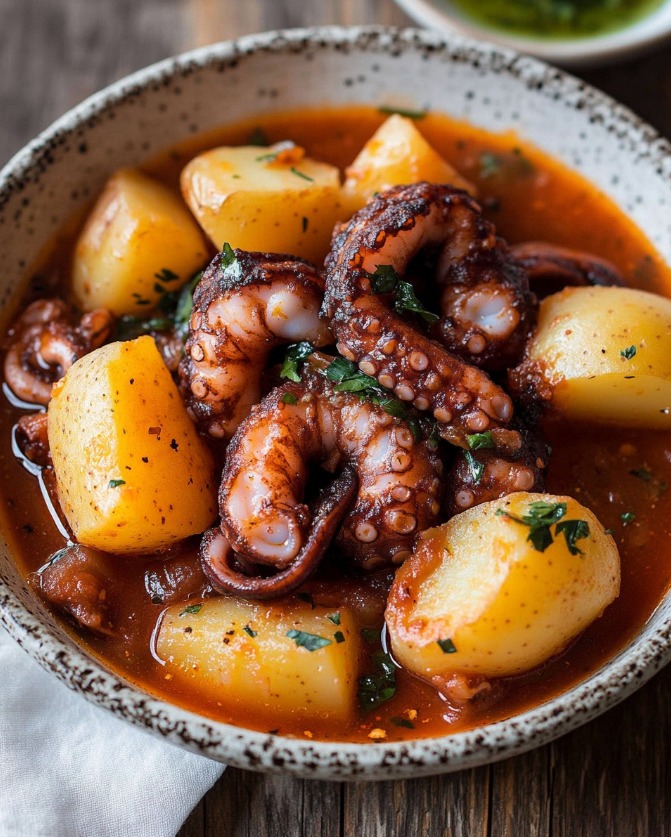
Discover the Magic of Greek Octopus Stew with Potatoes
Picture this: a cozy Sunday afternoon, the smell of garlic and tomatoes wafting through the air, and a big pot of Greek Octopus Stew bubbling on the stove. I first tried this dish during a summer trip to Greece, where it was served in a seaside taverna. The tender octopus, rich tomato sauce, and perfectly cooked potatoes had me hooked. When I got home, I knew I had to recreate it. After several attempts (and some very patient taste testers), I nailed the recipe. Now, it’s one of my go-to dishes for family dinners and gatherings with friends.
The Roots of Greek Octopus Stew
This dish is a staple of Greek coastal cuisine, where fresh seafood is king. Traditionally, fishermen would cook octopus they caught that day over an open fire or in clay pots. Over time, the recipe evolved to include ingredients like tomatoes, onions, and potatoes, which add depth and heartiness. While modern versions often use stovetop methods, the essence of the dish remains unchanged—simple, flavorful, and deeply satisfying. I love how this stew bridges generations, connecting us to the traditions of those who came before us.
Why You’ll Love This Recipe
Greek Octopus Stew is a celebration of flavors and textures. The octopus is melt-in-your-mouth tender, while the potatoes soak up the savory tomato sauce like little sponges. It’s easy to make, even if you’re new to cooking seafood, and the aroma alone will have everyone rushing to the table. Plus, it’s perfect for dipping crusty bread into the sauce—a must-do in my house!
Perfect Occasions to Prepare This Dish
This stew shines at casual family dinners, holiday feasts, or even as a comforting meal after a long day. It’s also a great centerpiece for themed dinner parties, especially if you’re celebrating Mediterranean culture. Pair it with a crisp white wine and some olives, and you’ve got yourself a feast fit for the gods.
Ingredients
- 1.5 to 2 kg (3.3-4.4 lb) of octopus
- 800 g (1.7 lb) of potatoes, peeled and cut into 5 cm (2 inch) pieces
- 2 medium onions, finely chopped
- 2 tablespoons of tomato paste
- 150 ml of non-alcoholic sweet red grape juice
- 1 teaspoon of ground pepper
- 1 bay leaf
- 12 tablespoons of extra virgin olive oil
- Freshly ground pepper for serving
Substitution Options
If you can’t find octopus, squid or shrimp work well as substitutes. For vegetarians, mushrooms or eggplant can mimic the texture. Swap grape juice for pomegranate molasses if needed, and feel free to use any neutral oil instead of olive oil, though the flavor won’t be quite as rich.
Step 1: Preparing the Octopus
Start by cutting the octopus into bite-sized pieces, about 5-6 cm (2-2 inches). Remove the eyes and teeth, then rinse under cold water. This step might seem intimidating, but trust me—it’s worth it. Pro tip: freezing the octopus for a few hours before cooking helps tenderize it naturally.
Step 2: Cooking the Octopus
In a large pot, combine the octopus, onions, bay leaf, grape juice, and 600 ml of water. Bring it to a boil, then reduce the heat and let it simmer for about an hour. The kitchen will fill with the most amazing aroma, and the octopus will become wonderfully tender. Stir occasionally to prevent sticking.
Step 3: Adding the Potatoes
Once the octopus is ready, stir in the tomato paste, ground pepper, olive oil, and potatoes. Lower the heat and let everything simmer together for another 30-40 minutes. Watch as the potatoes turn golden and absorb all those delicious juices. Scrape the bottom of the pot gently to keep things from sticking.
Step 4: Resting and Serving
Let the stew rest for 20 minutes before serving. This resting period allows the flavors to meld beautifully. Finish with a generous sprinkle of freshly ground pepper. Chef’s tip: Serve it piping hot with a side of crusty bread for maximum enjoyment.
Timing
Prep time: 20 minutes
Cooking time: 1 hour 20 minutes
Resting time: 20 minutes
Total time: 2 hours
Chef’s Secret
To enhance the dish’s flavor, add a splash of vinegar to the boiling water when cooking the octopus. This trick boosts tenderness and adds a subtle tang to the stew.
Extra Info
Did you know that octopus contains high levels of omega-3 fatty acids? These healthy fats are great for your heart and brain. Plus, the slow-cooking method ensures every bite is packed with nutrients.
Necessary Equipment
You’ll need a large pot, a sharp knife, a cutting board, a wooden spoon, and a colander for rinsing the octopus. A heavy-bottomed pot works best for even heat distribution.
Storage
This stew keeps beautifully in the fridge for up to three days. Store it in an airtight container to preserve its flavors. Reheat gently on the stovetop, adding a splash of water if the sauce thickens too much. For longer storage, freeze portions in freezer-safe bags. Thaw overnight in the fridge before reheating.
When freezing, label each bag with the date so you know how long it’s been stored. Always cool the stew completely before transferring it to the freezer to avoid ice crystals forming.
Proper storage not only extends the life of your dish but also makes weeknight dinners a breeze. Just reheat and enjoy!
Tips and Advice
Use fresh ingredients whenever possible—they make a world of difference. Don’t rush the cooking process; slow and steady wins the race here. If you’re unsure about handling raw octopus, ask your fishmonger to clean it for you.
Presentation Tips
- Serve in a rustic clay pot for an authentic touch.
- Garnish with fresh parsley or basil leaves.
- Add a drizzle of olive oil on top for shine.
- Pair with colorful sides like roasted peppers or a green salad.
Healthier Alternative Recipes
Here are six variations to suit different dietary needs:
- Low-Fat Version: Use less olive oil and opt for skin-on potatoes to retain moisture.
- Vegan Option: Replace octopus with king oyster mushrooms for a meaty texture.
- Gluten-Free Twist: Ensure all ingredients are certified gluten-free, and serve with gluten-free bread.
- Keto Adaptation: Skip the potatoes and double up on other veggies like zucchini.
- Spicy Kick: Add red chili flakes or a dash of hot sauce for heat lovers.
- Herbaceous Delight: Mix in fresh herbs like thyme or rosemary for extra fragrance.
Common Mistakes to Avoid
Mistake 1: Skipping the Rinsing Step
Not rinsing the octopus properly can leave behind sand or grit, ruining the texture. Always rinse thoroughly under cold running water. Pro tip: Use a fine mesh strainer for easier cleaning.
Mistake 2: Overcooking the Potatoes
Potatoes should be soft but not mushy. Check them frequently during the last 10 minutes of cooking. If they start breaking apart, remove the pot from heat immediately.
Mistake 3: Using Low-Quality Olive Oil
Olive oil plays a key role in flavor development. Cheap oils can taste bitter, so invest in a good-quality extra virgin variety.
FAQ
What does Greek Octopus Stew taste like?
It has a rich, savory flavor with hints of sweetness from the grape juice and a slight tang from the tomatoes. The octopus is tender, and the potatoes are creamy yet firm.
Can I use frozen octopus?
Absolutely! Frozen octopus is often pre-tenderized and works just as well as fresh. Just thaw it completely before using.
How do I choose the right octopus?
Look for small to medium-sized octopuses, as larger ones can be tougher. Fresh octopus should have a mild sea smell and firm texture.
Is this dish spicy?
No, it’s not inherently spicy. However, you can add chili flakes or hot sauce if you prefer some heat.
Can I make this ahead of time?
Yes! In fact, the flavors improve overnight. Reheat gently before serving.
What sides pair well with this stew?
Crusty bread, a simple green salad, or steamed vegetables complement the dish nicely.
How do I know when the octopus is done?
It should be fork-tender and easy to cut. If it feels rubbery, it needs more time.
Can I skip the grape juice?
Yes, substitute with red wine or pomegranate molasses for a similar effect.
What if I don’t have a bay leaf?
No worries! Dried oregano or thyme can work as alternatives.
How many servings does this recipe make?
This recipe serves four people generously, making it ideal for small gatherings or leftovers.
Final Thoughts
Greek Octopus Stew is more than just a dish—it’s an experience. From its humble origins to its place on modern tables, this recipe embodies the warmth and hospitality of Greek culture. Whether you’re cooking for loved ones or treating yourself, this stew promises comfort, flavor, and joy. So grab your apron, gather your ingredients, and let’s get cooking!
Greek Octopus Stew
Ingredients
Equipment
Method
- Cut the octopus into bite-sized pieces, about 5-6 cm (2-2 inches), remove the eyes and teeth, and rinse under cold water.
- In a large pot, combine the octopus, onions, bay leaf, grape juice, and 600 ml of water. Bring to a boil, then reduce heat and let simmer for about an hour.
- Stir in tomato paste, ground pepper, olive oil, and potatoes. Lower heat and let everything simmer together for another 30-40 minutes.
- Let the stew rest for 20 minutes before serving. Sprinkle with freshly ground pepper.