
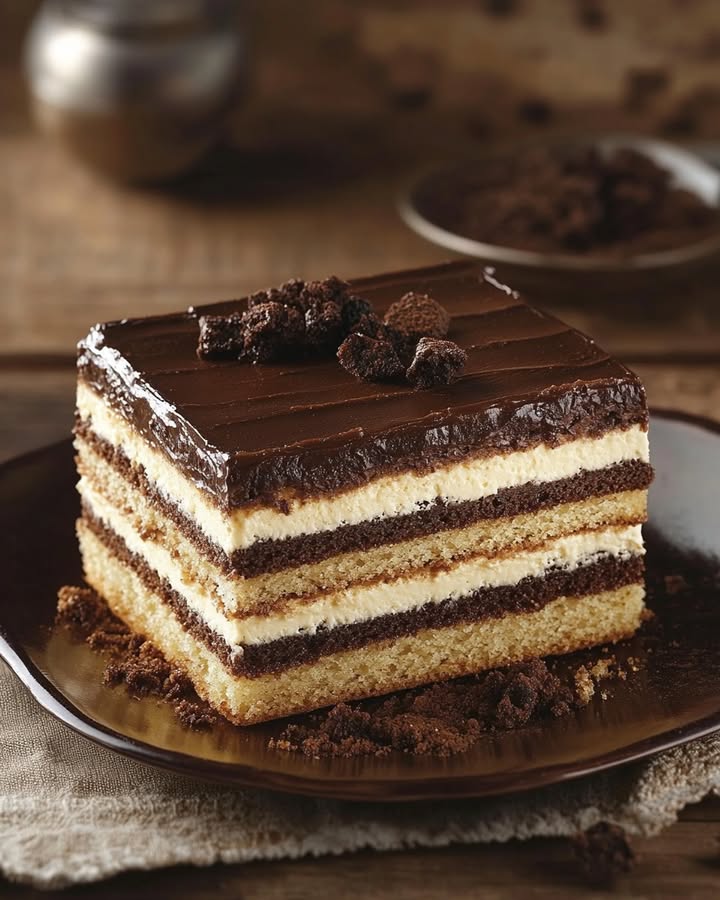

There’s a moment of pure quiet that happens when you serve an Opera Cake. That first forkful, with its perfect stack of coffee-soaked sponge, satiny ganache, and rich buttercream, is like a little edible symphony. It’s my go-to “wow them” dessert for special dinners. My friend Laura still talks about the one I made for her birthday three years ago! While it looks like something from a Parisian patisserie, I promise you can make this Classic Opera Cake at home. It just takes a little patience and a lot of love.
A Slice of Parisian History: The Story of Opera Cake
The Opera Cake is a French classic with a delicious bit of mystery. Most stories say it was created in the 1950s at the legendary Paris pâtisserie Dalloyau. The tale goes that a chef named Cyriaque Gavillon wanted to make a cake where every bite tasted the same. He layered it like the stage of the Palais Garnier, the famous Paris opera house. His wife named it “L’Opéra.” Imagine that! A cake so elegant it was named for an entire art form. The glossy chocolate top is said to look like the grand stage, and the layers are the different performances. Every time I make it, I think of that story. It turns baking into a bit of time travel.
Why You Will Fall in Love With This Opera Cake Recipe
You might think, “This looks complicated!” And yes, it has a few steps. But that’s the joy of it. This recipe breaks down the famous Opera Cake into clear, simple stages. You get to build a masterpiece layer by layer. The reward is a stunning dessert that balances bitter coffee, dark chocolate, and sweet almond sponge in perfect harmony. It’s not overly sweet. It’s sophisticated, rich, and incredibly satisfying. One small square is a complete experience. Plus, the look on your guests’ faces when you bring it out? Absolutely priceless.
The Perfect Occasions for Your Homemade Opera Cake
This cake is an event in itself. It’s perfect for celebrations where you want to impress and indulge. Think anniversaries, milestone birthdays, or holiday meals like Christmas or New Year’s Eve. It’s also a fantastic finale for a fancy dinner party. I love making it as a personal challenge, just to see if I can get my layers a bit straighter and my glaze a bit shinier. If you’re looking for other spectacular celebration cakes, our Decadent Chocoflan Delight is another showstopper that’s sure to amaze.
Classic Opera Cake Ingredients
Precision is key here, so a kitchen scale is your best friend. Measuring by weight ensures perfect layers.
- Biscuit Joconde (Almond Sponge Cake)
- 100 g Powdered Sugar
- 100 g Almond Flour
- 150 g Whole Eggs (about 3 large)
- 140 g Egg Whites (from about 4-5 large eggs)
- 70 g Granulated Sugar
- 35 g All-Purpose Flour
- 15 g Melted Butter, cooled slightly
- Coffee Syrup
- 35 g Ground Coffee (a good, strong brew)
- 340 g Water
- 70 g Granulated Sugar
- 100 g Cognac (or strong brewed coffee for alcohol-free)
- Chocolate for Sponge Cake
- 35 g Dark Chocolate (58-70%)
- 7 g Neutral Oil (like canola or grapeseed)
- Coffee Buttercream
- 150 g Milk
- 20 g Ground Coffee
- 70 g Granulated Sugar
- 70 g Egg Yolks (from about 4 large eggs)
- 226 g Unsalted Butter, softened completely
- Chocolate Ganache
- 300 g Dark Chocolate (58% couverture is ideal)
- 300 g Heavy Cream
- Chocolate Glaze
- 170 g Dark Chocolate (58% couverture)
- 30 g Neutral Oil
- Optional Decoration
- 35 g Dark Chocolate, melted, for drawing
Simple Substitutions for Your Opera Cake
- Alcohol-Free: Replace the cognac in the syrup with an equal amount of strongly brewed coffee or coffee extract mixed with water.
- Nut Allergy: You can try substituting the almond flour with an additional 100g of all-purpose flour, though the flavor will be different.
- Dairy-Free Buttercream: Use a high-quality, unsalted plant-based butter stick. Make sure it’s very soft before whipping.
- Different Chocolate: A good quality semi-sweet chocolate (around 55%) can work if you can’t find couverture. The glaze might be a little sweeter.
How to Make a Classic Opera Cake: Step-by-Step
Set aside an afternoon for this project. Put on some music, clear your counter, and enjoy the process. It’s like edible engineering!
Step 1: Make and Cut the Biscuit Joconde Sponge Cake
First, we build our foundation. Follow your favorite biscuit Joconde recipe to make the batter. You’ll whip egg whites with granulated sugar to stiff peaks. Then, gently fold in the almond flour, powdered sugar, whole eggs, and flour mixture. Finally, fold in the melted butter. The batter will be light and airy. Pour it onto two parchment-lined sheet pans. Tilt the pans to spread it very thin. Bake in a hot 410°F (210°C) oven for just 6-7 minutes. You want the sponge springy and lightly golden, not browned. Let it cool completely. Then, carefully cut each large rectangle in half lengthwise. This gives you four perfect, even layers. Pro tip: Use a ruler and a long, sharp serrated knife for the cleanest cuts. Don’t rush the cooling!
Step 2: Spread the Chocolate on the Sponge Layer
Now for a hidden surprise. Take 35g of dark chocolate and melt it gently with 7g of oil. Stir until it’s utterly smooth and glossy. Pick your best-looking sponge layer. This will be the top. Spread the chocolate mixture in a very, very thin, even layer over one side of it. The chocolate acts as a moisture barrier and adds flavor. It should look like a delicate sheet of dark silk. Pop this layer onto a tray and slide it into the fridge. Let the chocolate set firm before you start assembling. This chilling step is crucial for a neat assembly later.
Step 3: Brew the Fragrant Coffee Syrup
This syrup is the magic potion that keeps your cake wonderfully moist. In a small saucepan, combine the water and granulated sugar. Bring it to a gentle simmer, stirring just until the sugar dissolves. Take it off the heat. Now, stir in the ground coffee. Let it steep for a full 10 minutes. The kitchen will smell amazing. Place a fine-mesh sieve over a bowl and line it with a coffee filter or cheesecloth. Strain the mixture, pressing gently to get all the liquid out. You’ll have a deep brown, fragrant liquid. Let it cool completely, then stir in the cognac. This syrup packs a flavorful punch.
Step 4: Create the Silky Coffee Buttercream
This is the heart of the Opera Cake flavor. Start by making a coffee crème anglaise. Heat the milk almost to a boil, then steep the ground coffee in it for 10 minutes. Strain it. In a separate bowl, whisk the egg yolks and sugar until pale. Slowly pour the warm coffee milk into the yolk mixture, whisking constantly. Pour it all back into the pan. Cook over medium-low heat, stirring constantly with a spatula, until it thickens just enough to coat the back of the spoon. Don’t let it boil! Strain it into a clean bowl and let it cool to room temperature. In another bowl, whip the very soft butter until it’s light and fluffy. Gradually add the cooled coffee sauce, whipping continuously. It might look curdled at first but keep whipping. It will transform into a gloriously smooth, pale coffee-colored buttercream.
Step 5: Prepare the Luxurious Chocolate Ganache
Ganache is just chocolate and cream, but when done right, it’s pure magic. Chop your 300g of dark chocolate finely and place it in a heatproof bowl. Heat the heavy cream in a saucepan until it’s steaming hot with small bubbles around the edges. Pour about a third of the hot cream over the chocolate. Let it sit for a minute, then gently stir from the center outwards. The chocolate will start to melt beautifully. Add the rest of the cream in two more additions, stirring until you have a perfectly smooth, shiny mixture. Let this cool at room temperature, stirring occasionally, until it thickens to a spreadable consistency—like soft peanut butter. This takes about an hour.
Step 6: Assemble Your Opera Cake Masterpiece
Here’s where it all comes together. Get a flat board or plate. Place your first sponge layer (not the one with the chocolate on it) on it. Using a pastry brush, generously soak it with the coffee syrup. Spread half of the chocolate ganache over it in an even layer. Top with a second sponge. Soak it with syrup, then spread all of the coffee buttercream over it. Add the third sponge, soak it, and spread the remaining ganache. Finally, place the final sponge layer—the one with the set chocolate side facing up. Gently press down. Now, soak the top of this layer with the last of the coffee syrup. Your cake is built! Cover it loosely and refrigerate for at least 4 hours, preferably overnight, to set firmly. Chef’s Tip: A long offset spatula is your best tool for getting those layers perfectly smooth and even.
Step 7: Apply the Glossy Chocolate Glaze
The grand finale! Take your chilled, solid cake out of the fridge. Place it on a wire rack set over a baking sheet. Chop the 170g of chocolate for the glaze and melt it gently with the 30g of oil. Stir until completely fluid and glossy. Let it cool for just a minute or two so it’s not scalding hot. Working quickly, pour the glaze over the center of the cake. Use an offset spatula to gently guide it to the edges so it drips down the sides in a smooth curtain. You want to cover the entire top and sides. Don’t fuss with it too much! For a decorative touch, you can pipe lines of melted dark chocolate on top and drag a toothpick through to create a classic feathered pattern. Let the glaze set at room temperature before slicing.
Opera Cake Timeline: Your Baking Schedule
This recipe is a project best spread out over two days for a stress-free experience.
- Prep Time (Day 1): 1.5 hours (making all components)
- Chilling/Setting Time (Day 1): Overnight (at least 4 hours minimum)
- Glazing & Finishing (Day 2): 30 minutes
- Total Active Time: About 2 hours
- Total Project Time: 6 hours (with minimum chill) to Overnight
The Ultimate Chef’s Secret for Opera Cake
Temperature is everything. Your butter for the buttercream must be soft but not melted. Your ganache must be cool and spreadable, not runny. Your assembled cake must be completely chilled and firm before glazing. And your glaze should be warm, not hot, when you pour it. If any component is the wrong temperature, the layers can slide, the buttercream can break, or the glaze can melt the cake. Patience with cooling and chilling is the single biggest factor in a perfect Opera Cake.
A Sweet Piece of Trivia
Did you know the traditional Opera Cake is always rectangular? It’s designed to be cut into neat, small rectangles, just like a ticket to the opera. The name “Opéra” is often written on top in elegant script with chocolate. Each small piece is meant to be a rich, complete serving—a concept of mindful indulgence that modern nutritionists would appreciate, as it aligns with paying attention to satiety signals. It’s a dessert that encourages you to slow down and savor.
Equipment You’ll Need for This Recipe
- Kitchen Scale (non-negotiable for accuracy)
- Two Half-Sheet Pans (18″x13″)
- Parchment Paper
- Stand Mixer or Hand Mixer
- Saucepan and Heatproof Bowls
- Fine-Mesh Sieve
- Pastry Brush
- Long Offset Spatula
- Serrated Knife and Ruler
- Wire Rack for glazing
How to Store Your Homemade Opera Cake
Because of the buttercream and fresh ingredients, this cake must be stored in the refrigerator. Place it in a large, airtight container once the glaze is fully set. You can also tent it loosely with plastic wrap.
It will keep beautifully for up to 5 days in the fridge. The flavors actually deepen and meld after a day, making it even more delicious. However, the sponge texture is at its absolute best within the first 2-3 days.
I do not recommend freezing the fully assembled Opera Cake, as the buttercream can become grainy and the texture of the soaked sponge may suffer upon thawing. For the best experience, enjoy it fresh.
My Best Tips and Advice for Success
- Read the entire recipe first. Knowing the plan makes everything smoother.
- Prep your pans. Trace the bottom of your sheet pan on parchment paper and cut it out for a perfect fit. Grease the pan, place the paper, then grease the paper. The sponge will release like a dream.
- Don’t skip the soaking. The syrup keeps the cake luscious and moist. Every layer needs a good brush.
- Clean your knife. For picture-perfect slices, dip a long, sharp knife in hot water and wipe it clean between each cut. It gives you those stunning, clean layers.
Presentation Tips to Make It Shine
- Serve it on a simple, elegant rectangular platter or cake stand.
- Dust the edges of the plate with a little cocoa powder or gold luster dust for drama.
- Garnish each plate with a coffee bean, a mint leaf, or a few edible gold flakes.
- Use a cake server or pie server to lift each delicate piece onto the plate.
- Pair it with a small cup of strong espresso or a glass of dessert wine for the ultimate experience.
6 Delicious Variations on the Classic Opera Cake
Once you master the classic, try playing with flavors! Here are six inspired twists:
- Ruby Opera Cake: Use ruby chocolate for the ganache and glaze. Its berry notes pair wonderfully with the coffee buttercream for a fruity, modern twist.
- Mocha Opera Cake: Add 2 tablespoons of cocoa powder to the Joconde sponge batter. This doubles down on the chocolate for true chocoholics.
- Orange Opera Cake: Infuse the syrup with orange zest and use Grand Marnier instead of cognac. Add a touch of orange zest to the buttercream for a bright, citrusy note.
- Matcha Opera Cake: Replace the coffee in the syrup and buttercream with high-quality matcha powder. The green tea offers a beautiful color and elegant, earthy flavor.
- Praline Opera Cake: Add 50g of homemade or store-bought praline paste to the buttercream. Sprinkle chopped toasted hazelnuts between the layers for extra crunch.
- White Chocolate Opera Cake: Use a high-quality white chocolate for the ganache and glaze. It creates a stunning visual contrast and a sweeter, creamier profile.
Common Mistakes to Avoid When Making Opera Cake
Mistake 1: Rushing the Chilling Steps
This is the number one cause of a slumpy, messy cake. If the chocolate layer on the sponge isn’t set, it will stick. If the ganache is too warm, it will squish out the sides. If the assembled cake isn’t rock-hard cold, the warm glaze will melt everything. Patience is not just a virtue here; it’s a requirement. Follow the chilling times in the recipe. If anything feels soft or warm, give it more time in the fridge.
Mistake 2: Over-baking the Joconde Sponge
The sponge needs to be baked just until set and springy to the touch. At 410°F (210°C), this happens fast—in just 6-7 minutes. An over-baked sponge becomes dry and brittle. It will crack when you roll or cut it, and it won’t soak up the syrup properly, leading to a dry cake. Set a timer and watch it closely. The edges will pull away from the pan slightly, and the top will be a light golden color.
Mistake 3: Using Cold Butter for the Buttercream
Your butter must be softened to room temperature. This means it yields to gentle pressure but isn’t greasy or melting. Cold butter won’t incorporate smoothly into the cooled coffee sauce, and you’ll end up with a lumpy, curdled-looking mess. To soften it quickly, cut it into tablespoon-sized pieces and let it sit on the counter for 30-45 minutes. Don’t microwave it!
Mistake 4: Not Straining the Coffee Infusions
When you steep coffee grounds in milk or water, you must strain it meticulously. Any tiny grounds left in your syrup or buttercream will create a gritty texture. It’s worth using a fine-mesh sieve lined with a coffee filter or a double layer of cheesecloth. Take the extra minute to do this. Your syrup and buttercream will be silky smooth.
Mistake 5: Spreading Ganache or Buttercream Too Thick
The beauty of an Opera Cake is in its precise, even layers. If you glob on too much ganache or buttercream in one spot, the whole cake can tilt or bulge. It also makes it impossibly rich. Use an offset spatula to spread a thin, consistent layer—aim for about ¼ inch thick. Remember, you’re building a refined dessert, not a mountain of frosting.
Frequently Asked Questions About Opera Cake
Can I make an Opera Cake without alcohol?
Absolutely! The cognac adds depth, but it’s not essential. Simply replace the 100g of cognac in the syrup with an equal amount of strongly brewed coffee or a teaspoon of coffee extract mixed with water. The cake will still be wonderfully flavorful and moist from the coffee syrup alone.
Why did my buttercream look curdled?
This is very common and almost always fixable! It usually happens if the coffee crème anglaise is too cold or the butter is too firm when you mix them. The temperature difference causes the fat to separate. Don’t panic. Just keep whipping on medium-high speed. As the mixture comes to a more uniform temperature, it will magically emulsify into a smooth, fluffy buttercream. If it’s still not coming together, gently warm the outside of the bowl with a hairdryer for a few seconds while whipping.
What’s the best way to slice Opera Cake cleanly?
A hot, clean knife is the secret. Fill a tall glass with very hot water. Use a long, thin, non-serrated knife (a slicing knife works great). Dip the blade in the hot water and wipe it completely dry with a towel. Make one smooth, confident cut straight down through the cake. Don’t saw back and forth. Wipe the blade clean, reheat and dry it, and make the next cut. This method gives you those stunning, photo-ready slices with every layer visible.
Can I use instant espresso powder instead of ground coffee?
Yes, this is a great shortcut that ensures a strong, smooth flavor without any grit. For the syrup, dissolve 1-2 tablespoons of instant espresso powder in the hot sugar water. For the buttercream, dissolve 1 tablespoon in the warm milk before steeping (you can skip the straining step if you use powder). Adjust the amount to your taste for coffee intensity.
How far in advance can I prepare the components?
You can spread the work over two days. Day 1: Bake the sponge, make the syrup, ganache, and buttercream. Store the sponge wrapped at room temp. Keep the syrup in a jar in the fridge. The ganache and buttercream can be kept at cool room temperature if assembling that day, or refrigerated (then re-whipped to spreading consistency). Day 2: Assemble, chill, and glaze. The fully assembled and glazed cake keeps beautifully in the fridge for several days.
My glaze is too thick and didn’t pour smoothly. What went wrong?
The glaze likely got too cool before you poured it. The ideal consistency is like warm honey or heavy cream. If it’s too thick, you can gently re-warm it for 5-10 seconds in the microwave or over a double boiler. Add a tiny drop more oil if needed. Conversely, if it’s too thin and runny, it was too hot. Let it cool for a few more minutes, stirring occasionally, until it thickens slightly.
What does “couverture” chocolate mean and do I need it?
Couverture chocolate has a higher percentage of cocoa butter than eating chocolate. This makes it flow better when melted, giving your ganache and glaze a superior shine and smooth texture. It’s highly recommended for a professional result, but a good quality baking chocolate (like Ghirardelli or Valrhona) will still work very well.
Can I freeze Opera Cake?
I don’t recommend freezing the fully assembled cake. The buttercream can separate and become grainy upon thawing, and the texture of the soaked sponge can become soggy. The best plan is to enjoy it fresh within 5 days of making it.
What can I do with the leftover egg whites?
Don’t waste them! You have perfect whites for making light and airy desserts. Whip them into meringues, make an angel food cake, or add them to your morning omelet for extra protein. For a fun treat, why not try making our Fluffy Potato Donuts? They’re a wonderful way to use pantry staples for a completely different kind of delight.
Is there a simpler version for beginners?
If the full Joconde feels intimidating, you can use thin layers of a simple sponge cake or even store-bought ladyfingers as a base. The process of layering with syrup, ganache, and buttercream will be the same, giving you practice with the techniques. Start there, then level up to the traditional recipe when you feel confident! You’ll find that many classic desserts, like our popular Spider Cake Delight, also teach great foundational baking skills.
If the intricate layers of Opera Cake have you hooked on the art of French patisserie, you’ll love exploring all the other wonderful dessert recipes in our collection, from simple tarts to elaborate entremets.
Your Standing Ovation Awaits
Making a Classic Opera Cake is a true labor of love. It’s a project that rewards focus and care with an unbelievably delicious result. Don’t be intimidated by the steps. Take your time, enjoy the rhythm of the kitchen, and remember that even a slightly lopsided layer or a less-than-perfect glaze still tastes incredible. This cake is about celebrating skill and flavor. When you serve that first perfect square on a pretty plate, you’ll feel like a star. And your guests? They’ll be asking for an encore. Now, if you’re in the mood for something a bit more whimsical and fun to make with kids, our Delicious Funnel Cakes are always a crowd-pleaser. Happy baking!
Classic Opera Cake
Ingredients
Equipment
Method
- Make the Biscuit Joconde batter and bake on two parchment-lined sheet pans at 410°F (210°C) for 6-7 minutes. Cool and cut into four layers.
- Melt 35g of dark chocolate with 7g of oil; spread a thin layer on one sponge layer and refrigerate until set.
- Brew coffee syrup by simmering water and sugar, steeping coffee, straining it, and adding cognac.
- Make coffee buttercream by steeping coffee in warm milk, mixing with yolks and sugar, and whipping with softened butter.
- Prepare ganache by melting chocolate and pouring hot cream over it, mixing until smooth.
- Assemble the cake with layers of sponge, coffee syrup, ganache, and buttercream, then refrigerate to set.
- Pour chocolate glaze over the chilled cake, smoothing it to cover the top and sides.