
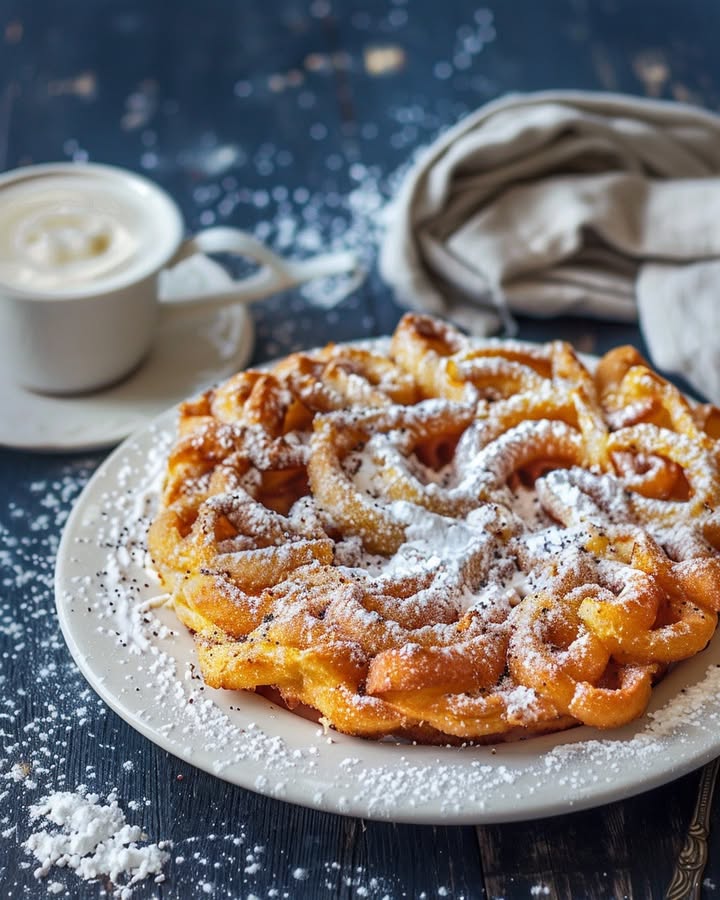
There’s something magical about the smell of hot oil and powdered sugar. It instantly transports me back to my first county fair. I was eight, holding a paper plate piled high with a warm, crispy, lacy funnel cake. I was hooked. Now, I love recreating that fairground magic in my own kitchen. It’s easier than you think! Today, I’m sharing my tried-and-true recipe for the most delicious Homemade Funnel Cakes you’ll ever taste.
The Story of Our Beloved Funnel Cakes
Funnel cakes are a true American classic, especially at state fairs and carnivals. Their history is a bit fuzzy, but many believe the idea came from German settlers. They brought recipes for “drechter kuche,” a fried pastry. The name comes from the simple tool used to make them: a funnel! You pour the thin batter through it right into the hot oil. It creates those wonderful, swooping, crispy loops. My version keeps things simple and classic, just like the ones that make us all smile.
Why You Will Love This Funnel Cake Recipe
You will adore this recipe because it turns simple pantry ingredients into pure joy. It’s incredibly simple—just mix, pour, and fry. The batter comes together in minutes. Plus, it’s a fantastic recipe to make with kids. They love watching the batter swirl into the oil. The result is a light, airy, and perfectly crispy treat. You can eat it plain or go wild with toppings. It’s the ultimate customizable dessert for any sweet tooth.
Perfect Occasions for Funnel Cakes
These funnel cakes aren’t just for summer! They’re perfect for birthday breakfasts, weekend movie nights, or a fun Friday treat. I love making them for sleepovers—it’s an activity and a dessert in one. They’re also a hit at game day parties. Just set up a topping bar with sauces, fruits, and sprinkles. Your guests will have a blast creating their own masterpieces. It turns any ordinary day into a mini celebration.
Ingredients for Heavenly Funnel Cakes
Gather these simple ingredients. You likely have most in your kitchen already!
- 3 1/2 cups all-purpose flour
- 1/4 cup granulated sugar
- 2 teaspoons baking powder
- 1/2 teaspoon salt
- 3 large eggs
- 2 cups milk
- 1 quart vegetable oil, for frying
- Powdered sugar, for generous dusting
Easy Ingredient Swaps
Out of something? No worries! Here are some easy swaps:
- Milk: Buttermilk adds a lovely tang, or use a non-dairy milk like almond milk.
- Gluten-Free: Use a 1:1 gluten-free all-purpose flour blend.
- Oil: Canola or peanut oil work great for frying too. The key is a neutral flavor.
- Toppings: Get creative! Use cinnamon sugar, fruit syrups, or even savory options like grated cheese (trust me, it’s good!).
How to Make Perfect Funnel Cakes: A Step-by-Step Guide
Let’s make some fair food! Follow these simple steps for crispy success.
Step 1: Mix Your Dry Goods
Grab a large mixing bowl. Whisk together the flour, sugar, baking powder, and salt. This ensures your leavening agents are evenly distributed. You’ll see little puffs of flour as you whisk. This step prevents lumps in your final batter. A smooth, homogeneous dry mix is the secret to a light texture. Pro tip: Sift your flour if it seems packed down for an even lighter cake.
Step 2: Whisk the Wet Ingredients
In a separate bowl, crack in the three eggs. Pour in the milk. Whisk them together until they are completely combined and slightly frothy. The mixture will turn a pale, creamy yellow. This frothiness helps create air pockets in the batter. Those air pockets are what give the fried dough its wonderful airy lift.
Step 3: Combine to Create the Batter
Now, pour the wet ingredients into the bowl with the dry ingredients. Use a whisk to gently combine them. Mix just until the batter is smooth and there are no dry flour pockets. The batter should be thin enough to pour easily, like a thick pancake batter. If it’s too thick, add a tablespoon of milk. A thin batter makes those beautiful, lacy strands.
Step 4: Prepare Your Frying Station
Pour your batter into a glass measuring cup with a spout or a squeeze bottle. This gives you the most control for swirling. Line a large plate or baking sheet with several layers of paper towels. This will be your draining station. Having everything ready before the oil is hot is crucial for safe and smooth frying.
Step 5: Heat the Oil to Perfection
Pour the oil into a heavy, deep skillet or Dutch oven. The oil should be about 1 to 1.5 inches deep. Heat it over medium heat until it reaches 375°F (190°C). Use a frying thermometer! This is the most important step for non-greasy funnel cakes. The oil should shimmer and be hot enough that a drop of batter sizzles immediately.
Step 6: Fry Your Funnel Cakes
Carefully hold your pouring tool over the hot oil. Start in the center and move in a swirling, circular motion outward to form a 5-6 inch round. Don’t worry about being perfect—the lacy look is part of the charm! Fry for about 1-2 minutes until the bottom is a deep golden brown. You’ll see the edges crisp up. Then, gently flip it with tongs or a slotted spatula. Fry the other side for another 1-2 minutes.
Step 7: Drain and Dust with Sugar
Once golden brown on both sides, lift the funnel cake from the oil. Let the excess oil drip off for a second. Then, place it directly onto your paper towel-lined plate. The paper towels will soak up any extra grease. While it’s still warm, give it a heavenly shower of powdered sugar from a sifter. The heat helps the sugar stick beautifully.
Step 8: Repeat and Enjoy!
Keep going with the remaining batter. Adjust the heat as needed to keep the oil at 375°F. Serve your delicious funnel cakes immediately while they’re warm and crisp. The sound of that first bite is pure happiness. Chef’s tip: For extra-crispy edges, make sure your oil is at the right temp before each new cake goes in.
Your Funnel Cake Timeline
This recipe moves quickly once you start!
- Prep Time: 10 minutes
- Cook Time: 2-3 minutes per cake
- Total Time: About 30 minutes for a full batch
- Servings: Makes about 8-10 medium funnel cakes
A Secret from My Kitchen
My little secret? I add a tiny splash of pure vanilla extract to the wet ingredients. Just half a teaspoon. You can’t really pinpoint it in the final product, but it adds a wonderful, warm aroma that makes the funnel cakes taste even more special and homemade.
A Fun Frying Fact
Did you know the first written mention of a “funnel cake” recipe in a cookbook was in 1879? It was in a book called “Practical Cooking and Dinner Giving.” Back then, they suggested serving it with wine sauce! I think I’ll stick with powdered sugar and strawberries.
Equipment You’ll Need
You don’t need any fancy gadgets.
- Large mixing bowls (2)
- Whisk
- Glass measuring cup with a spout or a squeeze bottle
- Heavy-bottomed deep skillet or Dutch oven
- Cooking thermometer
- Tongs or a slotted spatula
- Plate lined with paper towels
- Powdered sugar sifter
Storing Your Homemade Funnel Cakes
Funnel cakes are absolutely best eaten right away. Their crispy texture is fleeting! If you must store them, let them cool completely on a wire rack first. Do not stack them while warm, or they’ll get soggy.
Once cool, you can place them in a single layer in an airtight container. They will keep at room temperature for about a day. Be warned, they will lose their crispness and become more cake-like. They’ll still taste good, just different.
To reheat, place them on a baking sheet in a 350°F oven for 5-7 minutes. This can help bring back a little crunch. I don’t recommend microwaving, as it will make them very soft and chewy.
Tips for Funnel Cake Success
- Thermometer is Key: I can’t say it enough. A $10 frying thermometer guarantees perfect, non-greasy cakes.
- Don’t Crowd the Pan: Fry one funnel cake at a time. This keeps the oil temperature stable.
- Thin Batter: If your batter is too thick, it will plop instead of pour. Add milk a tablespoon at a time until it’s pourable.
- Practice Your Swirl: Your first cake might be a funny shape. That’s okay! It will still taste amazing. You’ll get the hang of the motion.
Presentation Ideas to Impress
Make your dessert table shine!
- Serve on colorful paper plates for a festive, fair-like feel.
- Create a topping bar with small bowls of: chocolate sauce, caramel, fresh berries, whipped cream, sprinkles, and cinnamon sugar.
- Stack small funnel cakes with layers of whipped cream and berries for a “funnel cake napoleon.”
- For a party, make mini funnel cakes using a bottle with a smaller opening. They’re perfect for grabbing.
Healthier & Fun Funnel Cake Variations
Want to mix things up? Here are six tasty twists on the classic.
- Whole Wheat Funnel Cakes: Swap half the all-purpose flour for whole wheat pastry flour. It adds a nutty flavor and more fiber.
- Baked Funnel Cakes: For a less oily version, try baking the batter. Pipe it onto a parchment-lined, well-greased baking sheet and bake at 425°F until golden. It won’t be as lacy, but it’s still tasty!
- Apple Cider Funnel Cakes: Replace half the milk with apple cider and add a teaspoon of apple pie spice to the dry mix. Taste like fall!
- Chocolate Funnel Cakes: Add 1/4 cup of cocoa powder to the dry ingredients. You’ll have a chocolate lover’s dream.
- Lemon Zest Funnel Cakes: Add the zest of one lemon to the dry ingredients. The bright citrus cuts the sweetness beautifully.
- Savory Herb Funnel Cakes: Omit the sugar. Add grated Parmesan, garlic powder, and Italian herbs to the batter. Serve with marinara sauce for dipping—unexpectedly delicious!
More Irresistible Dessert Recipes
If you loved making these, you’ll have a blast with our other dessert favorites. For a spooky seasonal treat, try our eerie Spider Cake Delight. Chocolate lovers must experience the magical layers of our Decadent Chocoflan Delight. If you’re a fan of fried dough, my Fluffy Potato Donuts are a must-make. And for something light and bright, nothing beats a slice of refreshing Lemon Angel Delight.
Common Mistakes to Avoid
Let’s troubleshoot so your funnel cakes are perfect every time.
Mistake 1: Using Oil That’s Too Cold
This is the biggest mistake. If the oil isn’t hot enough, the batter will absorb it like a sponge. You’ll end up with a greasy, heavy, and soggy funnel cake. It won’t get crispy. Always use a thermometer to confirm it’s at 375°F before you start pouring. If you don’t have one, test with a small drop of batter. It should sizzle and float immediately.
Mistake 2: Making the Batter Too Thick
A thick, pancake-like batter is hard to pour. It will blop into the oil in clumps instead of creating fine, lacy streams. Your funnel cake will be dense and doughy inside. The batter should be thin enough to pour steadily in a continuous stream. If it’s too thick, simply whisk in a little extra milk, one tablespoon at a time, until it’s right.
Mistake 3: Not Draining on Paper Towels
Taking the cake straight from the oil to a plate seems fine. But that little bit of extra oil left on it can make it taste greasy. Always have a plate lined with a few layers of paper towels ready. Let the funnel cake rest on it for 30-60 seconds after frying. This soaks up the surface oil, leaving you with a lighter, crispier bite.
Mistake 4: Flipping the Cake Too Soon
Patience is key! If you try to flip the funnel cake before the bottom is set and golden, it will fall apart. The delicate strands need time to cook and hold together. Wait until the edges look crispy and the bottom is a nice golden brown, about 1-2 minutes. Then, flip it with confidence using a wide tool like a slotted spatula.
Mistake 5: Overcrowding the Pan
It’s tempting to fry two at once to save time. Don’t do it! Adding a second cake will cause the oil temperature to plummet. Both cakes will then absorb oil and cook unevenly. Fry one beautiful, perfectly round funnel cake at a time. Keep the oil hot and consistent for the best results.
Frequently Asked Questions
Can I make the funnel cake batter ahead of time?
Yes, you can! Prepare the batter and store it in an airtight container in the refrigerator for up to 2 days. The baking powder will still be active. Give it a good stir before you use it. You might need to add a tiny splash of milk if it thickened up in the fridge. This is great for planning ahead for a party or a special breakfast.
What can I use if I don’t have a funnel or a squeeze bottle?
No problem! A glass measuring cup with a spout works perfectly. You can also use a plastic zip-top bag. Just pour the batter into the bag, snip a small corner off, and use it to pipe the batter into the oil. Start with a very small hole—you can always make it bigger. The goal is a steady, thin stream.
Why are my funnel cakes not crispy?
This usually points to the oil temperature. If the oil was too cold, the cakes absorb oil instead of frying quickly. If the oil was too hot, they brown too fast on the outside but stay doughy inside. A reliable thermometer is your best friend. Also, make sure you’re not making the batter too thick and that you drain them well on paper towels immediately after frying.
Can I bake funnel cakes instead of frying them?
You can try, but they won’t be the same. True funnel cakes get their unique lacy, crispy texture from the instant frying in hot oil. Baking will give you more of a cake or cookie texture. For a baked version, pipe the batter onto a parchment-lined sheet pan, but don’t expect the classic fairground crunch. It’s a different, but still tasty, treat.
What’s the best oil for frying funnel cakes?
Use a neutral oil with a high smoke point. Vegetable oil, canola oil, and peanut oil are all excellent choices. They don’t impart any strong flavor of their own. This lets the simple, sweet taste of the funnel cake shine through. Avoid oils like olive oil or butter, as they will burn at the high temperature needed for frying.
How do I get my powdered sugar to stick without melting?
Dust the powdered sugar on the funnel cakes while they are still very warm, but not piping hot straight from the oil. The slight residual heat will help the sugar adhere just enough without completely dissolving into a glaze. Using a fine-mesh sifter also helps distribute a light, even layer that sticks better than just spooning it on.
Are funnel cakes and elephant ears the same thing?
No, they are different fair treats! Funnel cakes are made from a thin, poured batter that creates a lacy, woven look. Elephant ears are made from a yeasted dough that’s rolled out flat, fried, and then stretched. They are more like a giant, flat, crispy sweet fry bread. Both are delicious, but the recipes and textures are distinct.
Can I make gluten-free or vegan funnel cakes?
Absolutely. For gluten-free, use a good 1:1 gluten-free flour blend. For vegan, replace the eggs with a flax egg (1 tbsp ground flax + 3 tbsp water per egg) and use a non-dairy milk like soy or almond. The batter consistency is key, so you may need to adjust the liquid slightly. They fry up just the same!
How can I tell when the funnel cake is done frying?
Look for visual cues. The funnel cake will turn a beautiful, even golden brown color. The sizzling sound from the oil will lessen slightly. The edges will look visibly crisp. When you lift an edge with tongs, the underside should be the same golden brown. The whole process is very quick, usually just 2-4 minutes total.
Is it okay to reheat leftover funnel cakes?
They are best fresh, but you can reheat them. The oven is your best bet. Preheat your oven to 350°F. Place the cakes on a wire rack set over a baking sheet. This allows air to circulate. Heat for 5-7 minutes until warmed through. This can help restore a bit of crispness. Avoid the microwave, as it makes them soft and chewy.
For more sweet inspiration, explore our entire collection of tried-and-true dessert recipes that are perfect for any occasion.
I hope this recipe brings as much fun and happiness to your kitchen as it does to mine. There’s nothing like the pride of making a fairground classic yourself. Seeing the smiles on my family’s faces when I bring a stack of warm, sugary delicious funnel cakes to the table is the best reward. So grab your whisk, heat that oil, and get ready to make some memories. Happy frying
Delicious Funnel Cakes
Ingredients
Equipment
Method
- In a large mixing bowl, whisk together the flour, sugar, baking powder, and salt.
- In a separate bowl, whisk together the eggs and milk until combined and slightly frothy.
- Pour the wet ingredients into the dry ingredients and mix gently until smooth.
- Pour batter into a glass measuring cup or squeeze bottle for easier pouring.
- Heat the oil to 375°F (190°C) in a heavy-bottomed deep skillet or Dutch oven.
- Swirl the batter into the hot oil starting from the center and moving outward to form a round shape.
- Fry for 1-2 minutes on each side until golden brown.
- Drain on paper towels and dust with powdered sugar while warm.
- Repeat with the remaining batter and serve immediately.